When Israel Errs

He’d done his homework. That was clear within the first five minutes of the interview.
I’d been told the goal was a portrait of life in Israel during war. Instead, the reporter arrived with a list. Not sweeping charges, but specific things: an incident here, a soldier’s conduct there, an accusation pulled from an interview, a decision made in the heat of battle. He started in 1948 and worked forward through the wars and intifadas, building toward a single question: “How do you justify these things?”
“I don’t,” I told him simply.
Let me explain. Like any nation, Israel has her triumphs, and her failures: dark moments of shame and wrongdoing that any country could match. We expect mistakes to happen. And when they do, we expect governments, armies and courts not to justify, but to investigate, hold accountable and render verdicts. Israel does exactly that. Inquiries are held. Blame is placed. The guilty are punished. But justified? Never.

To err is human, Alexander Pope wrote, borrowing a much older Latin proverb. Say it about any nation, and we nod in understanding. Of course governments err and armies miscalculate. They’re made of fallible people, doing an impossible job under impossible pressure, and sometimes they get it catastrophically wrong. We don’t like it, but it’s true. Obvious, even redundant, when put like that.
So why doesn’t the same apply for Israel?
A Tale of Two Statues
I’m often told that Jews spit on Christians in Israel. I’m Christian. I’ve lived in the Jewish state among Jewish neighbors for nearly nine years. They know exactly who I am. I’ve known nothing but welcome from them.
Yet the incidents are real. In August, six Jewish Israelis spat on the entrance of a monastery in Jerusalem. In April, a man assaulted a nun. That same month, a soldier in southern Lebanon took a sledgehammer to a statue of Jesus.
Terrible. And in every case, prosecuted. The six Israelis were in police custody within hours. The nun’s attacker was indicted, facing a doubled sentence. The soldier with the sledgehammer, and the man who filmed him, were jailed. Police pledged to treat incidents against Christians with utmost severity, and President Isaac Herzog affirmed that Israel deals with such hostility “aggressively.” Then came the harder work. Foreign Minister Gideon Sa’ar appointed George Deek, an Arab Israeli Christian, as Special Envoy to the Christian World, the first such post anywhere, tasked with confronting anti-Christian incidents head on. In short, Israel saw a problem. And instead of justifying it, Israel acted.
Now compare that to New York City. In August, a man vaulted a church fence, pulled out a hammer and smashed a statue of the Virgin Mary, the fourth such attack on that parish since 2024. Weeks earlier, another church had its doors defaced and a statue damaged. Elsewhere in the city, police pursued suspects behind a string of vandalized churches.
I have yet to hear anyone call New Yorkers a people who hate Christians. The crimes are ascribed to those who committed them, not the eight million people who share their city. Did Israel get such consideration? The same category of act, prosecuted faster and more visibly than in New York, still becomes proof of what Israel is, not what Israelis did. To err is human, and for every other nation, we accept that. But when an Israeli errs, the error somehow becomes Israel’s identity; not individual mistakes, but proof, supposedly, of what the Jewish nation itself is.
Guilty Until Proven Guilty
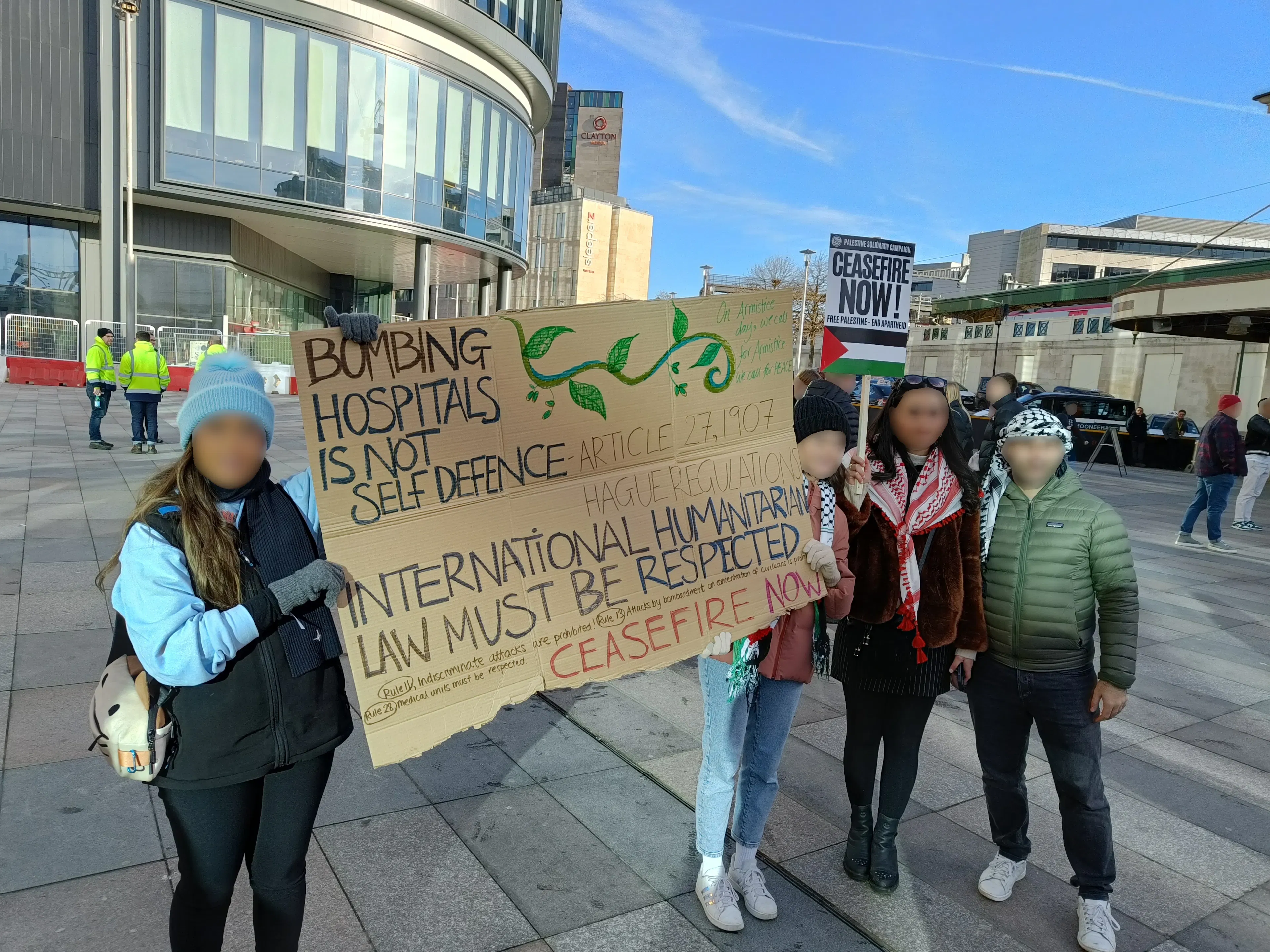
Once the identity sticks, it becomes the lens through which everything Israel does is seen. When a Gaza hospital was hit, the story, for days, was that Israel struck it before evidence pointed to a misfired Hamas rocket. Churches damaged near weapons caches Hamas had stored beside them are reported as Israeli crimes. People identified as doctors or journalists killed in strikes are, months later, confirmed as Hamas operatives. But nobody unrings a bell. The retraction never travels as far as the accusation. The debate no longer starts with whether Israel is guilty but rather with how guilty.
For the Jewish people, it’s an old production with a new cast. Every mistake becomes ammunition, every accusation becomes fact, because the goal was never justice. It’s all part of the case against the Jewish state, waiting for evidence to fill in the blanks.
There’s a word for holding a nation to a standard you’d never apply elsewhere, then vilifying it for failing to meet that impossible standard. That word is antisemitism, a double standard applied to Israel’s identity, not her conduct.
Our Own Rose-Tinted Glasses
There’s a flipside too. Loving Israel can quietly slide into a version of the same error. It’s easy, once you love a people, to start viewing them through lenses tinted just enough to soften the edges. That reporter expected me to explain away, to justify. I didn’t, because Israel has never needed to be perfect for me to stand with her.
God made that clear from the start. He didn’t choose Israel because she was better, smarter, holier or more deserving than other people (Deut. 7:7–8). Chosen, in the biblical sense, isn’t about superiority but about function and purpose, selected for a role in His plan. Still, it slips the mind. The desert blossoms. The economy booms. Ballistic missiles are shot down midair. The start-up nation turns out one invention after another, and it becomes tempting to read all this as Israel being better, rather than God’s hand of blessing on her.
But Israel is human, prone to failing like anyone else. And when that happens, as it will, disappointment tends to follow.
Israel doesn’t need a fan club that flinches every time she stumbles, but friends who don’t expect a standard they wouldn’t hold to themselves. Friends see each other as they are: human, fallible, trying, sometimes failing, always answerable. That’s simply love that was never tied to performance.
None of that is justifying. Excusing is what happens when perfection was expected, and the gap suddenly needs explaining away.
Standing with the people of Israel is bound up with standing with the God of Israel. He is perfect. His plans and purposes are perfect. That’s not a call to defend a sinless ideal, or to keep the rose-tinted glasses on for a people God never asked anyone to see as anything but human. It’s simply what it looks like to walk alongside a nation still doing the hard, messy work of holding itself accountable.
Related Resources




Discover Your Purpose and God’s Heart For You
In today's divided, turbulent world, it's essential for the Church to rediscover God's heart. Our free e-book, authored by a seasoned expert with three decades of experience in Israel, delves deep into the teachings of Jesus (Yeshua) to reveal God’s principles of love and purpose. Learn how embracing these truths can bring significance and impact to your life, even amidst chaos. Subscribe now to receive your free copy and embark on a journey of transformation.