One Year On: The Peace That Has Yet to Come

On October 13, 2025, Israel stopped to watch. Crowds packed Hostages Square in Tel Aviv, eyes fixed on giant screens, as the last 20 living hostages emerged from Gaza after more than two years in captivity. Strangers wept on each other’s shoulders as sons, brothers and husbands stepped back into the arms of their families. After the longest war in the modern Jewish state’s history, the nation could finally breathe.
The ceasefire behind that moment took effect on October 10, fulfilling the first phase of US President Donald Trump’s 20-point plan to end the war. One year later, it has delivered what Israel needed most. Every hostage—living and dead—has come home. The remains of the last, Ran Gvili, were recovered in January. For an entire year, not a single rocket has been fired from Gaza.
Yet the plan promised far more than a ceasefire. It envisioned a disarmed Hamas, a new civilian government and the rebuilding of Gaza. On those counts, the anniversary finds the process stuck, and for one reason above all.

The Cost of War
Gaza today lies in ruins. According to the UN, 82% of all structures had been damaged by June 2026, leaving behind an estimated 61 million tons of rubble. Most of the population still lives in tents or damaged buildings. The Hamas-run Health Ministry reports that more than 74,000 people have been killed.
These numbers represent real tragedy, yet they demand context. The ministry does not distinguish between civilians and combatants. Moreover, its claims have proven unreliable. In March 2024, it insisted that 72% of the dead were women and children, while an Associated Press analysis found its own data showed far less. By April that year, women and children made up 38% of newly identified deaths.
The same pattern emerges in the lists of “journalists” killed. In September, the BBC began reviewing 53 so-called journalists after an investigation revealed terror links. The inquiry showed that some had taken part in the October 7 massacre. The Committee to Protect Journalists has already removed 12 of these names from its own list.
Numbers alone cannot answer the question of responsibility. Hamas started this war on October 7, 2023, by murdering some 1,200 people and dragging 251 hostages into Gaza. It could have ended the war at any point by releasing the hostages and laying down its arms. Instead, it fought from tunnels beneath homes, schools and hospitals. According to the IDF, Hamas military chief Izz al-Din al-Haddad even surrounded himself with Israeli hostages as a human shield.
The ruin of Gaza isn’t evidence of genocide. It is the bitter fruit of a war waged against an enemy that hid behind its own people. War is ugly and tragic, but the intent to destroy a people, which genocide requires, belongs to Hamas, the side that wrote the slaughter of Jews into its founding charter.
The Plan on Paper
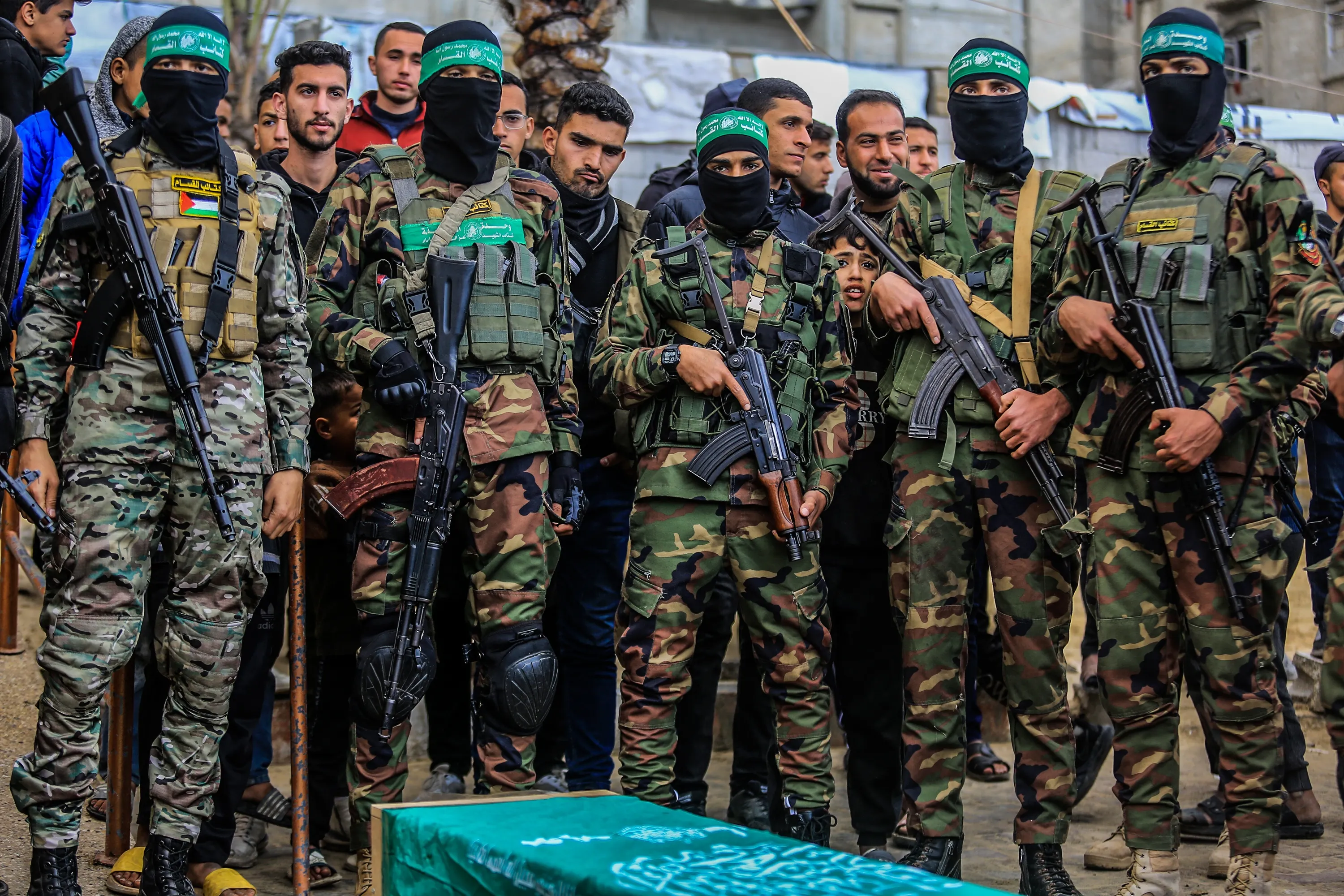
On paper, the road from war to peace looks clearly mapped. A Board of Peace, chaired by Trump, oversees the transition. A technocratic Palestinian committee led by Ali Shaath was appointed in January to run civilian affairs. In July, Hamas announced it would dissolve its civil administration in the committee’s favor.
Days later came what Trump hailed as historic. Hamas accepted a 15-point roadmap under which its weapons would be handed to the Palestinian committee, starting with police arms and followed by the decommissioning of heavy weapons. Once this was verified, an International Stabilization Force would deploy and Israeli troops would withdraw in stages.
The Plan in Practice
The fine print told a different story. Hamas rejected the word “disarmament,” insisting that no weapon would be handed over to Israel or any foreign party and relinquished personal firearms to future Palestinian legislation. Israel, unconvinced, refuses to withdraw until every weapon is verifiably gone.
Its skepticism is well founded. In June, Israeli military intelligence warned that Hamas was producing hundreds of explosive devices and anti-tank missiles every month, recruiting young fighters and retraining its elite Nukhba force. Israeli security officials estimate that the group earns millions of dollars a day by taxing goods and aid entering Gaza. In an attempt to thwart Hamas’s efforts, Israel has expanded its control of the Strip from the 53% agreed upon in October 2025 to roughly 70% at present.
Meanwhile, the Palestinian committee has yet to set foot in Gaza. The stabilization force has a commander but almost no troops after Indonesia put its pledge of 8,000 soldiers on hold.
Israel also continues to strike Gaza almost daily, hunting the architects of October 7 and targeting Hamas’s efforts to rearm. In May alone, it killed two successive commanders of Hamas’s military wing. Prime Minister Benjamin Netanyahu says 4,000 of the 6,000 terrorists who took part in the invasion are now dead.
Hamas itself is divided. A vote for its new Gaza leader stalled over blank ballots, while rival militias clash with its fighters.
The Question That Hasn’t Changed
Israel’s October 27 election may reshape the players, but they will not change the question at the heart of it all.
Three years ago, one decision could have spared Gaza: laying down the weapons. Today, that same decision stands between Gaza and its future. Reconstruction, withdrawal and a new government all wait on it. As long as Hamas holds on to its guns, any peace will be little more than a pause before the next war.
The prophet Jeremiah rebuked those who cried, “Peace, peace!” when there was no peace (Jer. 6:14). After two years of war, the world longs to call this ceasefire a peace. Yet a signature on a document cannot bring true peace to a land where the evil that launched the war remains armed and determined.
Until that evil is uprooted, we do as Scripture calls us. We pray for the peace of Jerusalem (Ps. 122:6). We stand with Israel and we refuse to look away from the truth.
Related Resources



Discover Your Purpose and God’s Heart For You
In today's divided, turbulent world, it's essential for the Church to rediscover God's heart. Our free e-book, authored by a seasoned expert with three decades of experience in Israel, delves deep into the teachings of Jesus (Yeshua) to reveal God’s principles of love and purpose. Learn how embracing these truths can bring significance and impact to your life, even amidst chaos. Subscribe now to receive your free copy and embark on a journey of transformation.