The Truth about Israel, AI and the Modern Battlefield
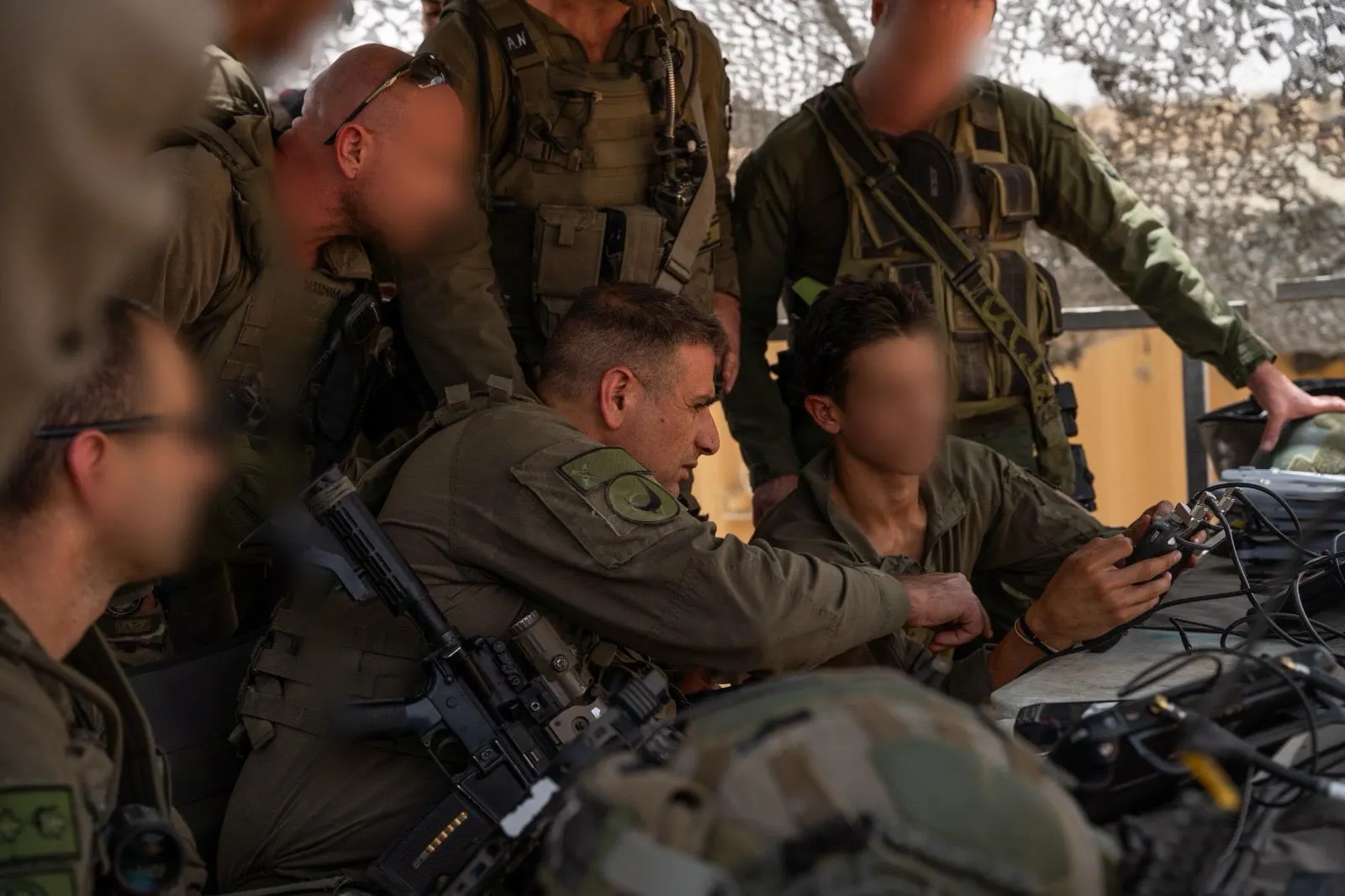
Since the beginning of time, the most effective deceptions have rarely been pure lies. Rather, they take a grain of truth and wrap it in a massive falsehood. The recent Naza documentary relies on this exact playbook to accuse the Israel Defense Forces (IDF) of using artificial intelligence to target civilians in Gaza. Yes, Israel employs artificial intelligence to calculate potential civilian presence ahead of a military strike. That much is true. However, the film completely inverts the motive: this technology is not deployed to harm innocent people, but to protect them from harm.
We’ve all heard the accusations. Now let’s look at the reality: How, and for what purpose, does the IDF actually use AI on the modern battlefield?
Pioneering AI Under Densely Populated Fire
Israel is far from the only nation using AI to estimate noncombatant presence in target areas. Major global powers, including the United States and NATO allies, have integrated algorithmic modeling into military planning for years. However, out of geographical and strategic necessity, Israel has become the global leader in pioneering, developing and deploying this technology in complex, real-world combat scenarios.
Operating in one of the most densely populated urban battlefields on earth, the IDF routinely faces accusations of relying on a “cold, calculating, robotic army.” Yet the reality of modern urban warfare in the Middle East demands tools that can process intelligence faster than any human mind could, precisely to bring order, clarity and precision to chaotic operational environments.
While Israel first deployed AI risk-assessment tools during the May 2021 conflict with terror groups in Gaza, its application expanded exponentially following the October 7, 2023, Hamas massacre. The IDF was forced to confront an embedded, underground terrorist network operating directly beneath and within civilian infrastructure. To handle the overwhelming volume of incoming intelligence, the IDF’s automated systems rapidly processed data to generate roughly 37,000 potential Hamas targets for military evaluation.
To manage this digital transformation, Israel established the AI and Autonomy Administration within its Directorate of Defense Research & Development. The heavy lifting behind these software tools is led by Unit 8200—the IDF’s elite cyber-intelligence unit—which specializes in signals intelligence, predictive modeling and custom-built algorithms tailored for urban operations.
Inside Israel’s AI Arsenal: How the Systems Function
To understand Israel’s technological approach, it helps to dismantle the sensationalism and examine the mechanics of the key systems frequently highlighted by critics.
Target Evaluation and Decision Support Systems:
- Lavender (Decision-Support System): Lavender is a software tool designed to analyze streams of intelligence data, including surveillance feeds, communications networks and cross-referenced behavioral patterns. It assigns individual suspects a numerical score indicating their probability of affiliation with armed terror groups like Hamas or Palestinian Islamic Jihad. Crucially, Lavender functions as a decision-support tool only. It offers human intelligence analysts a baseline probabilistic assessment rather than acting as an autonomous weapon system.
- The Gospel: Operating alongside Lavender, The Gospel is an AI engine built to process structural, tactical and spatial data. Instead of tracking individuals, it analyzes physical structures to identify terror infrastructure, such as concealed weapon depots, rocket launch sites, underground command bunkers and sniper nests.
- Where’s Daddy?: This tracking system monitors the real-time location of high-value targets prior to an approved strike. Its primary operational purpose is to assist commanders in timing an engagement to ensure the target is actually present while evaluating surrounding environmental conditions to minimize unintended damage.
Tactical Field Operations and Biometric Security:
- Smart Shooter (SMASH): Attached directly to infantry rifles, the SMASH electro-optical sight uses AI fire-control software to track moving targets in real time. The system calculates trajectory and velocity, ensuring a soldier’s weapon fires only when a precise hit is guaranteed. This increases accuracy against fast-moving threats like weaponized drone swarms while preventing stray bullets in crowded urban corridors.
- Wolf Pack, Red Wolf and Blue Wolf: Israel utilizes AI-driven facial recognition networks to maintain security across high-risk zones. Wolf Pack serves as the centralized database storing threat profiles. Red Wolf (stationed at security checkpoints) and Blue Wolf (a mobile app deployed on soldiers’ smartphones) capture biometric data in real time, matching individuals against known security files connected to Israel’s internal security agency, Shin Bet.
While international critics label these biometric tools as invasive “profiling” and a violation of International Human Rights Law, Israeli military planners view them as essential, non-lethal verification tools required to detect terror threats before they reach civilian centers.

The Core Dilemma: Target Scale, Speed and Human Shields
This brings us to the ultimate operational paradox of modern urban warfare: the very technology that identifies military targets faster inherently exposes the proximity of noncombatants.
When an enemy force deliberately embeds itself within dense civilian neighborhoods and uses its own population as human shields, rapid target identification creates an unprecedented mathematical and moral challenge. When intelligence software processes data at breakneck speed, the sheer volume of generated targets increases the mathematical probability of error because human intelligence officers are operating under intense time pressure to cross-examine every data point.
This is an unavoidable operational risk that Israel must navigate. Far from ignoring civilian danger, Israel works to mitigate the risk of collateral damage. By combining precision-guided munitions with real-time AI risk modeling, the IDF strives to establish clear danger zones, issue early evacuation warnings and protect noncombatants who find themselves tragically close to legitimate military targets.
Regulatory Realities and the Future of Defense
As AI integration accelerates across modern militaries, international regulatory bodies are scrambling to establish legal boundaries. Frameworks such as UN General Assembly Resolution 79/239, the UK’s Bletchley Declaration and the US-led Political Declaration on Responsible Military Use of Artificial Intelligence all emphasize a core principle: military AI systems must operate under meaningful human oversight, minimize algorithmic bias and comply strictly with International Human Rights Law.
Israel remains committed to aligning its military protocols with these evolving international standards. However, while global diplomatic committees debate the ethics and pace of artificial intelligence, hostile state actors and non-state terror networks continue to deploy unguided rockets, booby-trapped structures and autonomous attack drones without moral or legal constraint.
For Israel, developing state-of-the-art, AI-driven defense mechanisms is not an academic debate or a corporate pursuit. It is a nonnegotiable necessity for national survival.
Related Resources





Discover Your Purpose and God’s Heart For You
In today's divided, turbulent world, it's essential for the Church to rediscover God's heart. Our free e-book, authored by a seasoned expert with three decades of experience in Israel, delves deep into the teachings of Jesus (Yeshua) to reveal God’s principles of love and purpose. Learn how embracing these truths can bring significance and impact to your life, even amidst chaos. Subscribe now to receive your free copy and embark on a journey of transformation.