History Repeating Itself
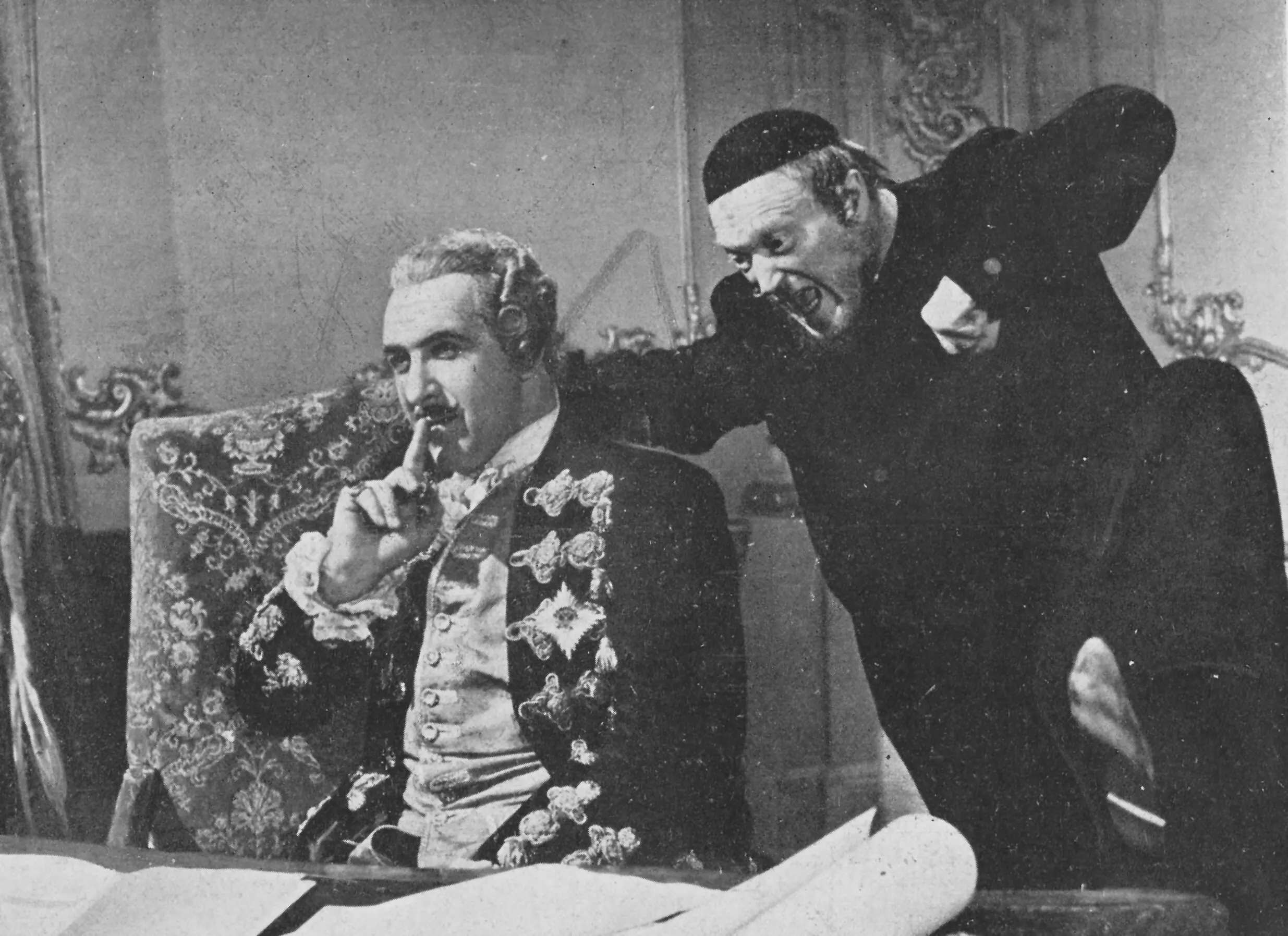
During the 1940 Venice Film Festival, audiences viewed Jud Süss (Jew Süss), a Nazi propaganda film that peddled antisemitic stereotypes and incited hatred. Their response? Roaring applause. The film received the Golden Crown award that year.
To be fair, only Axis countries and their allies attended that year, and the awards were political. Allied countries banned the film, and after the war, so did Germany.
From Novel to Nazi Weapon
Jud Süss was based on a 1925 novel of the same name by German Jewish writer Lion Feuchtwanger, a book the Nazis banned in the 1930s as too pro-Semitic. It reached the British stage in 1929 and the screen in 1934. Then Joseph Goebbels, the Nazi head of propaganda, appropriated the story and turned it into antisemitic sludge.
In Goebbels’s version, a grand duke, Karl Alexander, runs into money trouble and turns to Joseph Süss Oppenheimer, a conniving, greedy cartoon of a Jew. Süss exploits the duke’s weakness for his own gain, with the duke even opening the city’s doors to Jews, who had been barred entry. As a result, the territory under the duke’s rulership spirals into economic and political ruin, and the duke tragically dies of a heart attack.
Süss, now unrestrained, rapes the innocent Christian Aryan woman he has pursued the entirety of the film and tortures her heroic fiancé. The villagers then seize their chance and try him for his economic crimes and for defiling a pure Christian girl. The film ends with his public hanging, as the Jewish people file out of the city, which will once again be Judenfrei (free of Jews). As a grand finale, a villager remarks sagely: “May the citizens of other states never forget this lesson.”
Every major role in Jud Süss was played by a non-Jewish actor, but the Jewish extras were real: Czech ghetto Jews forced into service by the SS. Prosecutors stressed this when director Veit Harlan was tried for crimes against humanity after the war, the only Third Reich film director to face such charges. He claimed he was also forced into making the film and was acquitted.
A Machine of Hate
Goebbels promoted the film, and Heinrich Himmler made it required viewing for the German military, the SS and the police. It spread across occupied Europe and drew over 20 million viewers, making it the most successful antisemitic film ever made.
In Film in the Third Reich: A Study of the German Cinema, 1933–1945, David Stewart Hull quoted Austrian film historians Blobner and Holba: “The impact of the film on adolescents was enormous and devastating. For example, in Vienna an old Jewish man was trampled to death on a public street by a Hitler Youth band which had just seen the film.”
It was a powerful weapon in the Nazis’ propaganda machine, stoking hatred and suspicion across Europe just as the Third Reich moved toward the “Final Solution.” It was even reportedly shown to concentration camp guards as motivation.
86 Years Later
A similar scene played out 86 years later, yet this time before a free, international audience, not Axis sympathizers.
On September 12, a documentary by Israeli filmmakers received a 25-minute standing ovation at the Venice Film Festival. Was it a film reminding the public of the horrors of October 7, or of the wars Israel fought to defend itself on multiple fronts?
No. The audience was applauding a documentary on the IDF operation in Gaza and alleged targeting of civilians. The Israeli military said the film “presents a distorted, misleading and disingenuous picture of the IDF’s target planning and striking process.”
The film, NAZA, a Hebrew acronym for “collateral damage,” made several unverified claims, including that the IDF used AI to choose targets and approved strikes that could kill as many as 500 civilians. Produced by the British Guardian newspaper, it relied on interviews with 24 anonymous, digitally masked people claiming to be Israeli soldiers, including intelligence officers.
Claims without Details
A few weeks after the premiere, the IDF released a 10-page document responding to NAZA’s claims and defending its practices in Gaza, noting the efforts it takes to minimize civilian harm while operating in an urban battlefield where its enemies use their civilians as human shields.
The IDF noted that the filmmakers never reached out during production, as accepted journalistic practice requires, to let the IDF view and answer the allegations. Critics also noted that interviewees offered no details, such as dates, times or places that would allow independent fact-checking, which put the filmmakers’ practice and intentions in question.

The IDF stated that it is “open to hearing genuine criticism of its conduct and attaches importance to learning from substantiated allegations,” adding that it investigates violations, responding with disciplinary action when necessary.
“Fuel for a Pre-Existing Fire”
In a Times of Israel blog post, American Israeli physician Michal Gasco questions the filmmakers’ motives. If they truly want to improve the IDF, she asks, why “seek accolades, red carpets and prestige at Western film festivals rather than doing the hard, grinding work of advocacy within their own society?” Instead of a work of advocacy, Gasco suggests that it feels, “more like a pursuit of global prestige at the expense of one’s own community.”
Gasco continues to point out that, “Much of the Western public exhibits an insatiable appetite for any narrative that delegitimizes or criticizes the State of Israel, or its IDF.” Moreover, she notes that NAZA is following a familiar cycle: unverified claims of Israeli strikes killing civilians, a reaction of outrage and protests, and then, although the claims later prove false, the damage cannot be undone.
Therefore, the film’s real purpose, Gasco argues, is more “cynical”: “supplying endless fodder to a Western audience eager for reasons to justify its hostility toward Israel.”
“Real dialogue,” she concludes, “requires transparency, nuance and an honest accounting of the existential threats a nation under siege faces. Without those, a film isn’t a documentary—it’s just fuel for a pre-existing fire.”
Eighty-six years separate the two ovations in Venice. The films and audiences differ. Yet the pattern feels painfully familiar: a story that casts the Jewish people as villains, an audience eager to believe it and applause that drowns out any question of truth. History has shown where that road leads. This time, may we learn the right lesson.
Related Resources





Discover Your Purpose and God’s Heart For You
In today's divided, turbulent world, it's essential for the Church to rediscover God's heart. Our free e-book, authored by a seasoned expert with three decades of experience in Israel, delves deep into the teachings of Jesus (Yeshua) to reveal God’s principles of love and purpose. Learn how embracing these truths can bring significance and impact to your life, even amidst chaos. Subscribe now to receive your free copy and embark on a journey of transformation.