The Strait that Stopped a Thousand Ships

Helen of Troy had a face that launched a thousand ships. The Strait of Hormuz has a width that stopped them.
Twenty-one nautical miles (39 km.). That is all that separates Iran from Oman at the narrowest point of one of the most fought-over stretches of water on earth. For the better part of this year, that narrow channel has done what neither missiles nor mediation could. It has held two of the strongest militaries on earth at a standstill.
The Strait of Hormuz looks, on the surface, like a footnote to the real war between Israel, America and Iran. Yet it has become, in many ways, the war itself.
A Waterway Nobody Owns
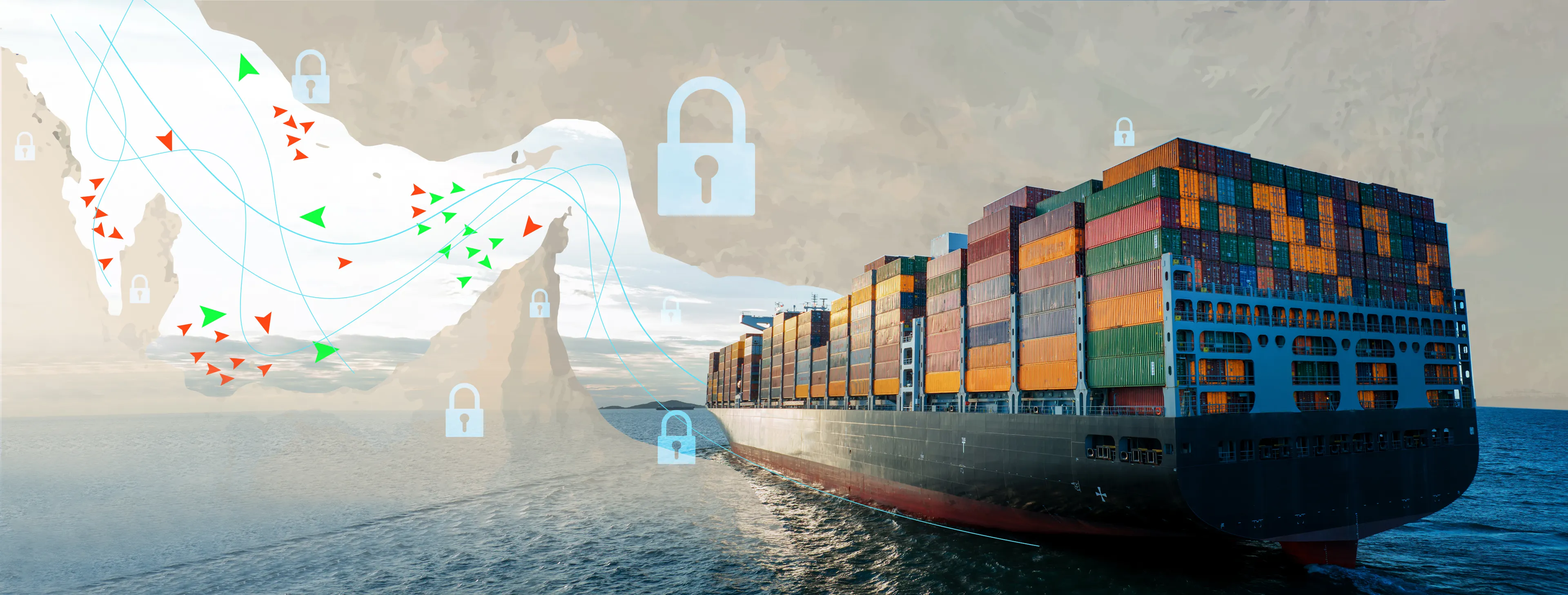
Every tanker leaving Kuwait, Iraq, Saudi Arabia, Qatar or the UAE has to sail through Hormuz. There is no other possible sea route. Both Iran and Oman claim territorial waters stretching 12 nautical miles (22.2 km.) from their coastlines, which means the entire strait, at its narrowest, technically belongs to one or the other.
International law says straits like this one must stay open to everyone regardless of whose water they cross, protected by a rule called transit passage. But Iran never ratified the treaty that guarantees it. Oman did, with reservations of its own. The result is a legal gray zone Iran has exploited relentlessly. No, Iran does not own the Strait of Hormuz, but the Islamic Republic has learned that ownership and control are two different things when you are willing to fire on tankers and nobody can stop you fast enough to matter.
Not Most but Enough
Roughly a quarter of the world’s seaborne oil and a fifth of its liquefied natural gas passes through Hormuz. While that is significant, it isn’t most of the world’s supply. So why has this narrow channel caused a shock that the International Energy Agency called the largest supply disruption in the history of global oil markets?
Modern energy markets run on the thinnest of margins. You do not need to remove all the oil to send prices soaring. You only need to eradicate the cushion, the spare capacity that keeps prices stable when something goes wrong elsewhere. Hormuz was that cushion. When it closed in early March, Brent crude surged past US $120 a barrel within days. Qatar’s enormous gas terminal had to declare it could not fulfill its contracts. Gulf oil producers began losing over a billion dollars a day.
Iran’s Last Card
Here is the bitter irony. The war that started on February 28 had almost nothing to do with Hormuz. US President Donald Trump’s stated goal was to eliminate what he called imminent threats from the Iranian regime: destroy its missile arsenal, cripple its navy, and above all, ensure Iran never gets a nuclear weapon. He spoke of regime change one day but denied it the next. Then, as Iran’s supreme leader lay dead, Trump called on Iranians to seize their moment. Hormuz featured nowhere in the picture.
The now famous waterway entered the story almost as an afterthought as Iran’s immediate retaliation following the Israeli and US opening strikes. But somewhere across the following months, cause and effect reversed. Iran’s proxies had already been gutted. Its missile stockpiles were smoking craters. Its nuclear program lay in ruins. What remained to Tehran was geography…and Tehran used it.
A regime with almost nothing left to lose discovered that a cheap sea mine, a fraction of the cost of anything in Israel’s or America’s arsenal, could still force the world’s shipping companies to blink.
Trump’s own language tracked this shift. In March, he shrugged that America did not really need Hormuz’s oil. The US should not even be there, he mused. But by April, he ordered the US Navy to hunt Iranian minelayers. By August, he posted that America had total control over the Strait, that there was nothing Iran could do about it, even as Iranian strikes on tankers made that assessment look premature.
The Pain, Measured Two Ways
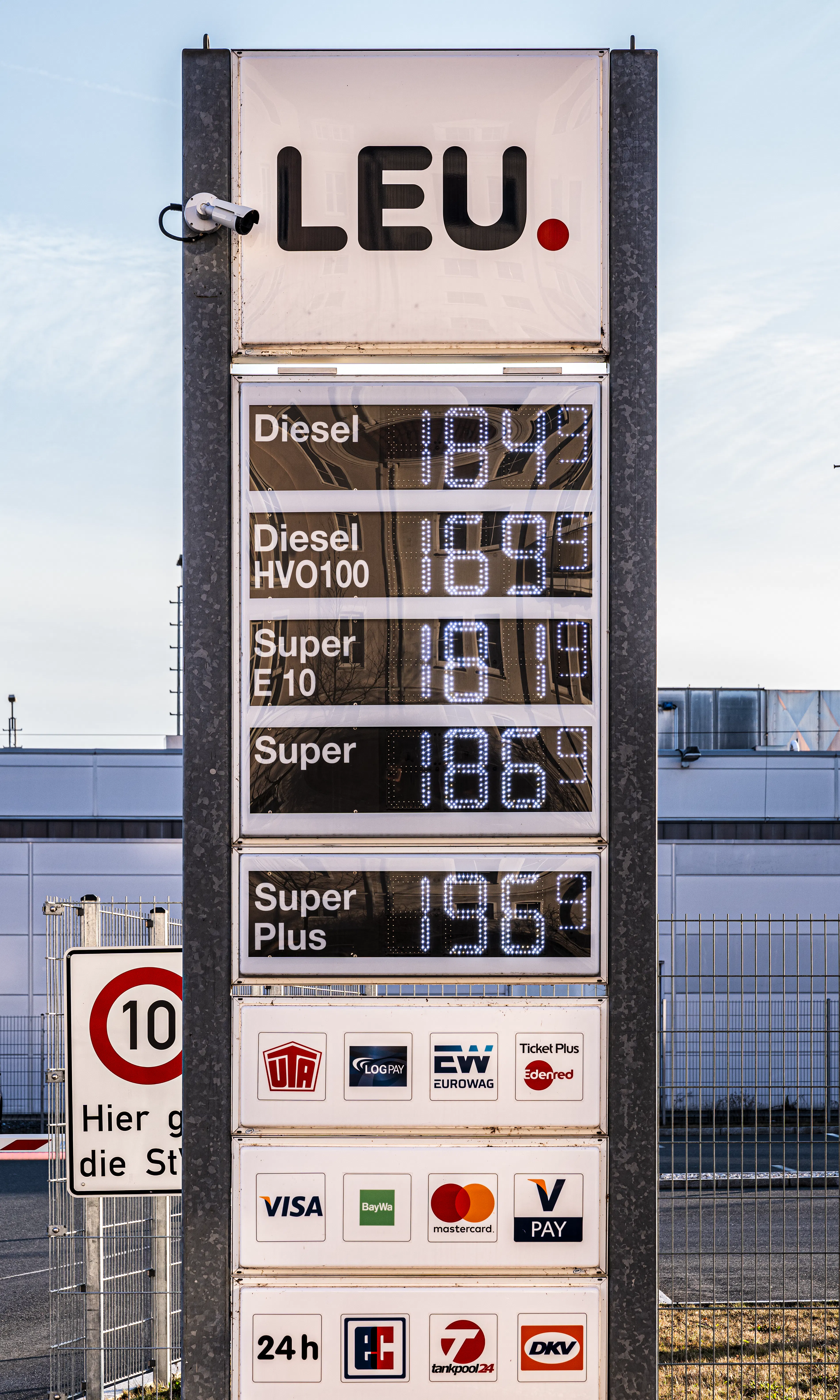
For the rest of the world, the cost showed up at the pump and in the ledger. Vietnam saw fuel shortages and panic buying. Britain’s growth forecast was cut. India watched its import bill balloon. America drew its strategic oil reserves down to their lowest levels since 1984.
Yet the strategy arguably hit Tehran the hardest. Iran’s own currency collapsed past one and a half million rial to the dollar. Inflation raced toward triple digits. The war destroyed well over a million Iranian jobs. Ordinary Tehran residents describe grocery lists shrinking week by week, fruit disappearing first, then dairy, then everything but the barest essentials. Iranian officials privately admit their greatest fear is no longer Israeli jets but meeting payroll.
Iran took the world’s oil supply hostage because it calculated that global patience would break before Iranian patience did. The gamble appears to have paid off, but the blockade it triggered turned inward and is strangling the very economy it depends on to survive.
Where This Leaves Us
As I write, Hormuz sits in a grinding stalemate rather than a resolved conflict. Traffic has partly recovered but remains far below normal. A June ceasefire collapsed within weeks. The blockade eases and tightens with the pulse of diplomacy. President Trump insists America holds the advantage in the Strait, and by most measures of firepower, he is right. Yet Iran still manages to land an occasional strike on a tanker, a reminder that even a badly wounded regime can make a narrow channel very hard for anyone to fully secure.
Neither side can sustain this forever, but they are not burning the same fuel. America’s cost is measured in inflation and political patience before November’s elections. Iran’s cost is measured in a currency in freefall and a population going hungry.
Helen’s face pulled the Greeks into ten years at Troy over a woman they could never fully possess. The Strait of Hormuz has pulled two of the world’s strongest powers into a war over 21 miles of water that neither of them owns and neither can afford to lose. The Iranian regime gambled that the world would bend to a chokepoint before its own people broke. And tragically, as always, its own people are left to suffer the terrible consequences.
Related Resources



Discover Your Purpose and God’s Heart For You
In today's divided, turbulent world, it's essential for the Church to rediscover God's heart. Our free e-book, authored by a seasoned expert with three decades of experience in Israel, delves deep into the teachings of Jesus (Yeshua) to reveal God’s principles of love and purpose. Learn how embracing these truths can bring significance and impact to your life, even amidst chaos. Subscribe now to receive your free copy and embark on a journey of transformation.