The Abraham Accords: Stronger Than Predicted
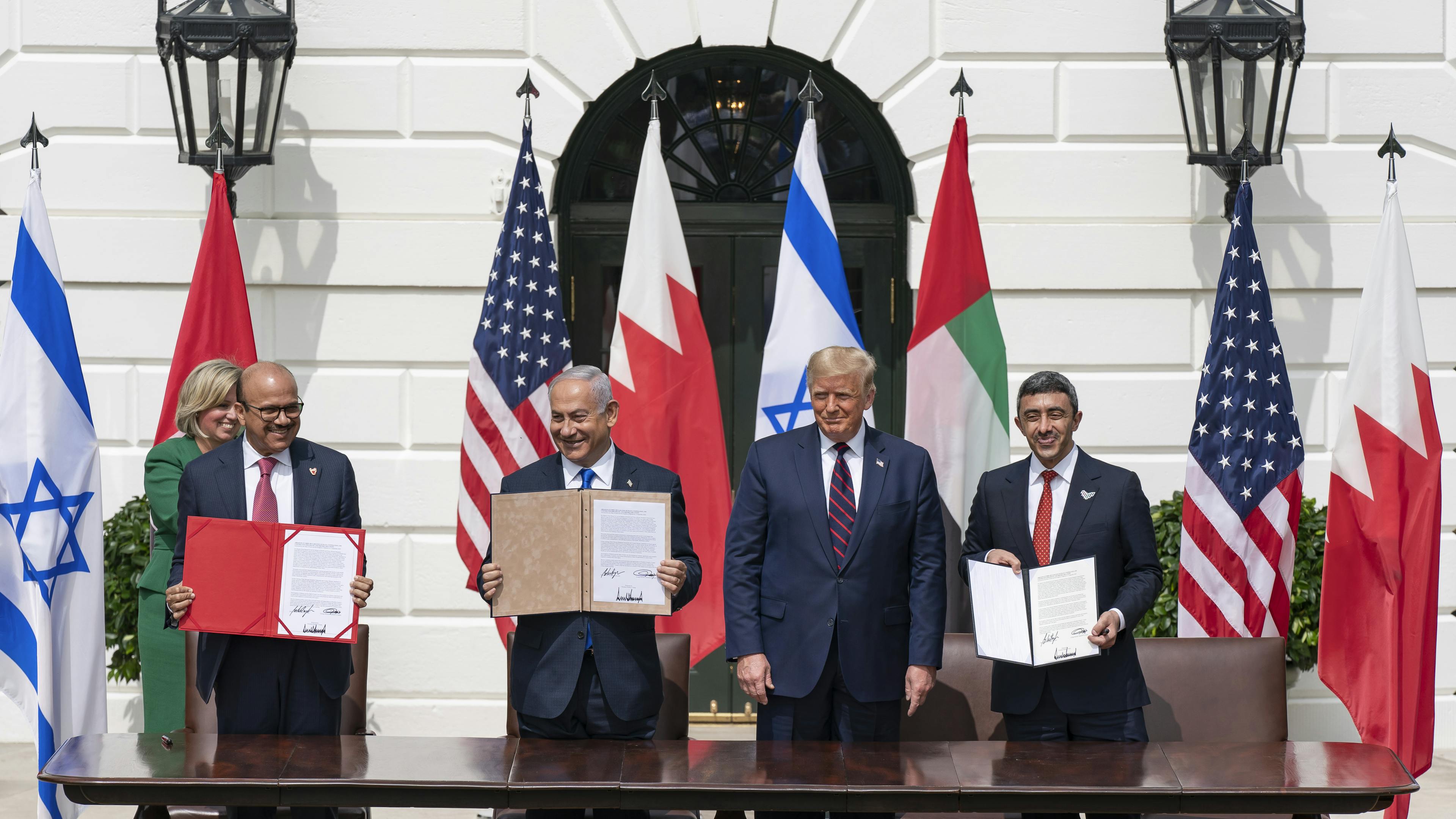
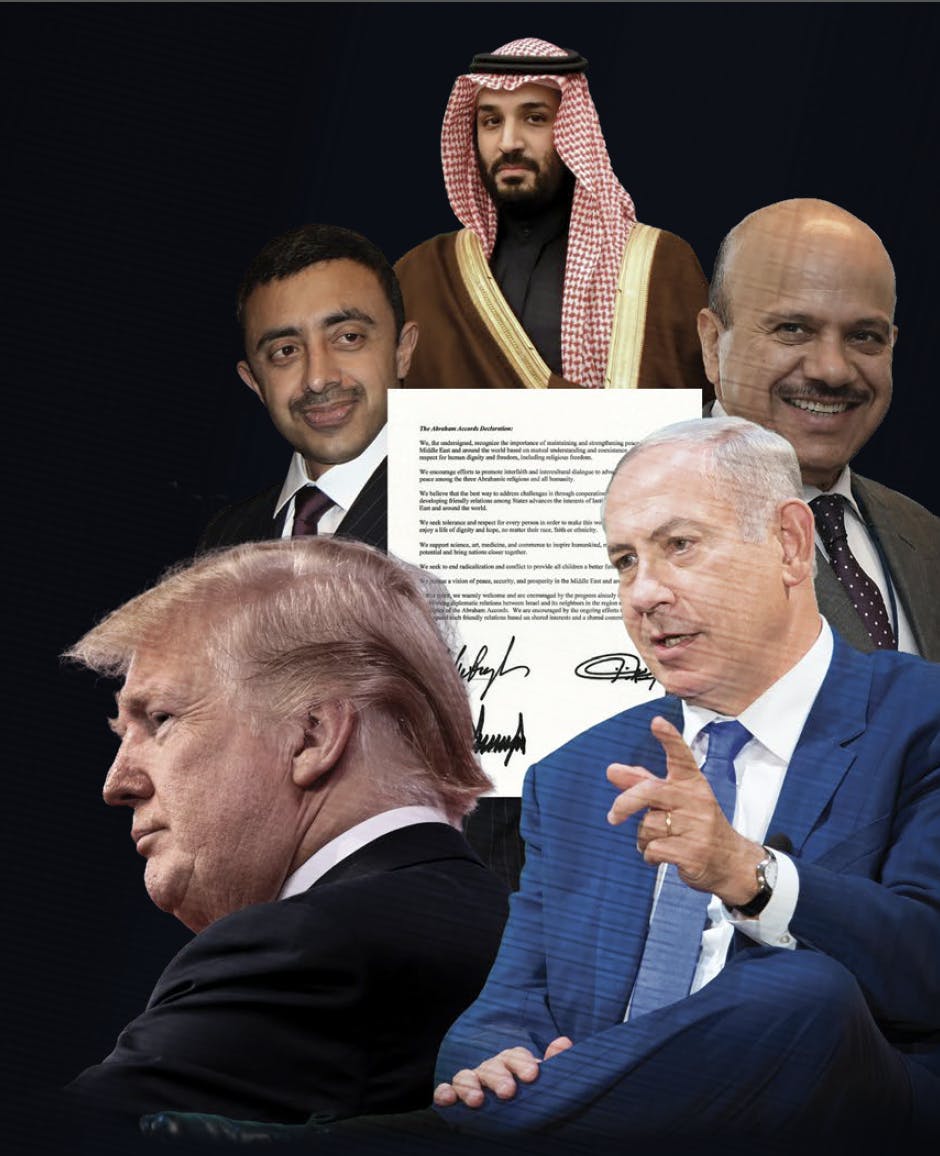
When the Abraham Accords were signed in September 2020, few expected them to survive the first serious regional earthquake. Five years later, after the deadliest war between Israel and Palestinians in decades, the collapse of the Assad regime and repeated, direct clashes between Israel and Iran, the Accords remain intact. In fact, they are on the cusp of their most significant expansion since inception.
The original signatories—the United Arab Emirates (UAE), Bahrain, Sudan and Morocco—normalized relations with Israel in rapid succession at the end of President Trump’s first term. The agreements broke a decades-old Arab consensus that recognition of Israel must wait for a resolution of the Palestinian issue. Instead, they were driven by shared concerns about Iran, economic opportunity and a mutual desire to deepen ties with Washington.
The results were immediate and measurable. Bilateral trade between Israel and the UAE rose from virtually zero in 2019 to more than US $3.1 billion in 2024. Cumulative trade with all Abraham Accords countries now exceeds US $11 billion, with the UAE accounting for roughly 75% of the total. Direct flights, joint venture funds, technology partnerships and tourism exchanges have become routine. Israeli companies have established offices in Dubai. Emirati firms have invested heavily in Israeli water, agriculture and cybersecurity sectors.
The Gaza Stress Test
The Hamas-led attack on October 7, 2023 triggered a war that has claimed thousands of Palestinian lives and displaced most of the Strip’s population. Public anger across the Arab world was intense. Bahrain recalled its ambassador from Tel Aviv for months, and Morocco suspended some military cooperation. Yet none of the participating states abrogated or suspended the Accords.
The UAE never wavered. Foreign Minister Abdullah bin Zayed declared publicly: “The UAE remains committed to the Abraham Accords and to the pursuit of peace and stability in the region.” Even in the darkest weeks of the war, Emirati and Israeli officials continued quiet security consultations. When Iran launched more than 300 missiles and drones at Israel in April and October 2024, Gulf radar data and early-warning information flowed to Israeli defenses in real time.
That resilience has been rewarded with a second Trump administration determined to enlarge the circle. Since returning to office in January 2025, President Trump has made expansion of the Accords a foreign-policy priority.
The Elusive Prize
Saudi Arabia remains the most resistant partnership Washington is determined to lock in. During Crown Prince Mohammed bin Salman’s visit to Washington in November 2025, the Saudi leader publicly told Trump: “We want to be part of the Abraham Accords, but we want also to be sure that we secure a clear path toward a two-state solution.” It was the most explicit public statement Riyadh has ever made about joining the peace framework.
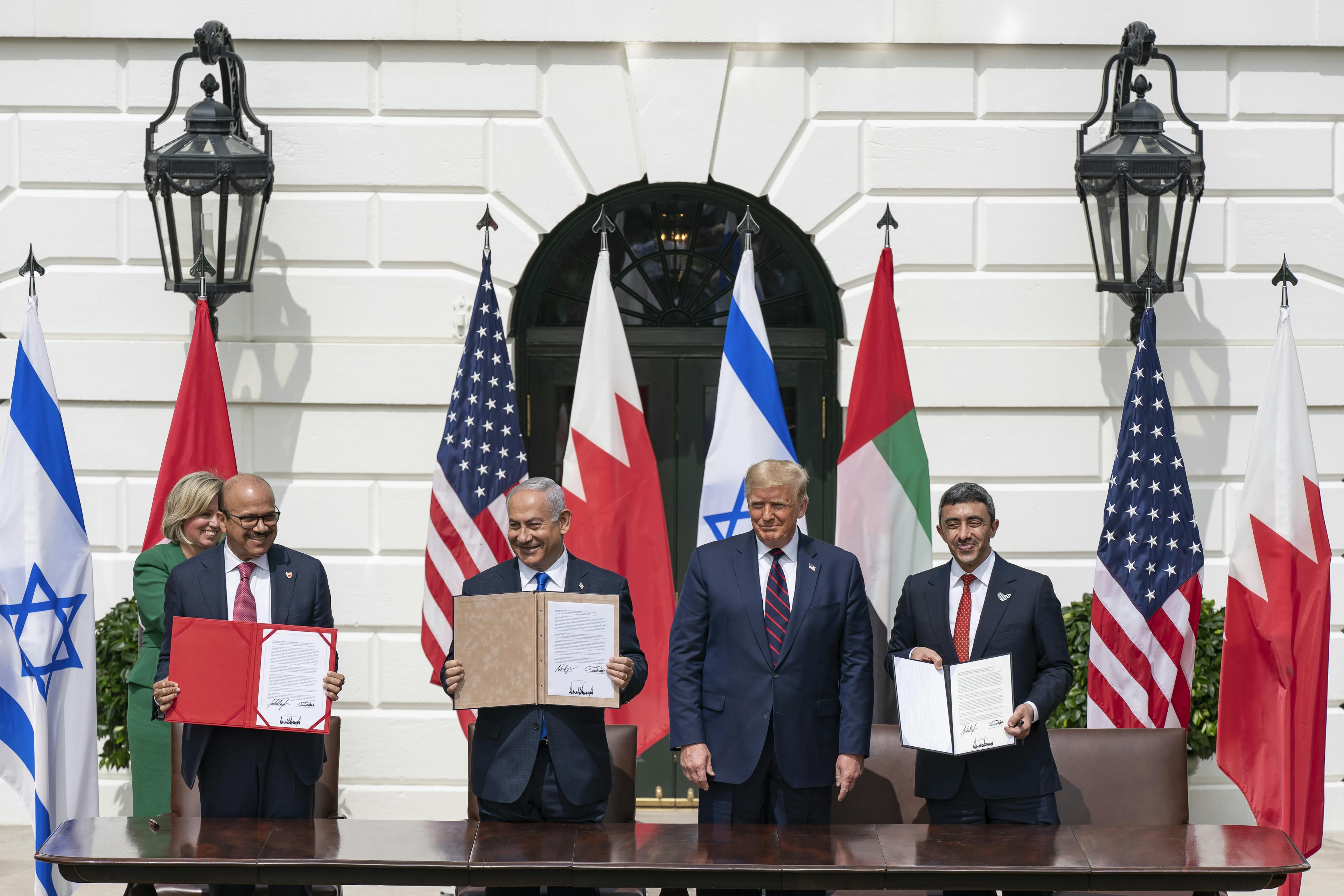
The same visit produced a sweeping US–Saudi deal: designation of Saudi Arabia as a Major Non-NATO Ally, authorization for the sale of stealth fighters and civil nuclear cooperation. Israel confirmed in November that the jets would be delivered to the Saudis in a configuration that preserves Israel’s Qualitative Military Edge, thus minus certain software and sensor capabilities present in the Israeli Air Force fleet. An Israeli government spokesperson described the outcome as “acceptable” and emphasized the broader benefit of aligning Riyadh more closely with Washington and, by extension, with Israel.
Even without formal normalization, Saudi Arabia has maintained low-profile channels of cooperation with Israel, including intelligence sharing on Iranian activities and facilitating overland trade routes for Israeli goods to reach the UAE amid Houthi disruptions in the Red Sea.
Senior Emirati officials have emerged as the Accords’ most vocal champions. In November 2025, Dr. Ali Rashid Al Nuaimi, a senior Emirati official and chairman of the UAE’s Defense and Foreign Affairs Committee, told Israel’s Knesset that the UAE is committed to actively expanding support for the Abraham Accords, promoting peace, and countering divisive extremist ideologies—not just issuing statements or attending conferences.
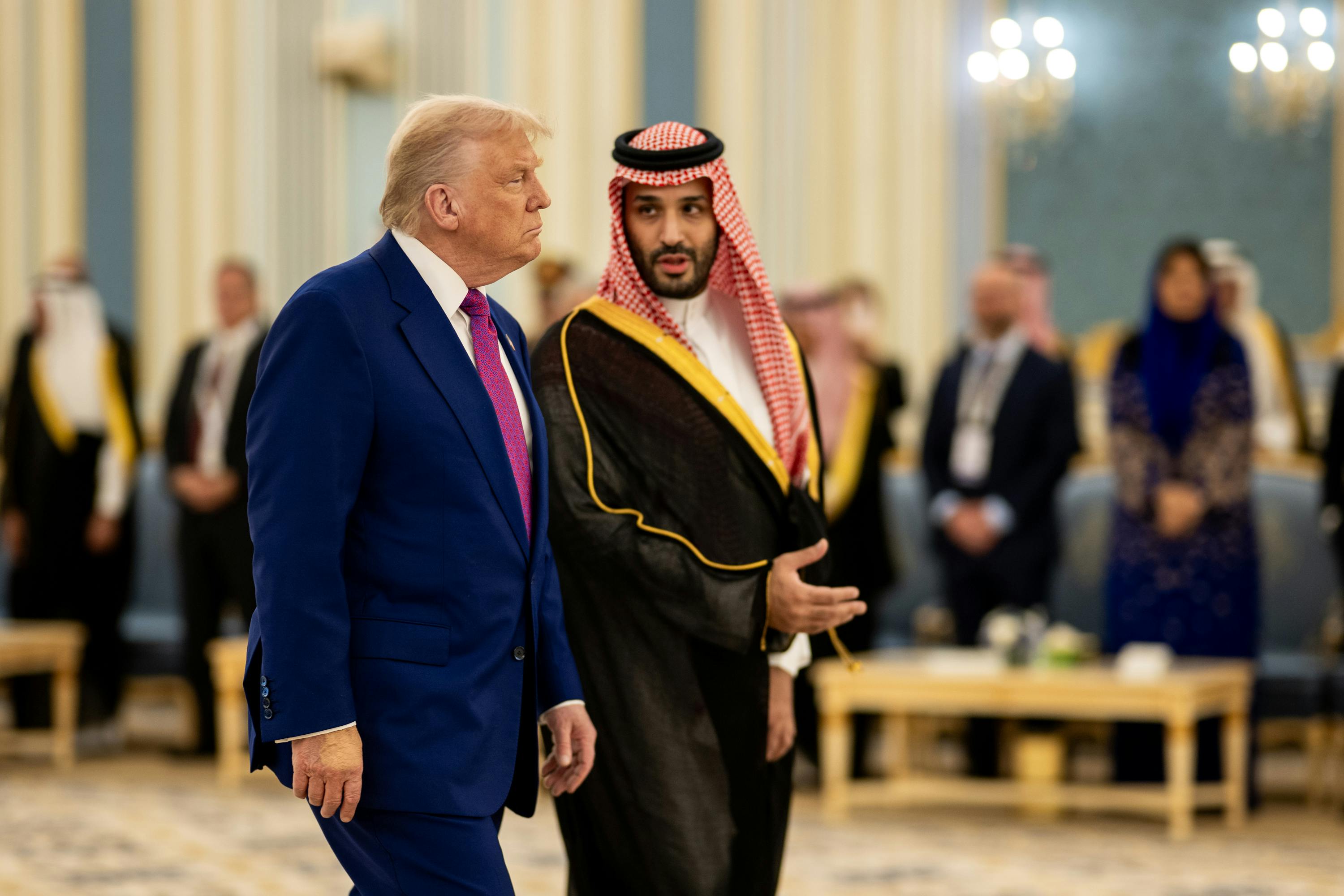
Syria, long one of Israel’s most arch foes, now represents perhaps the most dramatic potential new member. The fall of the Assad regime in December 2024 has opened an unexpected diplomatic window. President Ahmad al-Sharaa’s White House visit in November—the first by a Syrian head of state in more than two decades—produced striking optics and cautious optimism. US-brokered security guarantees for the Golan Heights and southern Syria are already on the table, red lines al-Sharaa said must be met before normalization.
Beyond the Arab world, Kazakhstan formally acceded to the Accords in November, becoming the first Central Asian state in the fold.
The Palestinian question remains the primary brake on faster expansion. Saudi Arabia has consistently linked its potential entry to visible progress toward a two-state solution. During the November press conference, Trump acknowledged the issue obliquely, saying the parties had discussed “one-state and two-state” possibilities without committing to either.
Qatar and Turkey: An Evolving Axis
Rapidly changing regional dynamics could soften Riyadh’s preconditions. Saudi Arabia’s longstanding antipathy toward the Muslim Brotherhood has intensified amid perceptions of a growing “axis” led by Qatar and Turkey, both key backers of the Islamist movement. The 2017–2021 Gulf blockade, spearheaded by Riyadh against Doha, was aimed at curbing Qatar's support for the Brotherhood, Hamas and political Islam. Turkey’s alignment with Qatar during that crisis further strained relations, as Ankara hosted exiled Brotherhood leaders and pursued policies Riyadh viewed as destabilizing.
In this context, deeper Saudi–Israeli ties could serve as a counterweight, enhancing Riyadh’s leverage against Iran and the Doha–Ankara influence. In time, public commitments to Palestinian statehood may take a back seat to the Saudi’s security priorities, paving the way to normalization.
Toward a Broader Accord
Even with Saudi Arabia on the sidelines, the Abraham Accords have altered the geometry of the Middle East. Intelligence sharing between Israel and Arab states, joint military exercises and commercial ties continued without interruption throughout the Gaza war. Saudi accession could generate an additional US $15–20 billion in annual Israel–Arab trade within five years while cementing a de facto anti-Iran bloc that now includes the US, Israel, the UAE, Bahrain, and—informally but unmistakably—Riyadh.
Five years after their launch, the Abraham Accords have defied the widespread prediction that the first major Israeli–Palestinian flare-up would bury them. Instead, they have appeared to emerge stronger. The coming months will reveal whether the delicate path between Israeli security imperatives and Arab demands for Palestinian progress can be navigated successfully to bring Saudi Arabia—and others—into the fold.
Related Resources



Discover Your Purpose and God’s Heart For You
In today's divided, turbulent world, it's essential for the Church to rediscover God's heart. Our free e-book, authored by a seasoned expert with three decades of experience in Israel, delves deep into the teachings of Jesus (Yeshua) to reveal God’s principles of love and purpose. Learn how embracing these truths can bring significance and impact to your life, even amidst chaos. Subscribe now to receive your free copy and embark on a journey of transformation.