Iran 2.0: Reigniting the Ring of Fire
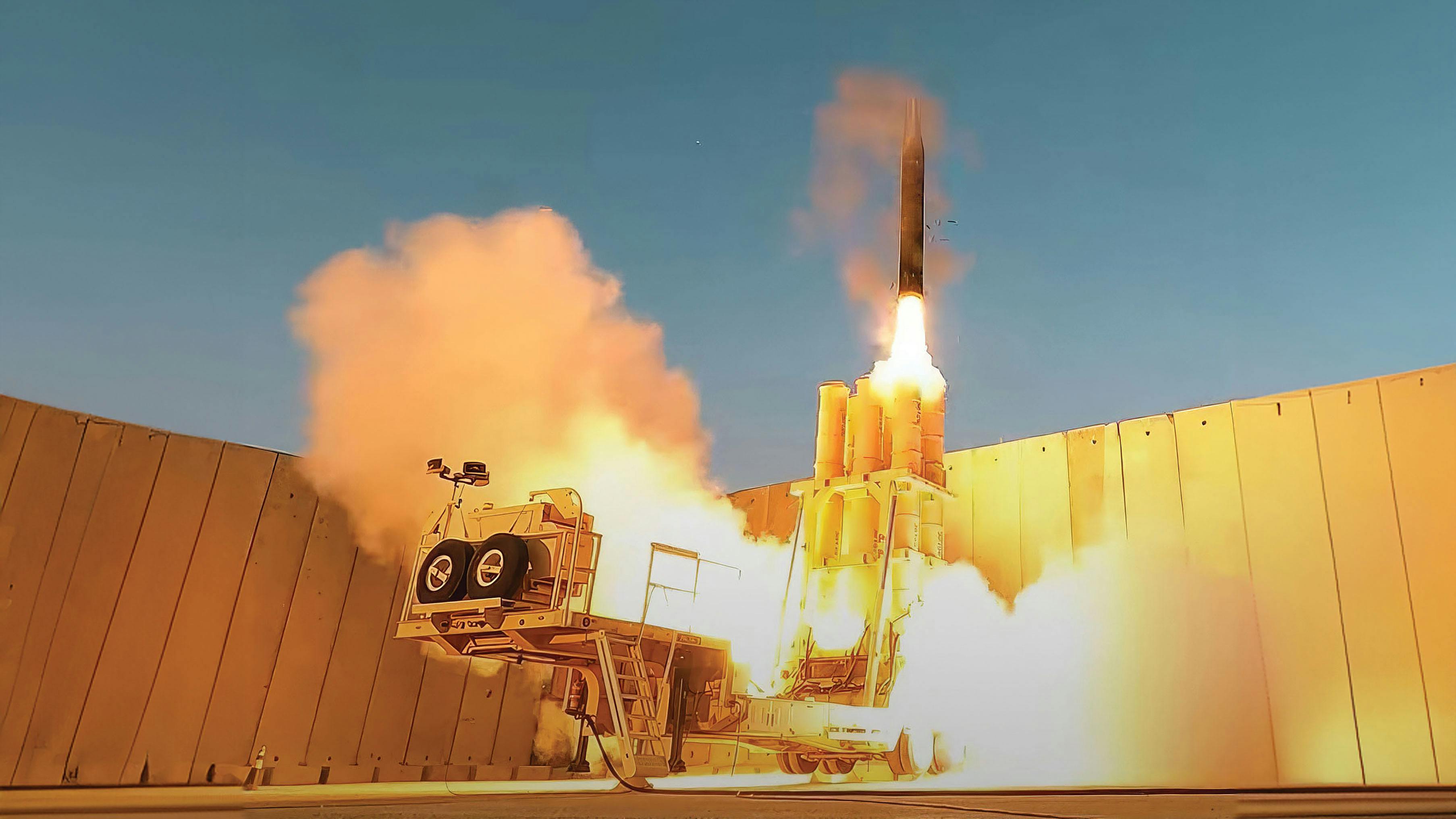
In June 2025, Israel’s surprise Operation Rising Lion—better known as the 12 Day War—caught Iran off guard. Within minutes, Israel removed key senior Iranian military commanders and nuclear scientists, shaking the core of the regime’s military and strategic leadership. Within hours, Israel had disrupted Iran’s air defense network, established supremacy over Iran’s skies, targeted major missile production hubs and severely dented the Islamic Republic’s confidence in its own security apparatus.
At that point, Tehran’s terror proxies around Israel’s borders were already reeling. After two years of war, Hamas in Gaza, Hezbollah in Lebanon and the Houthis in Yemen had lost commanders, stockpiles and the ability to operate in sync. When Israel then struck deep inside Iran, the regime simply couldn’t coordinate a unified, multi-front response.
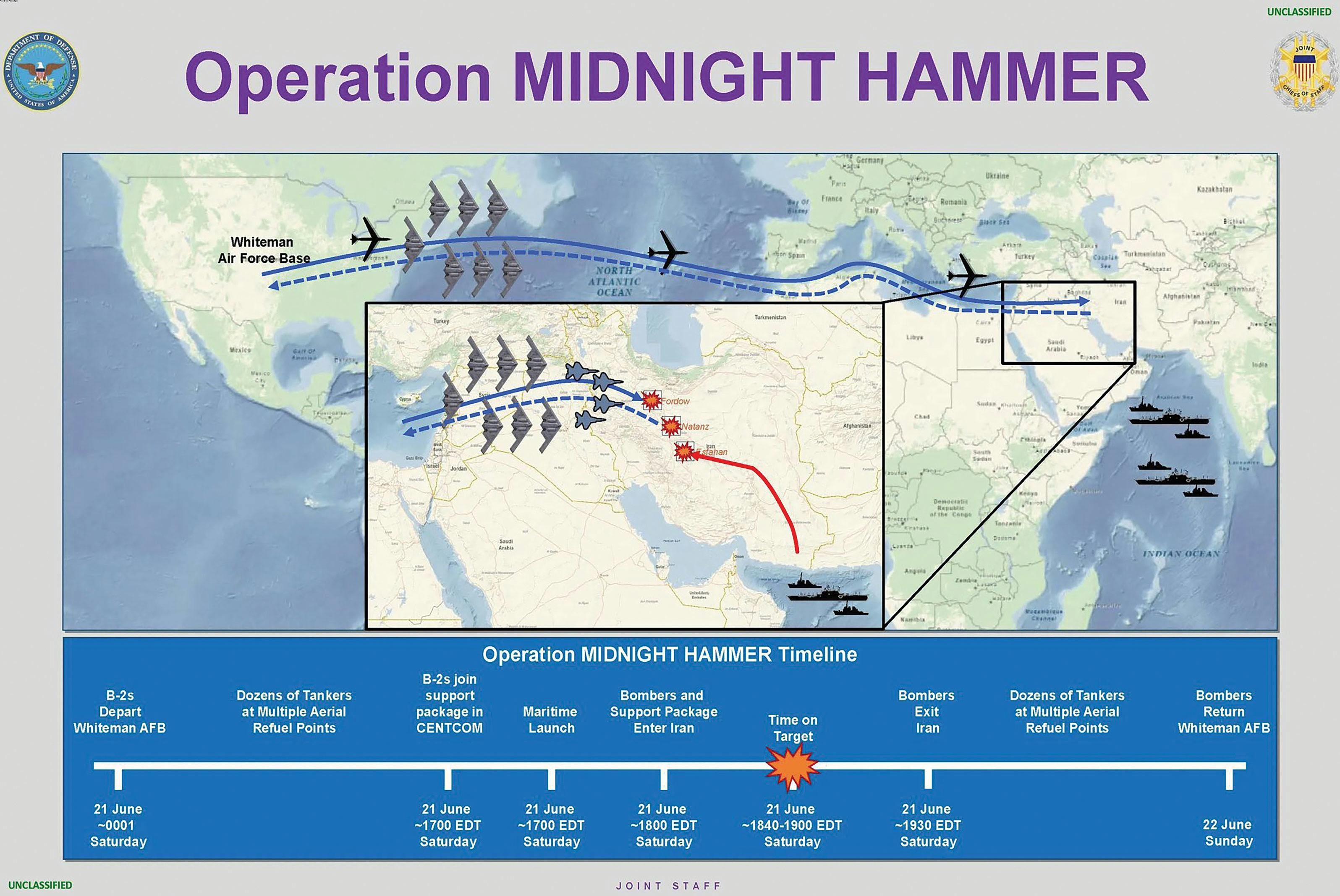
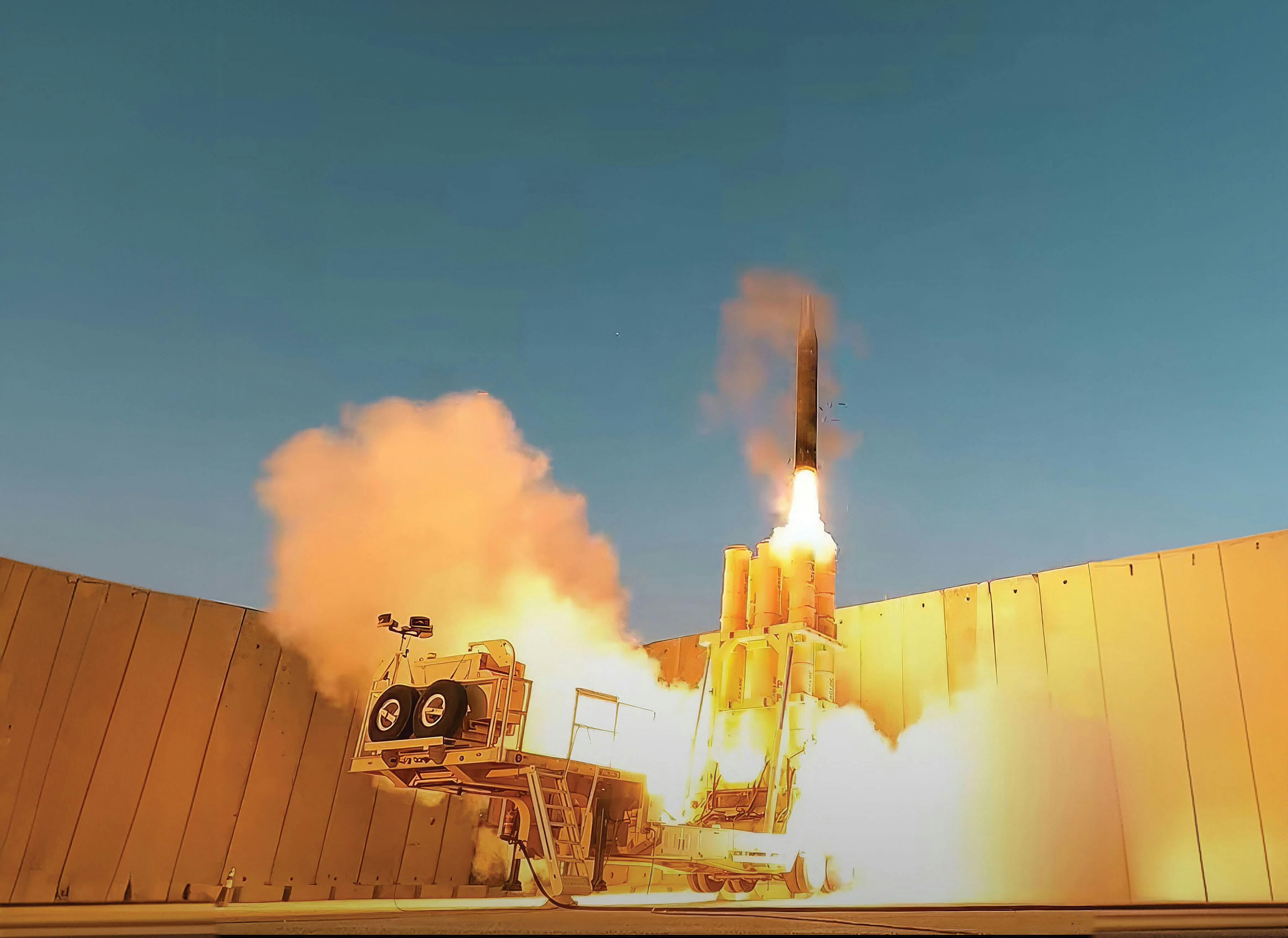
The United States’ surprise Operation Midnight Hammer on June 22 amplified the shock, as American B-2 “bunker buster” bombs hit Iran’s nuclear sites, followed by Tomahawk cruise missiles from a US submarine. Meanwhile, US and Israeli air defenses worked together to intercept the barrage of Iranian missiles aimed at Israel, achieving an 85% interception rate.
By the end of the operation, Israeli officials called Rising Lion one of the most effective military campaigns in the country’s history. A delegation of former US commanders in a November assessment described it as an “operational masterpiece.”
It seemed that Israel had set Iran back for years.
A Major Setback, but not a Surrender
It quickly became clear that while Iran had been dealt a heavy blow, it had not been defeated. On the one hand, the operation exposed just how deeply Iran’s defenses had been compromised. For the 12 days of war, Israeli aircraft maneuvered almost freely through Iranian airspace. Early-warning systems were paralyzed. Strategic facilities that had taken years to construct were destroyed within hours. The war revealed vulnerabilities the regime had long denied—and left Iran scrambling to regain its footing.
However, on the other, although Iran suffered a serious setback, the Islamic Republic is far from finished. According to Dr. Nir Boms, a Middle East expert who told Bridges for Peace that while Iran suffered a serious setback, it was far from finished. “The Iranian threat was compromised,” explained Dr. Boms, research fellow at the Moshe Dayan Center at the Tel Aviv University and at the International Center for Counter Terrorism in Hertzliya, “but I don’t think it was eliminated.” The regime remains motivated and hasn’t abandoned its agenda, Boms added, noting that Israel expects another round in the “medium- to long-distant future.”
Faced with this reality, Iran is pivoting: rebuilding its missile arsenal, restarting parts of its nuclear program and strengthening its regional terror proxies.
Missile Factories Working Constantly
Iran claims it now has more missiles than it did before the war, with Iranian defense officials boasting that production lines are running “24 hours a day.”
A CNN investigation revealed that Iran has received roughly 2,000 tons of sodium perchlorate from China, an ingredient used to make solid-fuel ballistic missiles. Western experts estimate that amount could produce several hundred missiles.
Satellite images also show Iran rebuilding damaged missile-production sites, including those responsible for solid-fuel propellant. Israeli analysts believe Iran held around 2,700 missiles before the war and has already restored at least half of that stockpile.
Moreover, Iranian leaders are speaking openly about expanding missile ranges, with senior officials confirming that the supreme leader has removed previous limits.
A Quiet Nuclear Rebuild
Despite US claims that bunker buster bombs “buried” Iran’s enriched uranium, Israeli officials told the New York Times they believe much of the stockpile was quietly relocated before the war.
Iran is also building a new underground enrichment site—nicknamed “Pickaxe Mountain”—and is barring access to international inspectors. Pressure is mounting in Iran for a nuclear weapon, as 70 parliament members recently urged approval for a deterrent nuclear arsenal, and a leading nuclear scientist said Iran could build a bomb “if ordered.”
While Iran may not be sprinting toward a weapon today, it is keeping every option open.
Reigniting the Ring of Fire
Iran’s “Ring of Fire”—its decades-old strategy of surrounding Israel with hostile militias—was badly shaken during the war. Yet none of the groups collapsed entirely. And now, each is being nursed back to life.
Hezbollah: Damaged but Recovering
Hezbollah suffered severe losses with thousands of fighters dead or wounded, senior commanders eliminated and most of its long-range missile arsenal destroyed. The group’s ability to invade northern Israel—its proudest boast—no longer exists.
But Hezbollah is rebuilding by restocking weapons, recruiting new fighters, threatening Lebanon’s government over disarmament and reactivating smuggling routes across post-war Syria. Lebanon officially voted to disarm Hezbollah by the end of 2025—which has yet to happen.
Hamas and PIJ: Reorganizing Under Iranian Guidance
Hamas refuses to disarm, in violation of the ceasefire. Iran recently appointed a new senior Quds Force operative to oversee the reconstruction of Hamas and Palestinian Islamic Jihad (PIJ) networks in Gaza, Lebanon and Syria.
Iranian efforts to expand operations in Judea and Samaria continue. Israeli officials warn that the Iranian-backed presence there remains underestimated internationally.
Houthis: Preparing for Round Two
The Houthis are poised to restart attacks on Israel and Red Sea shipping once conditions allow. Iran continues supplying advanced drones and naval capabilities, keeping the group competitive despite heavy losses.
Iraqi Militias: A New Front
Iraqi militias, embedded within Iraq’s security forces, are regaining strength after lying low during the Gaza and Lebanon conflicts. Israel and US officials fear Iraq may become one of the next major fronts in Iran’s renewed strategy.
Iran’s Push and Israel’s Response
Tehran is rushing to restore deterrence after its humiliation in the 12 Day War and regain leverage amid renewed sanctions and shifting regional alliances, particularly with the Gulf states inching closer to Israel.
Israel’s doctrine has shifted as well. The old policy of “managing” Iranian proxies is gone. In its place is a strategy of preemptive disruption: striking Hezbollah leaders and supply lines, blocking weapons transfers across Syria and Iraq; preventing Hamas from rebuilding military infrastructure; and pressing China diplomatically to stop missile-fuel shipments.
Israeli leaders view the last conflict as unfinished—and they believe Iran does too.
The Bottom Line
Iran is weaker than before the war—but not deterred.
Its proxies are damaged—but already rebuilding.
Its nuclear program is disrupted—but not abandoned.
The Ring of Fire is not the same as it was. In some ways, it may soon be more dangerous: better prepared; more desperate; and more determined.
The battle has shifted from open confrontation to a quieter struggle over reconstruction and deterrence. One reality is increasingly clear: this chapter of the conflict is not over. It has merely entered a new phase, one that will require vigilance and decisive action from Israel and its allies.
Related Resources



Discover Your Purpose and God’s Heart For You
In today's divided, turbulent world, it's essential for the Church to rediscover God's heart. Our free e-book, authored by a seasoned expert with three decades of experience in Israel, delves deep into the teachings of Jesus (Yeshua) to reveal God’s principles of love and purpose. Learn how embracing these truths can bring significance and impact to your life, even amidst chaos. Subscribe now to receive your free copy and embark on a journey of transformation.