Top Gun of the Middle East
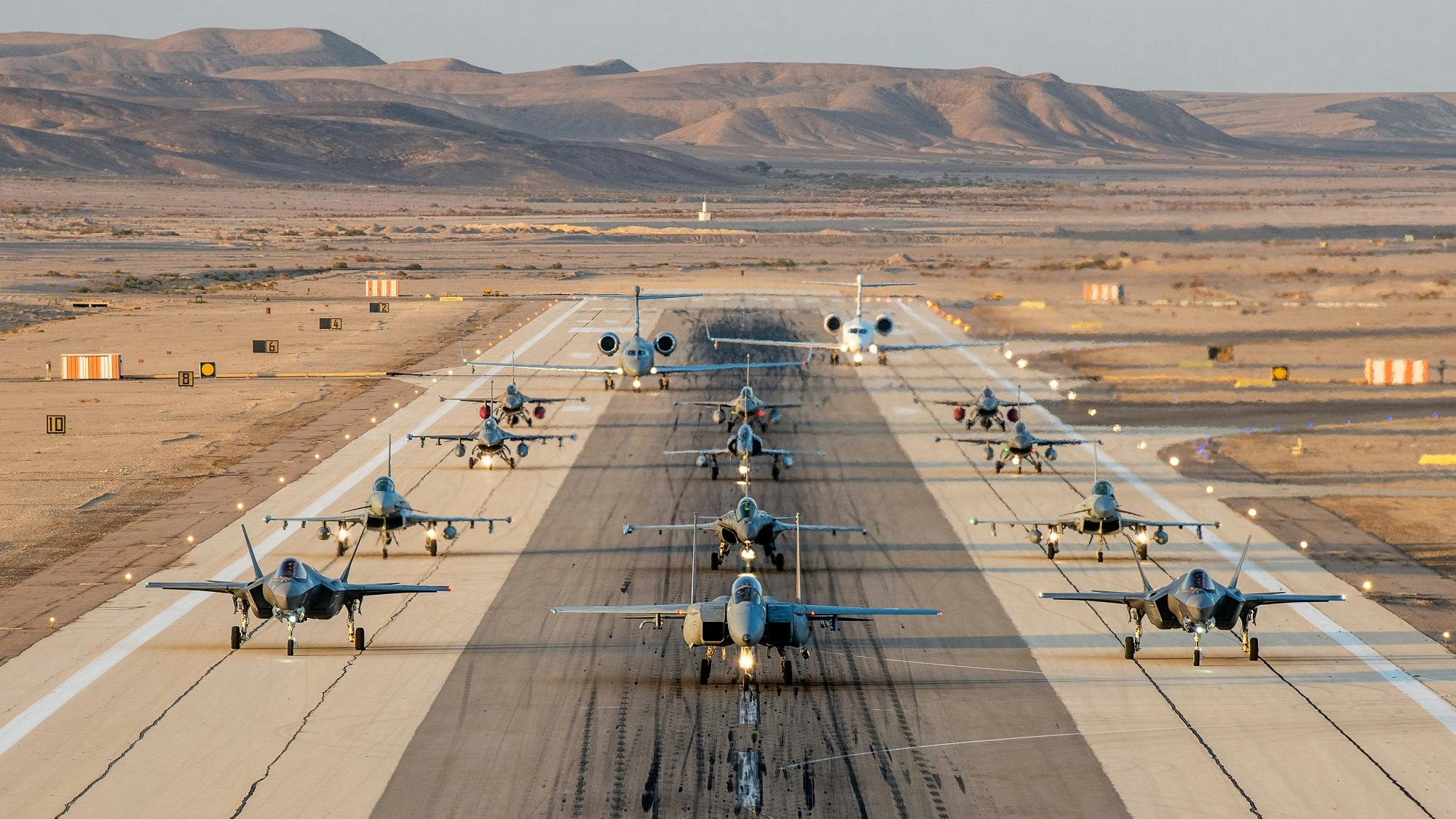
In the skies above the Negev Desert, Israeli fighter pilots execute maneuvers that would make Maverick envious. But this isn’t Hollywood; this is the Israeli Air Force (IAF). The Heyl Ha’Avir, as Israel’s flying corps is known in Hebrew, is a cutting-edge military aviation force that has maintained uncompromising air superiority for over seven decades in one of the world’s most volatile regions.
While America’s Top Gun school trains elite naval aviators, Israel’s entire fighter pilot corps operates at a level of intensity and skill that reflects an existential reality: for a nation the size of New Jersey surrounded by hostile actors and terror organizations, air dominance isn’t a luxury, it’s survival.
The Necessity of Excellence
The IAF’s reputation as a premier air force stems from strategic necessity rather than mere ambition. Since its founding in 1948, Israel has fought multiple existential wars where air superiority proved decisive. From the preemptive strikes of the 1967 Six Day War to the surgical precision demonstrated in recent operations against Iranian weapons transfers and Hamas infrastructure, the IAF has consistently served as Israel’s most critical strategic asset.
Defense experts agree that Israel’s qualitative military edge—particularly in aviation—represents the thin line between regional stability and catastrophic conflict. This isn’t nationalistic boasting. It is geopolitical reality confirmed by decades of operational success rates exceeding 95% in complex combat missions.
Homegrown Innovation
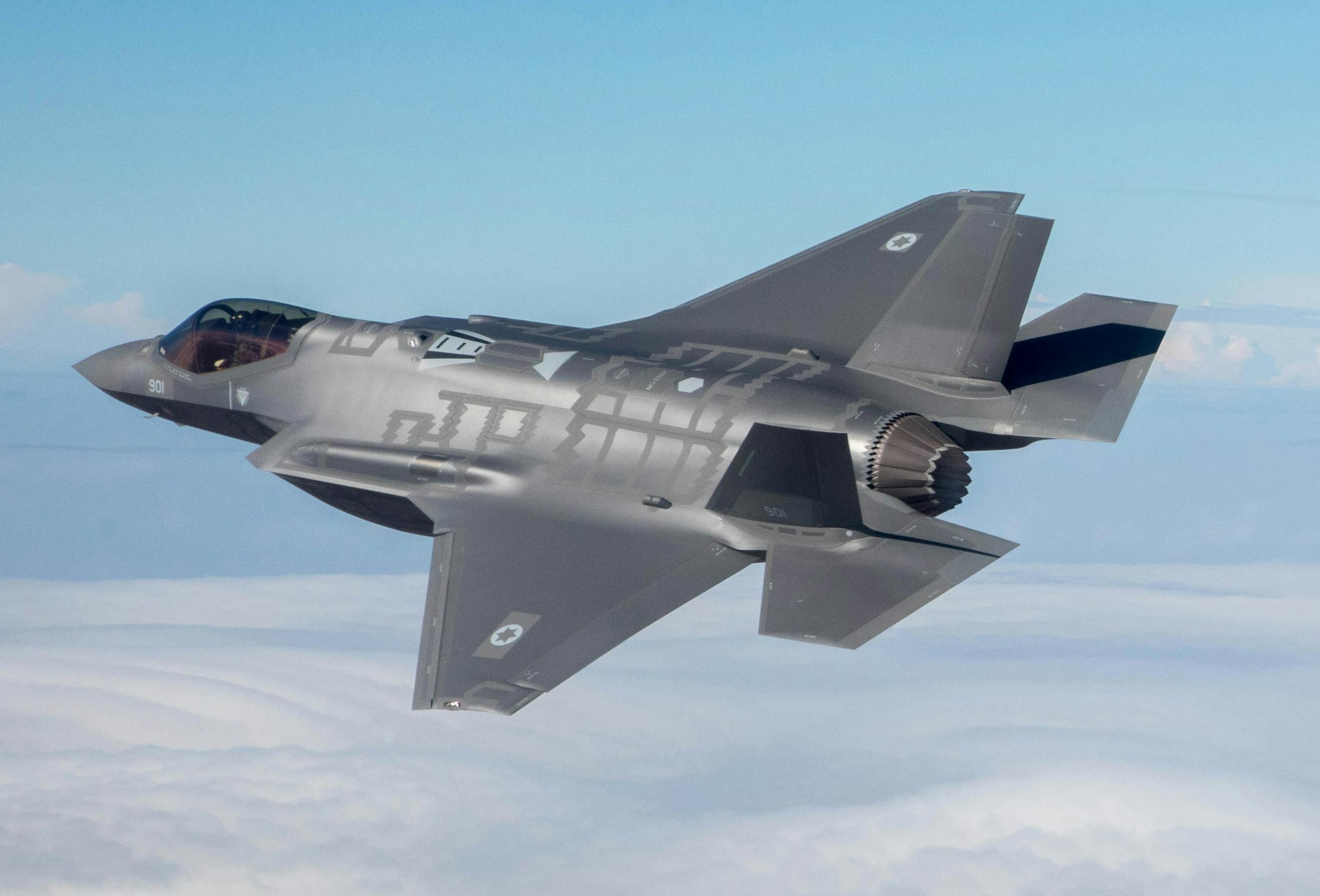
What distinguishes the IAF from peer air forces worldwide is Israel’s unique integration of homegrown defense technology with advanced foreign platforms. The F-35I Adir (Mighty)—Israel’s customized variant of America's fifth-generation stealth fighter—incorporates Israeli-developed electronic warfare systems, precision-guided munitions and sophisticated targeting pods that give Israeli pilots capabilities unavailable to any other F-35 operator globally.
This technological edge has become even more significant following US President Trump’s recent agreement to sell F-35 fighter jets to Saudi Arabia. Israeli defense officials have expressed no concern over the announcement. The reason is straightforward: Israel’s F-35I fleet features cutting-edge Israeli modifications and proprietary systems that simply aren’t available to any other nation, including Saudi Arabia. As reported by the Israeli defense establishment, these customizations ensure that Israel maintains its qualitative military edge regardless of what platforms neighboring countries acquire.
Israeli technological superiority extends to electronic warfare, where Israeli systems are recognized as world-class. During operations in Syria, IAF aircraft have consistently penetrated sophisticated Russian-made air defense networks that theoretically should deny access to fifth-generation fighters. This demonstrates Israeli mastery of electronic countermeasures and cyber warfare integration.
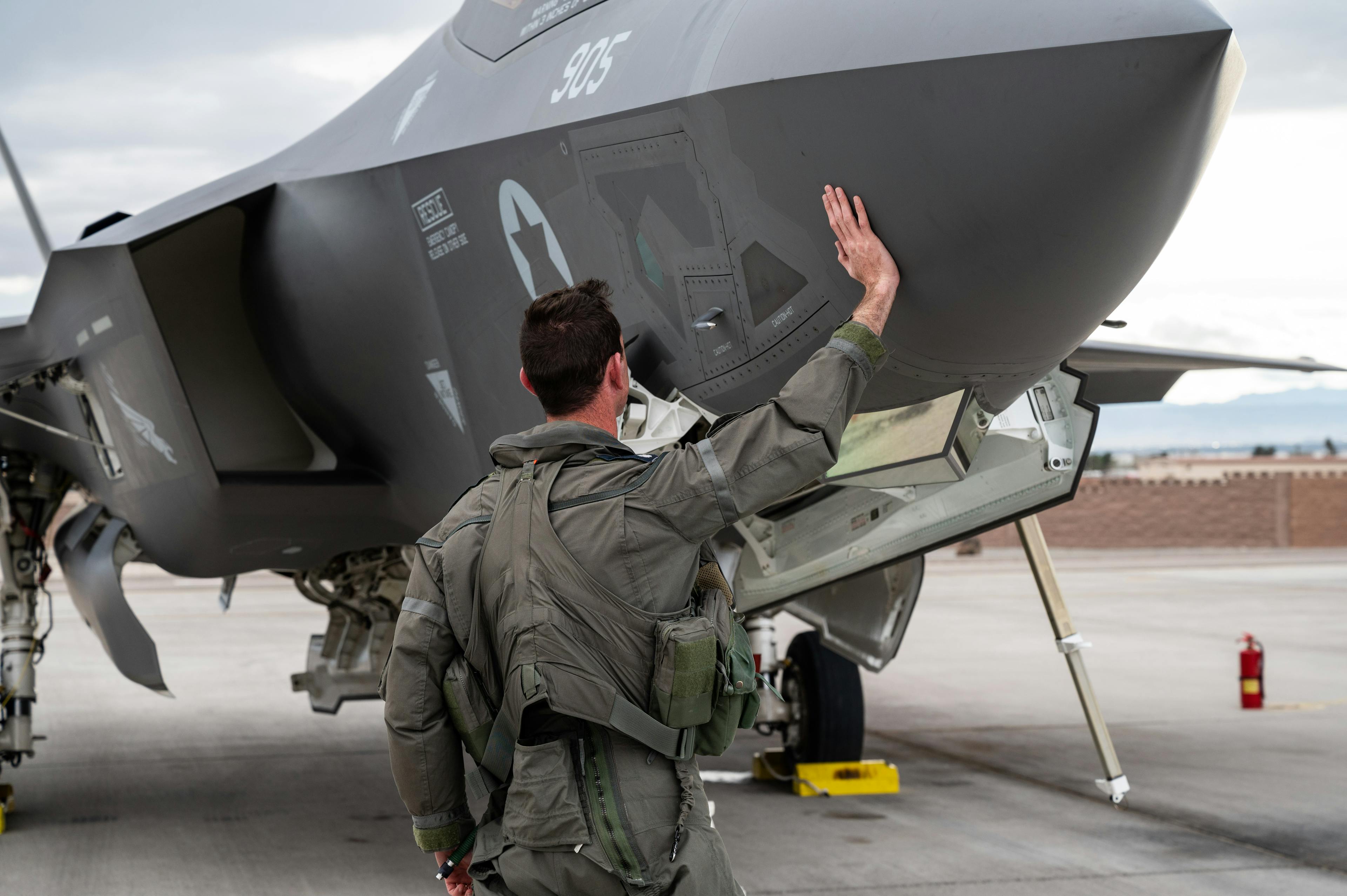
Israeli innovation extends beyond individual platforms to entire operational concepts. The IAF pioneered unmanned aerial vehicles in combat decades before other militaries. Today, Israeli drones like the Heron TP conduct persistent surveillance and strike missions impossible with manned aircraft alone.
Moreover, Israel’s Arrow and Iron Dome missile defense systems have intercepted thousands of rockets, protecting civilians while freeing the IAF for offensive operations.
The Human Element
Technology alone doesn’t win wars; skilled pilots do. The IAF’s Flight Academy at Hatzerim Air Base operates what amounts to Israel’s own Top Gun school. There’s a critical difference though: every Israeli fighter pilot graduates from this single, grueling program, ensuring uniformly elite standards across the entire force.
The selection process is notoriously demanding, with acceptance rates below 1%. Moreover, of approximately 10,000 young Israelis who apply annually, fewer than 50 complete the three-year pilot training, which amounts to a selection rate more stringent than Harvard’s undergraduate admissions.
According to the Israeli defense establishment, this intensive training emphasizes leadership, decision-making and the ethical use of force. Pilots internalize the highest standards of professionalism and moral accountability, ensuring operational precision is paired with commitment to minimize collateral damage. This is, of course, vital when operating in densely populated environments. This moral training reflects the national ethos of a small nation defending its ancient homeland.
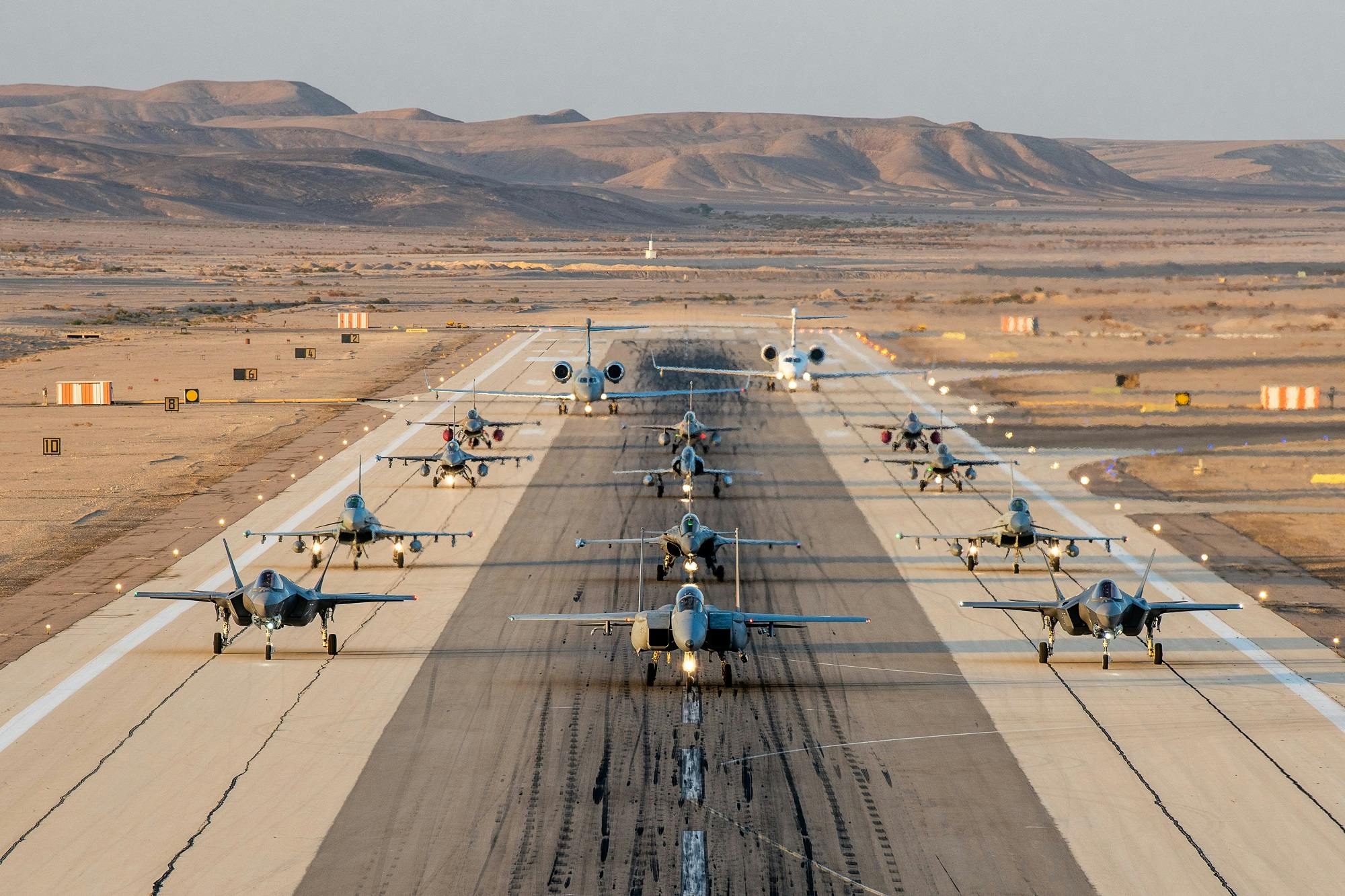
The IAF’s doctrine encourages junior officers to challenge assumptions and propose tactical innovations, a bottom-up approach uncommon in hierarchical military organizations. This intellectual agility produces tactical breakthroughs, from new close air support techniques during counterterror operations to innovative approaches for defeating advanced surface-to-air missile systems. The result: pilots capable of executing complex, multi-layered missions—from long-range strategic strikes to pinpoint counterterror operations—with precision and success rates unmatched globally.
Strategic Cooperation
Israel’s air superiority increasingly depends on strategic cooperation with allied nations, particularly the United States. The F-35 partnership represents more than an arms sale; it’s a deep technological collaboration where Israeli modifications and operational lessons inform the entire global F-35 program. American pilots train regularly with IAF counterparts, exchanging tactics and learning from Israel’s unparalleled combat experience.
Joint exercises like Blue Flag—hosted biennially at Israel’s Uvda Air Base—bring together air forces from the United States, Germany, India and other nations for realistic combat training in scenarios mirroring actual Middle Eastern threats. Defense experts note that Israel’s willingness to share hard-won combat lessons strengthens Western air power collectively, making the IAF not merely a national asset but a contributor to broader democratic security.
Emerging partnerships with Gulf Arab states following the Abraham Accords create new opportunities for regional cooperation. The Trump administration’s willingness to sell advanced platforms like the F-35 to Saudi Arabia reflects growing confidence in regional stability and shared strategic interests against Iranian aggression. Israel’s technological superiority ensures these partnerships strengthen rather than threaten Israeli security.
The Indispensable Shield
The IAF’s dominance stems from a three-pronged strategy: elite human talent forged through the world's most selective pilot training; proprietary technological systems that maintain an unassailable qualitative edge; and strategic partnerships that amplify regional security. In a neighborhood where existential threats remain constant, the Heyl Ha’Avir doesn’t merely defend borders; it serves as the ultimate deterrent, preserving stability and protecting millions of lives across the Middle East. As regional dynamics shift and new players acquire advanced platforms, Israel’s commitment to innovation ensures the gap only widens. For the Jewish state, air superiority isn’t a military preference but rather the cornerstone of survival. And mission after mission, the IAF proves why it remains the undisputed top gun of the Middle East.
Related Resources




Discover Your Purpose and God’s Heart For You
In today's divided, turbulent world, it's essential for the Church to rediscover God's heart. Our free e-book, authored by a seasoned expert with three decades of experience in Israel, delves deep into the teachings of Jesus (Yeshua) to reveal God’s principles of love and purpose. Learn how embracing these truths can bring significance and impact to your life, even amidst chaos. Subscribe now to receive your free copy and embark on a journey of transformation.