Israel's Post-war Gaza Dilemma
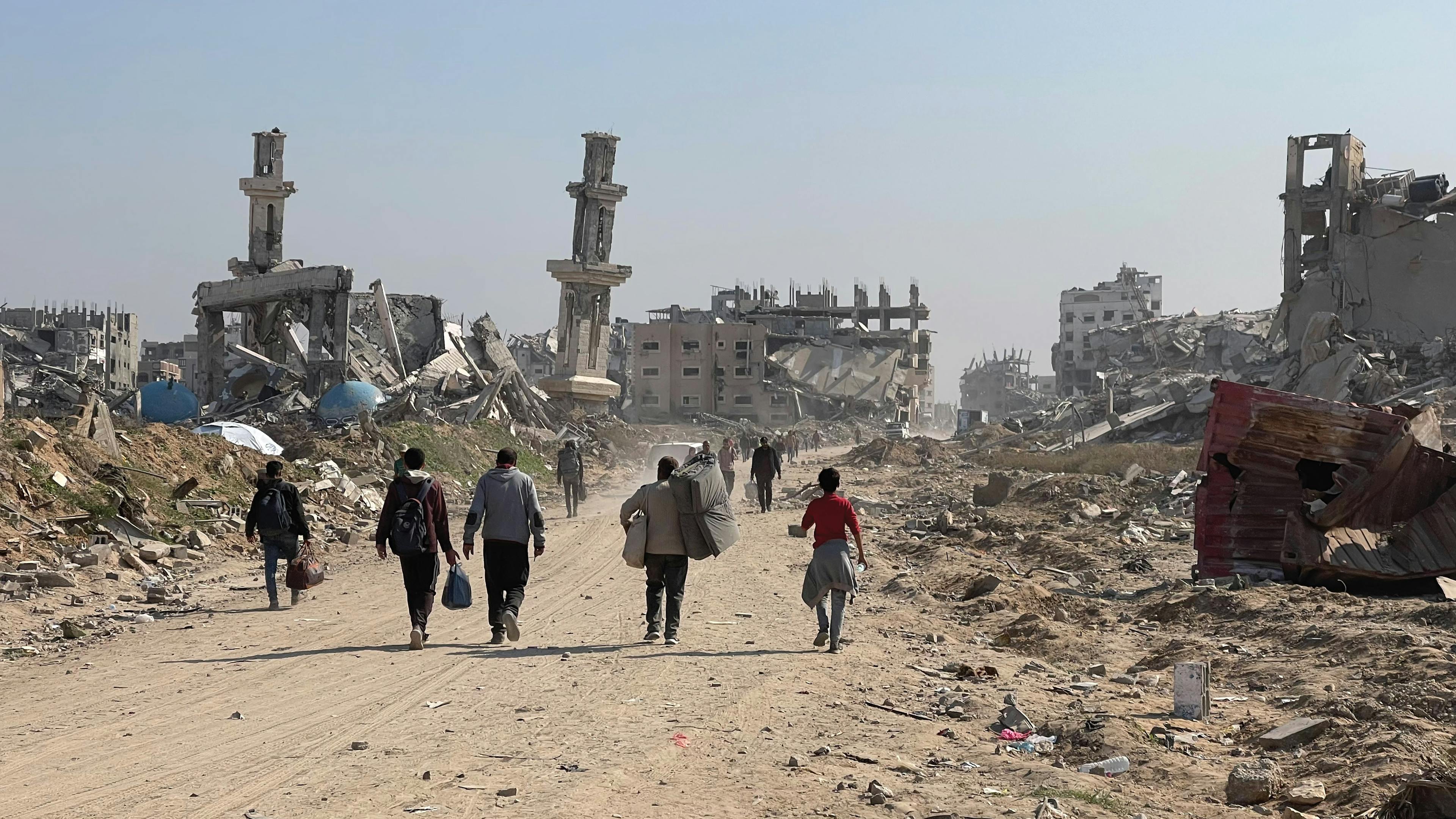
The focus in post-war Gaza is on the future as world leaders deliberate on how to rebuild effectively and prevent a security vacuum and the reemergence of Hamas. The peace plan put forth by Washington DC includes the creation of a multinational stabilization force tasked with overseeing Gaza’s transition away from Hamas rule. The stated goals are ambitious: preventing the rearmament of terrorist groups, supporting new governing structures, securing humanitarian corridors and facilitating reconstruction.
Rather than a traditional UN peacekeeping mission—which in the past has failed to maintain calm along Israeli and other borders—the force is envisioned as a temporary security framework operating alongside vetted local Palestinian bodies. Responsibilities will include border and weapons monitoring, coordination with Israeli and regional security actors and protection of humanitarian aid operations.
Israeli leadership declared from the beginning that they would not accept any force that includes countries openly aligned with Hamas or hostile to the Jewish state. As such, Prime Minister Benjamin Netanyahu and other senior leaders have repeatedly rejected Turkish or Qatari involvement, arguing that allowing nations that support Hamas to deploy forces along Israel’s border would entrench adversaries under the guise of peacekeepers.
While the United States has taken a more pragmatic view—pointing to Qatar’s role as a mediator and Turkey’s NATO status—Israel’s objections remain firm, even as both countries continue to appear in diplomatic discussions surrounding Gaza’s future.

Understanding why Israel has drawn such a firm line requires a closer look at Ankara’s and Doha’s longstanding ties to Hamas and the broader Muslim Brotherhood network.
Turkey’s Extremist Legacy
Under the leadership of President Recep Tayyip Erdoğan, Turkey has increasingly aligned itself with Islamist movements hostile to Israel. Erdoğan’s ruling Justice and Development Party (AKP) functions as the Turkish arm of the Muslim Brotherhood, and Ankara has effectively acted as a state sponsor of the movement, even allowing Brotherhood-affiliated media outlets to operate freely on Turkish soil.
Erdoğan maintains close ties to Hamas, which itself emerged from the Muslim Brotherhood. He has repeatedly defended Hamas, calling it “not a terrorist organization [but] a resistance movement.” Amid fighting between Israel and Hamas in May 2021, Ankara even floated the idea of deploying its own troops to support Hamas in Gaza. Turkey has also provided sanctuary to Hamas leaders, going so far as to offer Turkish citizenship to a dozen senior Hamas officials in 2020.
Following Hamas’s attack on October 7, 2023, Erdoğan unleashed a torrent of anti-Israel rhetoric, blaming Jerusalem for the war, accusing Jerusalem of genocide and refusing to condemn Hamas’s atrocities.
Erdoğan’s response to the war in Gaza has been more bark than bite, but the bark is loud and hostile. Reports are conflicted over whether Israeli–Turkish trade was fully severed after October 7 or whether commerce continued largely unhindered behind the scenes. Regardless, from Israel’s vantage point, Turkey’s ideological alignment with Hamas and the Muslim Brotherhood makes it fundamentally unfit to serve as a neutral security actor in Gaza.
“Turkey, led by Erdoğan, led a hostile approach against Israel,” Israeli Foreign Minister Gideon Sa’ar said in October 2025. “It is not reasonable for us to let their armed forces enter the Gaza Strip. We will not agree to that and we said it to our American friends.”
Netanyahu downplayed the influence that Turkey and Qatar will have on the Board of Peace and asserted that Israel and the US can come to agreements. Disagreements, he noted, don’t hurt ties with the Jewish state’s “greatest friend in the White House.”
Qatar’s Pro-Hamas Track Record
Despite its small size, Qatar wields outsized influence on the global stage. Nestled between Saudi Arabia and the Persian Gulf, the tiny state possesses enormous energy wealth, holding approximately 13% of the world’s natural gas reserves. Doha has used this wealth—and strategic maneuvering—to position itself as a global mediator, particularly in conflicts in Gaza.
Qatar and Israel do not maintain official diplomatic relations. Though brief formal ties existed in the 1990s following the Oslo Accords, relations since the Second Intifada have been unofficial and transactional, surfacing most visibly when Qatar mediates between Israel and Hamas.
Qatar has played a central role in mediating between Israel and Hamas during multiple rounds of fighting and has helped broker ceasefires and hostage arrangements. The emirate has also funneled enormous sums of money into Gaza—more than US $1.8 billion between 2012 and 2023—purportedly for humanitarian relief and civil servant salaries.
At the same time, Qatar has also hosted senior Hamas members, including the late political chief Ismail Haniyeh, providing the terror group’s leadership with a safe haven far from the battlefield. Doha also funds the fiercely anti-Israel Al Jazeera network, a machine churning out pro-Hamas, anti-Israel narratives with biased reporting and disinformation. In May 2024, Israel shuttered Al Jazeera’s operations in the country, citing incitement and security concerns. Notably, even the Palestinian Authority—Hamas’s rival—suspended Al Jazeera broadcasts in Palestinian territories in early 2025, accusing the network of spreading false and inflammatory content and interfering in Palestinian affairs.
Israel’s relationship with Qatar is deeply conflicted. On one hand, Doha funds Hamas, hosts its leadership, promotes Muslim Brotherhood ideology and amplifies anti-Israel narratives through its media empire. On the other, Qatar serves as an indispensable intermediary in negotiations over hostages and ceasefires, often at the urging of Washington.
Complicating matters further is Qatar’s close strategic relationship with the United States. The Al Udeid air base outside Doha is the largest US military installation in the Middle East and plays a crucial role in monitoring regional threats, including missile activity from Iran. Qatar is also one of the largest purchasers of American weapons and has invested tens of billions of dollars in the US economy, along with hundreds of millions in lobbying efforts and major financial contributions to American universities.
This positioning gives Doha considerable diplomatic leverage, ensuring it remains central to discussions about Gaza’s future. For Jerusalem, this creates a delicate tightrope: Qatar helps broker deals with Israel’s enemies while simultaneously empowering them.
Israel’s Dilemma
For Israel, the question of who polices Gaza after the war is not an abstract diplomatic exercise; it is a matter of national survival. Allowing states that legitimize, finance or shelter Hamas to don the mantle of “peacekeepers” risks turning Gaza into a staging ground for the next war rather than a step toward stability.
Related Resources



Discover Your Purpose and God’s Heart For You
In today's divided, turbulent world, it's essential for the Church to rediscover God's heart. Our free e-book, authored by a seasoned expert with three decades of experience in Israel, delves deep into the teachings of Jesus (Yeshua) to reveal God’s principles of love and purpose. Learn how embracing these truths can bring significance and impact to your life, even amidst chaos. Subscribe now to receive your free copy and embark on a journey of transformation.