Southern Lebanon’s False Liberator
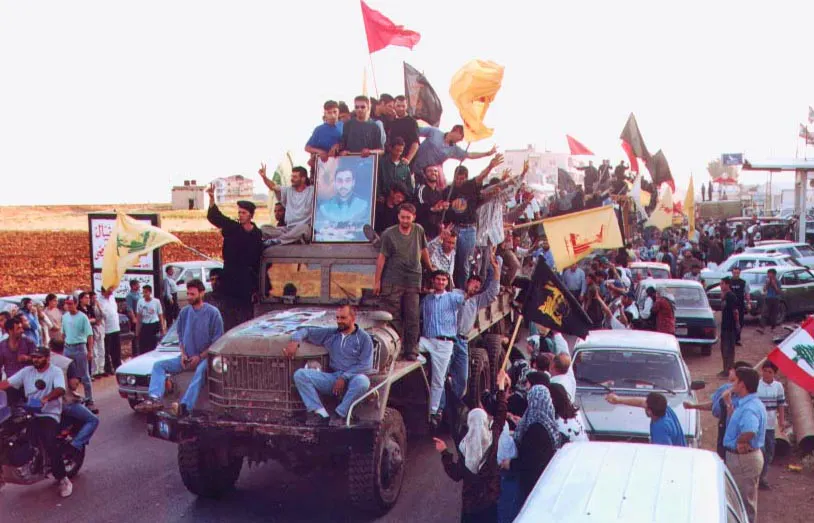
The Islamabad Memorandum of Understanding (MOU) signed by the United States and Iran in June to de-escalate the conflict raised significant concern in Israel. One of the main misgivings was the fact that, without being a party to the negotiations, Israel was instructed to halt hostilities with Hezbollah, the Iranian-backed terror army perched on its northern border with Lebanon. In short, Iranian negotiators demanded that Israel commit to a ceasefire in southern Lebanon in order to keep the Strait of Hormuz open.
While Israel desires nothing more than a lasting peace on all fronts, this is unfortunately not one of the options on the table. The Jewish state knows that without maintaining military pressure on Hezbollah, Israel will never experience quiet in its northern communities. That is why the prime minister pushed back and Israel kept firing at Hezbollah targets.
The Party of Allah
This recent scenario was nothing new in the decades-old struggle for political and military dominance in the Levant. Israel doesn’t claim any territory nor wish to control any of the populace north of its border with Lebanon; neither does the government of Lebanon make any claim to Israeli territory south of its shared—and potentially peaceful—border with Israel. What then is the problem? That is easily answered in one word: Hezbollah. Correction, make that two words: Hezbollah and Iran.
Hezbollah, translated directly from Arabic as the “Party of God,” is a Shia terror proxy army doing Iran’s bidding. Born in the early 80s with the dual mission of dominating Lebanon politically and expelling the Israeli army militarily, Hezbollah has since made significant advances—thanks to Iranian support. At the time of Hezbollah’s formation, the IDF was deployed in southern Lebanon after expelling Yasser Arafat’s Palestine Liberation Organization (PLO), which had long been terrorizing Israelis along the northern border. Thus began the four-decade saga of friction, clashes and all-out war between Hezbollah and the IDF.
Occupier or Liberator?
An understanding of this bitter struggle is best gained through a timeline that tracks Hezbollah’s role of “liberator” and “occupier” of southern Lebanon over the past forty years.
1982–1985
Israeli intervention: IDF enters southern Lebanon to dismantle PLO terror networks launching cross-border attacks on Israel. Initially welcomed by Christian, Druze and Shia populations as liberators.
Hezbollah forms: Iranian-backed Hezbollah emerges, branding itself as “Islamic resistance” to wage guerrilla warfare against Israel and project Iranian influence.

1986–1999
Israel establishes buffer zone: Alongside the Southern Lebanon Army (SLA), Israel maintains a southern security zone to protect northern Israel from cross-border rocket attacks. Local sentiment across sectarian lines turns against Israel.
Hezbollah expands: Hezbollah conducts ongoing asymmetric warfare against IDF and SLA, leveraging anti-Israel sentiment to solidify its political and military dominance in Lebanon.
2000–2005
Israel withdraws: In May 2000, in a move of political expediency, Israel unilaterally withdraws all forces to the UN-demarcated Blue Line, fulfilling UN Resolution 425 to restore the international border.
Hezbollah claims victory: Instead of disarming as mandated by the UN, Hezbollah frames the withdrawal as a military triumph and continues low-intensity cross-border attacks and abduction attempts.
2006–2007
Israel returns: After Hezbollah kills eight soldiers, abducts two and fires rocket barrages at Israel on July 12, 2006, IDF launches a major campaign to dislodge Hezbollah terror infrastructure in southern Lebanon.
Hezbollah hijacks state: Hezbollah fires nearly 4,000 rockets into Israeli population centers. Despite heavy losses, claims “divine victory.” Sparks internal backlash from non-Shia factions concerned over Hezbollah holding the country hostage.
2008–2022
Hezbollah turns arms inward: In May 2008, Hezbollah turns its weapons on its own people, seizing parts of Beirut to secure its private communication network, shifting from a regional proxy to an armed internal occupier of the Lebanese state.
Israel prevents: Israel enforces red lines through targeted air strikes to intercept Iranian weapons shipments while maintaining strong border deterrence along the Blue Line.
2023–Present
Israel liberates: Following Hezbollah’s October 8 attacks on Israel in solidarity with Hamas, Israel enters southern Lebanon to dismantle Hezbollah’s border infrastructure. Anti-Hezbollah factions see the opportunity to break Hezbollah’s chokehold on the state.
Hezbollah erodes: As Lebanon juggles ceasefire frameworks and Lebanese Armed Forces (LAF) deployment to the south, Hezbollah’s claim as “liberator” deteriorates heavily. Most Lebanese now view its armed status as the main obstacle to state sovereignty.
A New Hope for Peace
While the Islamabad MOU raised concerns in Israel, it also prompted a new form of negotiation—much to the benefit of both Lebanon and Israel. Overseen by US Secretary of State Marco Rubio, Lebanese and Israeli negotiators met in Washington to forge an historic agreement. The two sides affirmed that there is no territorial dispute between them and acknowledged their intention for peace. While the proposal includes an Israeli military withdrawal from southern Lebanon, the IDF would only disengage in stages as the SLA takes control of territories and disarms Hezbollah.
Hanin Ghaddar is a journalist, Senior Fellow at the Washington Institute’s Rubin Program on Arab Politics and a Shia woman who grew up in southern Lebanon, deeply steeped in the culture of the conflict. In a July 2 interview with the Times of Israel, Ghaddar offered expert insight into the conflict’s history and how the Lebanese people view Hezbollah. According to Ghaddar, locals saw the terror group’s true colors when it imposed strict Sharia Law, sided with a corrupt political establishment and deployed thugs against fellow citizens demonstrating for justice.
Ghaddar highlights that Hezbollah was responsible for the 2020 Beirut port explosion and that its operatives are currently threatening the judges trying the case. Consequently, when Hezbollah went to war against Israel on October 8, 2023, the terror group had very little public support. Most of the Shia population no longer believe in “the resistance” or view Hezbollah as their liberator. Instead, the public blames Hezbollah for the ongoing destruction, knowing the group provoked the conflict with Israel despite knowing full well what the Israeli response would be.
Ultimately, Ghaddar reports that the Lebanese public wants peace with Israel.
And the Liberator Is…
Lebanese citizens are encouraged by their new Maronite Christian president, Joseph Aoun, who, alongside the SLA, is showing firm resolve to disarm what remains of Hezbollah’s forces. The people long for the state to finally belong to the Lebanese people. And many are wondering if the IDF might once again serve as their liberator, just as it did during the PLO years.
Related Resources



Discover Your Purpose and God’s Heart For You
In today's divided, turbulent world, it's essential for the Church to rediscover God's heart. Our free e-book, authored by a seasoned expert with three decades of experience in Israel, delves deep into the teachings of Jesus (Yeshua) to reveal God’s principles of love and purpose. Learn how embracing these truths can bring significance and impact to your life, even amidst chaos. Subscribe now to receive your free copy and embark on a journey of transformation.