Jewish Roots of Human Rights Organizations

Wherever there has been injustice in the world, you can expect to find Jews taking the side of the underdog. The concept of tikkun olam, or “repairing the world,” is deeply rooted in Judaism. In a Chabad article “What is Tikkun Olam?” author Tzvi Freeman says it “literally means to do something with the world that will not only fix any damage, but also improve upon it...” Since Genesis, the first book of the Torah (Gen.–Deut.), clearly states that men and women are created in the image of God, it follows that human suffering is something “to be repaired.” So, it should not come as a surprise that several of today’s well-known human rights organizations were founded by Jews. What is surprising is that these organizations, while continuing to advocate for human rights, have become extremely hostile towards the State of Israel. We’ll look at two specific examples: Amnesty International and the Human Rights Watch.

Humble Beginnings
In 1961, a humble letter-writing campaign sparked by Peter Benenson’s compassion for those unjustly imprisoned in Portugal began. The spark birthed a global organization. Today, Amnesty International involves over “10 million people in over 150 countries and territories who campaign to end abuses of human rights.”
Who was Peter Benenson? Born in 1921 into a large Jewish family in London, his name at birth was Peter James Henry Solomon, which he later changed to Benenson, his mother’s family name. Although his privileged upbringing included private tutoring and a term at Eton College, he was aware of the suffering of others from a young age. When he was 16, he helped set up a relief fund for children orphaned by the Spanish Civil War and remained active in the human rights movement until his death in 2005.
In 1961, Benenson read a newspaper report about Portugal’s authoritarian and repressive government which had imprisoned and held two of its citizens without cause. In an article published by the Observer entitled “The Forgotten Prisoners,” he asked readers “to write letters showing support for all those imprisoned for their political or religious beliefs.” In order to coordinate the growing letter-writing campaign, Amnesty International was formed.
Accusations of Genocide and Apartheid
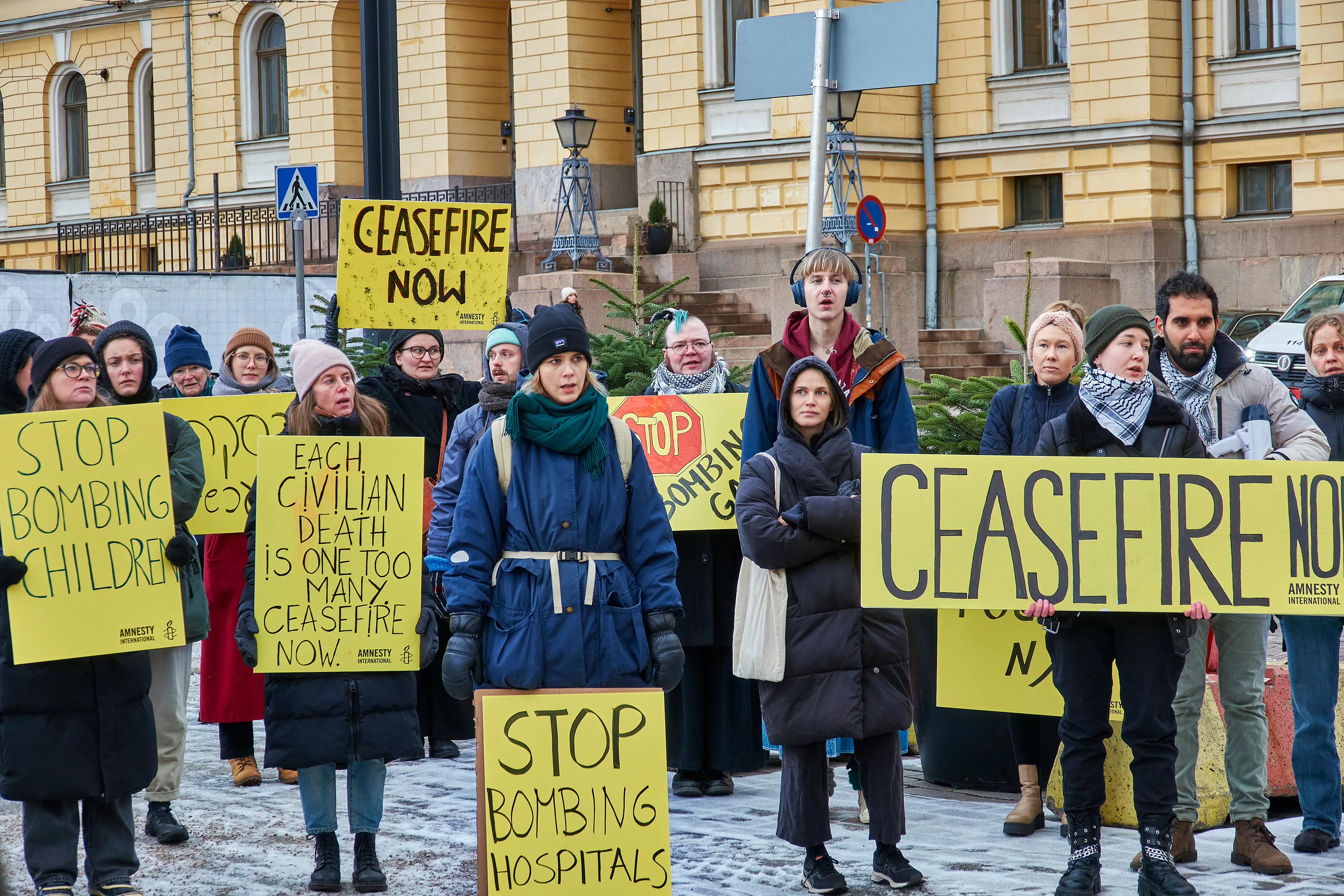
Amnesty International continues to champion the causes of those suffering under totalitarian governments is one of today’s most well-known human rights organizations. However, their position regarding countries in the Middle East is decidedly biased against the State of Israel.
The Amnesty website states: “Through our “detailed research” and determined campaigning, we help fight abuses of human rights worldwide” (emphasis added). However, their detailed research in the Middle East has produced one-sided information resulting in a determined campaign calling Israel the oppressor and members of terror groups the oppressed.
From the beginning of the war in Gaza, Amnesty was one of Israel’s harshest critics and quick to adopt unverified information regarding the situation in Gaza as truth. That stance has continued, sadly, without an end in sight.
In a recent report, Amnesty International wrote, “The international community’s tacit or explicit support for Israeli crimes, including genocide and apartheid, or their failure to act resolutely to stop them has emboldened the Israeli authorities to escalate a brutal campaign to forcibly displace Palestinians and expand its control over land in the West Bank [Judea and Samaria].” The strong, overt language, using words like “genocide” and “apartheid,” clearly indicates Amnesty’s anti-Israel bias.
From Helsinki Watch to Human Rights Watch
When Robert L. Bernstein, considered to be one of the most influential figures in the American publishing industry, visited the Soviet Union in 1973, he was appalled by the lack of freedom of expression that writers who were critical of the government experienced. Upon his return to the United States, he established the Fund for Free Expression and worked to provide a platform for dissident Soviet writers to have a voice in the West.
In 1975, 35 countries signed the Helsinki Accords, agreeing to respect certain human rights principles. Russian dissidents began a group called the Moscow Helsinki Watch to report Soviet violations of the Accord, which they had signed. On the other side of the Atlantic, in response to the reported suppression by the Soviet government, Bernstein co-founded the American Helsinki Watch in 1978 to support the work of the dissidents in Moscow, many of whom had been imprisoned.
The American Helsinki Watch, along with watch groups in the Americas, Asia and Africa, monitored and documented human rights violations in repressive societies until 1988 when these various groups merged to become the Human Rights Watch (HRW). Affectionately known as “the father of the Human Rights Watch,” Bernstein was chairman of the board until 1998, and remained active as chairman emeritus until his death in 2019 at 96 years of age.
HRW Becomes Critical of Israel
Bernstein was always a strong and vocal supporter of the State of Israel. When he saw the focus of the HRW becoming critical of Israel and its reporting “helping those who wish to turn Israel into a pariah state,” he took action. In late 2009, Bernstein published an article in the New York Times in which he argued that “the Human Rights Watch has betrayed its original mission—to pry open closed societies, advocate basic freedoms and support dissenters.” He continued by arguing that the organization was spending too much time on open societies that had the ability to monitor themselves while “brutal, closed and autocratic societies of the Arab world were being ignored.”
The article created a furor in the world of human rights, and his critics said that his love of Israel had caused him to compromise his stand on human rights. He replied: “The easiest way to dispense with an argument is by saying that somebody is either pro-Israel or pro-Palestinian. I’m just going to try and come off as pro-human rights. Simple as that.”
Keep Human Rights about Human Rights
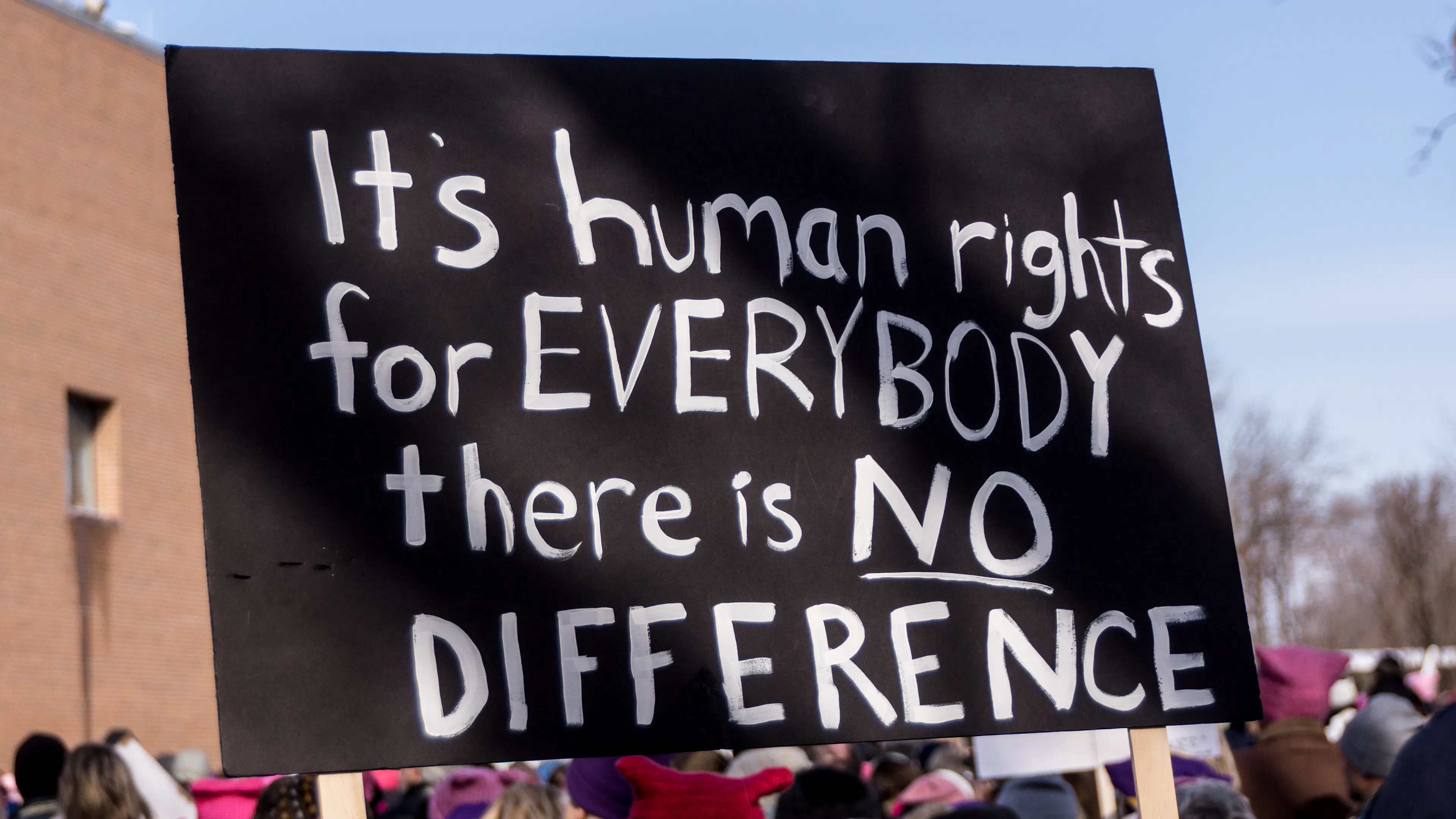
People are still suffering under totalitarian governments today. Human rights organizations like Amnesty International, the HRW and others fulfill a much-needed role in drawing our attention to that suffering. But they cross a red line when they choose biased and one-sided reporting on the world’s only Jewish state.
Is Israel perfect? Of course not. But it is a democracy where the rights of Jews, Christians and Muslims are respected. So, let’s agree with Bernstein’s goal of being pro-human rights instead of pro-Palestinian or pro-Israel.
Related Resources




Discover Your Purpose and God’s Heart For You
In today's divided, turbulent world, it's essential for the Church to rediscover God's heart. Our free e-book, authored by a seasoned expert with three decades of experience in Israel, delves deep into the teachings of Jesus (Yeshua) to reveal God’s principles of love and purpose. Learn how embracing these truths can bring significance and impact to your life, even amidst chaos. Subscribe now to receive your free copy and embark on a journey of transformation.