Jerusalem’s Ancient Lifeline Resurfaces Beneath Its Newest Neighborhood
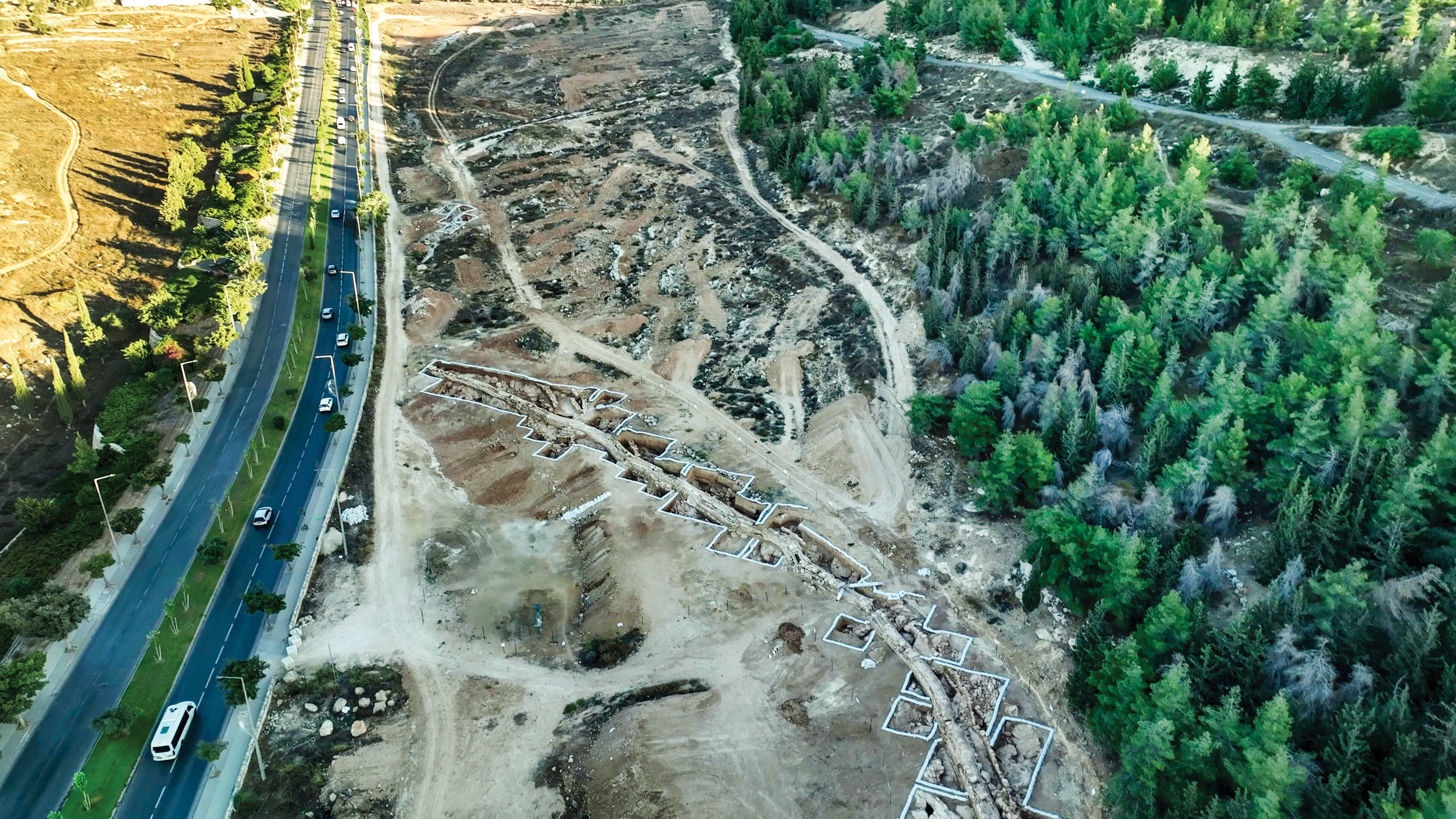
Before the first bulldozer breaks ground on any new construction project in the Promised Land, the archaeologists have already excavated and left the site. The reason is simple. The history of the Jewish people in this land is so richly entrenched in its rock and soil that you can barely put a spade in the ground without turning up evidence of Jewish life flourishing here through the ages.
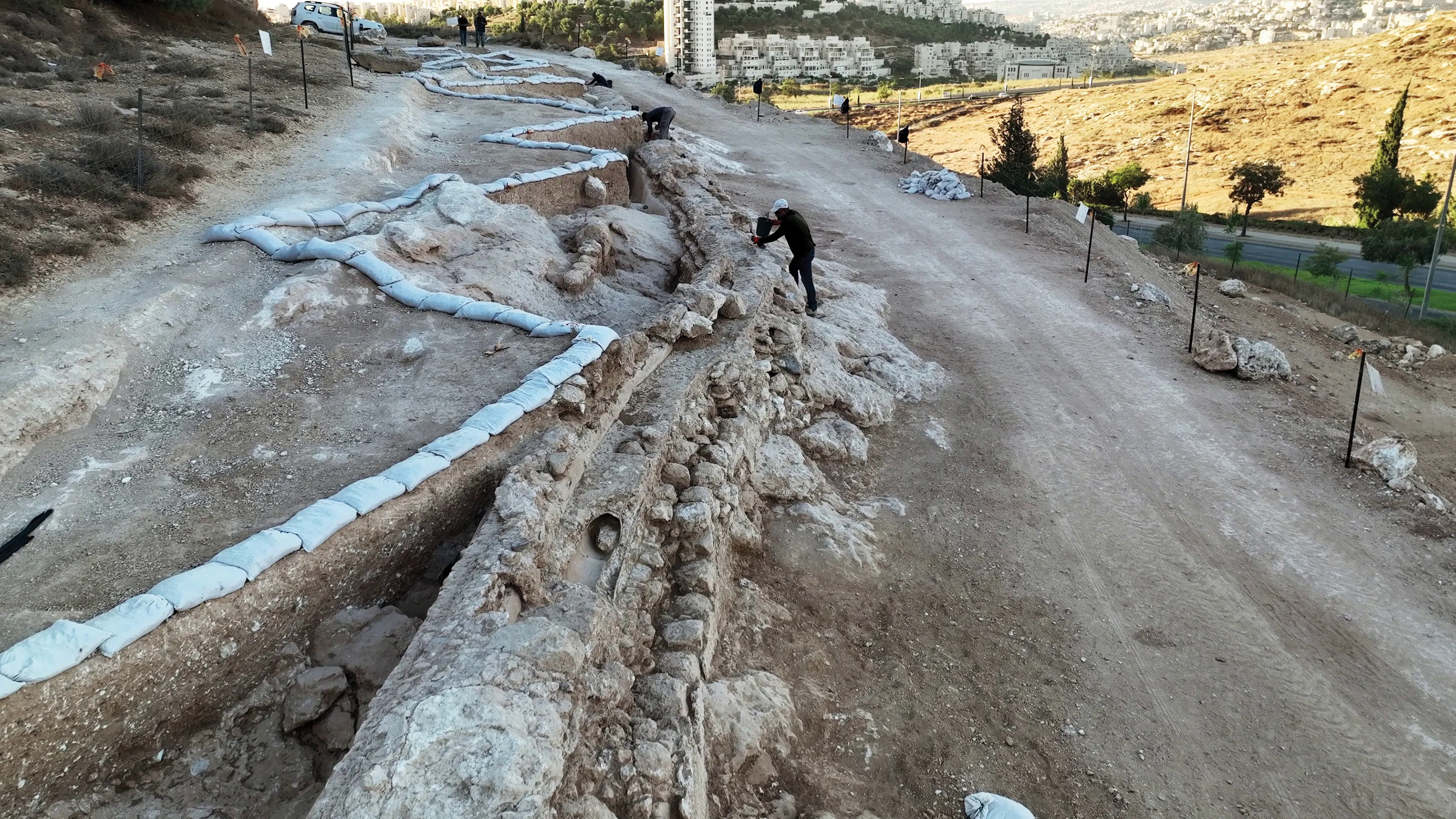
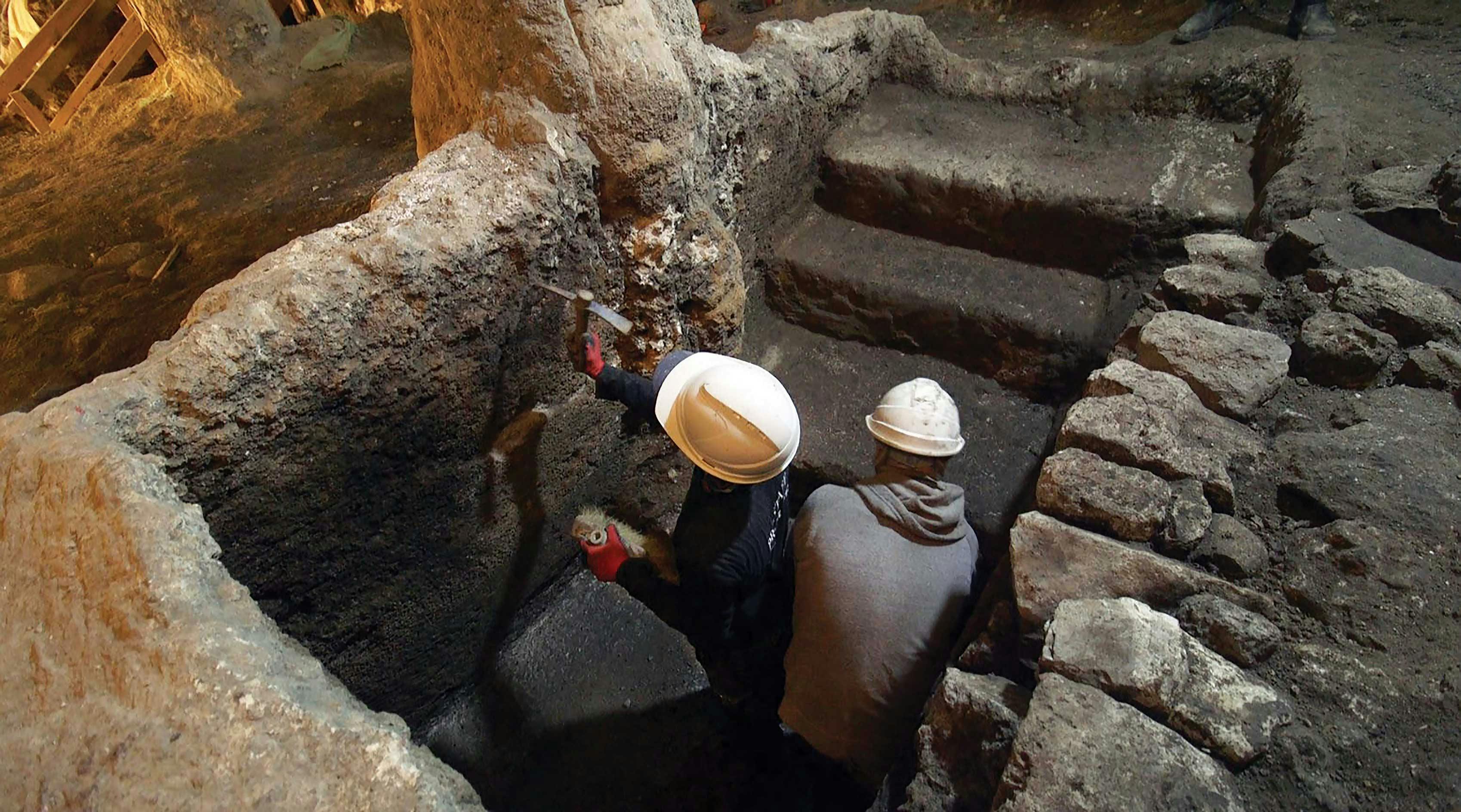
So it was on the slopes south of Kibbutz Ramat Rachel, where the Israel Land Authority plans to build Jerusalem’s newest neighborhood. And what the Israel Antiquities Authority (IAA) found there was remarkable: nearly 1,000 feet (300 m.) of Jerusalem’s Lower Aqueduct, a water line built more than 2,000 years ago to carry spring water all the way to the Temple Mount.
Rather than clearing the discovery away, the planners are building around it. The aqueduct will greet residents at the neighborhood’s main entrance.
Water for a Thirsty City
Perched high in the Judean Mountains, Jerusalem has always struggled for water. In the Second Temple period, rainfall and the Gihon Spring could not satisfy a city that swelled with pilgrims three times a year. So, around 100 BC, the Hasmonean kings—the Jewish dynasty that rose from the Maccabean revolt—are believed to have built a solution.
The Lower Aqueduct ran some 13 miles (21 km.) from Solomon’s Pools, south of Bethlehem, to the Temple Mount. No pumps, no machinery; gravity did all the work. Yet the total drop between start and finish was only about 98 feet (30 m.), so the water could fall no more than about 5 feet per mile (1 m. per km.).
“The aqueduct is an engineering marvel,” says Dr. Amit Re’em, the IAA’s Jerusalem District Archaeologist. “Even today, with all our modern technology, building such a system would require extensive planning and effort.”
It was a humble structure: two rows of stone enclosing a plastered channel. Yet according to excavation director Dr. Benyamin Storchan, it was planned so well that it remained in intermittent use until about a century ago.
Water from the hills of Bethlehem was flowing into Jerusalem when Jesus (Yeshua) stood in the Temple courts during Sukkot (Feast of Booths) and cried, “If anyone thirsts, let him come to Me and drink” (John 7:37). And it kept flowing, on and off, for nearly two millennia.
A Line Drawn True
Those ancient surveyors had to know exactly where the water would end up before a single stone was set. Misjudge the line anywhere along 13 miles (21 km.) of hillside and bedrock, and the water never reaches the city.
That is precisely the kind of precision God claims for His Word. “As the rain comes down, and the snow from heaven, and do not return there, but water the earth…so shall My word be that goes forth from My mouth; it shall not return to Me void, but it shall accomplish what I please” (Isa. 55:10–11).
Scripture does more than record what happened. It sets a course, then carries its promises across centuries of exile and silence to their destination. Some of God’s promises to Israel were spoken more than 2,500 years ago and seemed to vanish into history. But the line never lost its gradient. Today, one after another, those promises are arriving in Jerusalem.
On Rachel’s Height
Notice where this discovery came to light. Ramat Rachel—“Rachel’s Height”—overlooks the road to Bethlehem, the city where the matriarch Rachel lies buried. Jeremiah pictured her weeping as her children were carried into exile, “refusing to be comforted” (Jer. 31:15).
But God did not leave her weeping. “Refrain your voice from weeping, and your eyes from tears…there is hope in your future, says the Lord, that your children shall come back to their own border” (Jer. 31:16–17).
Now, on the very hillside that bears her name, Rachel’s children are preparing to build homes.
In the same chapter, God promised that Jerusalem would be rebuilt for Him and “shall not be plucked up or thrown down anymore forever” (Jer. 31:38, 40). A chapter earlier, He declared that “the city shall be built upon its own mound” (Jer. 30:18). It is hard to imagine a more literal picture: a Jewish neighborhood rising around a Jewish aqueduct, Jerusalem expanding along the very line its Hasmonean kings drew, on its own ancient ground.
A Billboard for the Nations
Why would God go to such lengths? Speaking of the day He would gather Israel from the nations and bring them home, God told Ezekiel, “I do not do this for your sake, O house of Israel, but for My holy name’s sake…and the nations shall know that I am the Lord” (Ezek. 36:22–23). The nations would know that He had “rebuilt the ruined places” and that what He speaks, He does (Ezek. 36:36).
Israel is God’s billboard to the nations. On this tiny strip of land, He has written in letters large enough for the whole world to read: I exist. I keep My word. What I promise, I do.
No wonder the billboard draws such fire. A world that refuses to bow its knee before God will rage against evidence that He is real and faithful (Ps. 2:1–3). But the psalmist records Heaven’s response: “He who sits in the heavens shall laugh” (Ps. 2:4).
Drinking from the Same Stream
For those of us who follow the God of Israel from among the nations, this matters deeply. If God is keeping His promises to Israel—down to a hillside named for a weeping mother—then we can trust Him with every promise He has made to us. The Word bringing Rachel’s children home is the same Word we stake our lives on.
To stand with Israel, then, is to stand where God is visibly at work and to add our “amen” to what He is writing on that billboard. It means praying for the peace of Jerusalem (Ps. 122:6), speaking truth when the nations rage and coming alongside His people as they rebuild.
Zechariah promised that Jerusalem’s streets would again be full of boys and girls playing (Zech. 8:5). And now, one day in the not-so-distant future, children not yet born will run past a 2,000-year-old water channel on their way home near Ramat Rachel.
The water stopped flowing a century ago. The promise never did.
Related Resources

Discover Your Purpose and God’s Heart For You
In today's divided, turbulent world, it's essential for the Church to rediscover God's heart. Our free e-book, authored by a seasoned expert with three decades of experience in Israel, delves deep into the teachings of Jesus (Yeshua) to reveal God’s principles of love and purpose. Learn how embracing these truths can bring significance and impact to your life, even amidst chaos. Subscribe now to receive your free copy and embark on a journey of transformation.