The Stones Cry Out: Temple-era Discovery Bears Witness to Scripture’s Truth
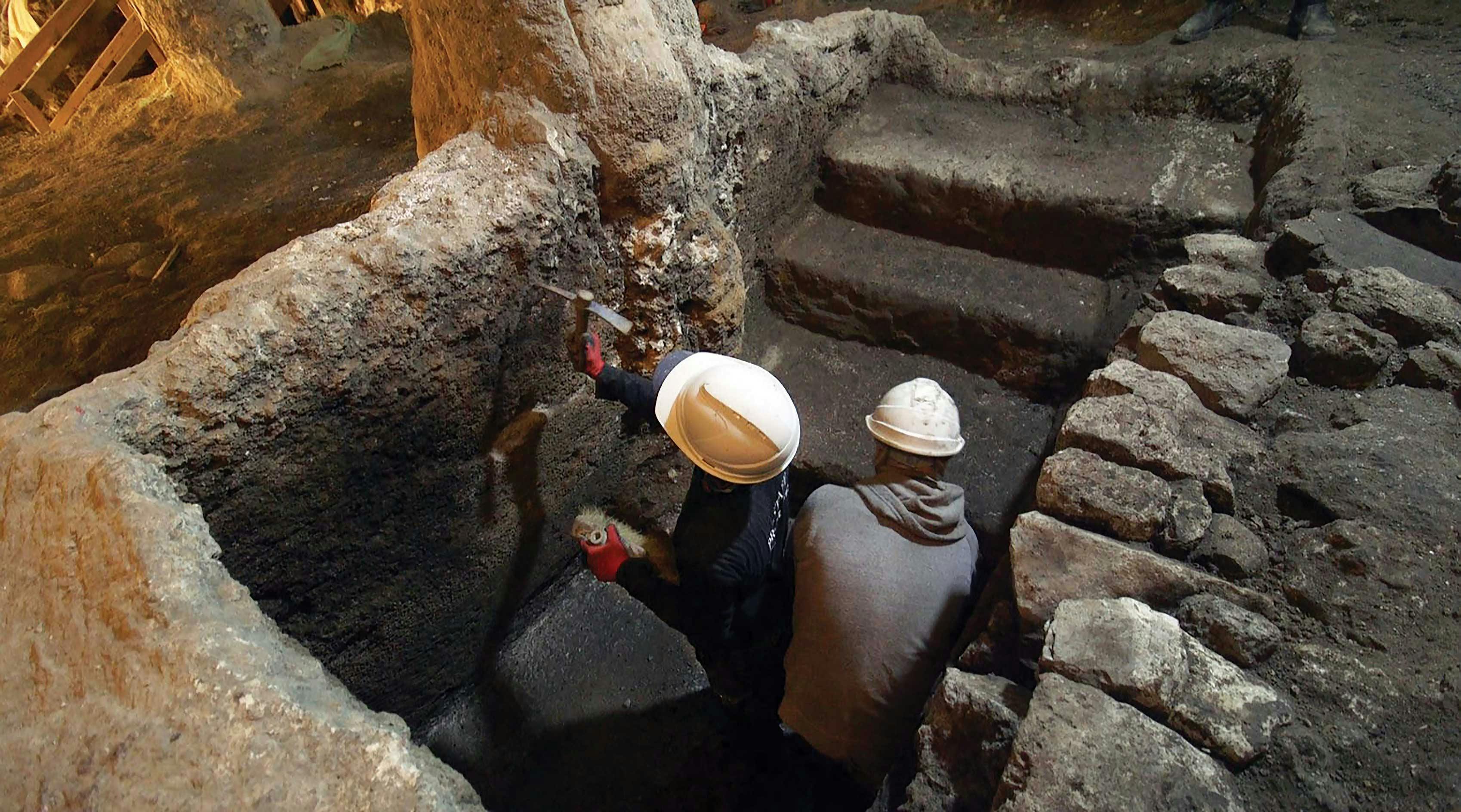
Archaeologists working beneath Jerusalem’s Western Wall Plaza have uncovered a Jewish ritual bath dating to the final days before Rome destroyed the city in AD 70. The rock-hewn mikveh—carved directly into bedrock between two main entrances to the Second Temple—still bears scorch marks from the fires that consumed Jerusalem. A thick layer of ash sealed the installation, along with pottery shards, glass fragments and numerous stone vessels abandoned as the Roman legions advanced.
The discovery was made during excavations conducted by the Israel Antiquities Authority (IAA) and the Western Wall Heritage Foundation as part of ongoing efforts to uncover Jerusalem's past. For archaeologists, the find holds immense worth, promising to cast new light on ancient culture and history. Yet for those who follow the God of Israel and cherish Scripture as His revelation, its significance reaches far beyond the dust of antiquity. It stands as another testimony that the Word of God is steadfast and sure, true, unfailing and fully worthy of the trust we place in it.
“Jerusalem Was Not a City with a Temple”
“Jerusalem was not a city with a temple, but a temple with a city,” explains excavation director Ari Levy from the IAA. The distinction matters. The First and Second Temples weren’t merely religious buildings within an urban landscape, but spoke of a community oriented entirely toward one purpose: worshiping the God of Israel at His chosen dwelling place. And the ritual bath stands as proof of that devotion.
The mikveh measures just over 10 feet (3 m.) long, 4.5 feet (1.4 m.) wide and 6 feet (1.8 m.) deep. Its builders carved it into bedrock and plastered the walls smooth. A water conduit still visible on one side once filled the pool. Stone remnants discovered inside suggest it originally stood within a room, providing privacy for bathers.
The ritual bath stood between the Great Bridge and Robinson’s Arch, two main entrances to the Temple complex. Jews living in ancient Jerusalem would have used it daily. Moreover, three times yearly—during Passover, Shavuot (Feast of Weeks) and Sukkot (Feast of Booths)—pilgrims from across the ancient world would have descended these four steps, immersing themselves in obedience to God’s command before approaching His holy mountain.
Alongside the mikveh, archaeologists uncovered numerous stone vessels. “In every Jewish site from this period you excavate, you will find two things,” Levy notes. “Lots of mikvehs and lots of stone vessels.”
The abundance stems from Jewish law. Unlike pottery or metal, stone cannot contract ritual impurity. For a people whose lives revolved around maintaining purity before God, stone vessels were necessities, not luxuries.
This focus on purity wasn’t mere legalism. It flowed from reverence. God had commanded: “Be holy, for I am holy” (Lev. 11:44). When the God of the universe chose and sanctified Jerusalem, that His “name may be there forever” and His heart there perpetually (2 Chron. 7:16), every detail of daily life took on cosmic significance. The ritual baths, the stone vessels and the careful observance of purity laws all reflected a community organized around proximity to God’s presence.
Scripture Written in Stone
In August of AD 70, Roman forces under Titus breached Jerusalem’s walls after months of siege. The Temple erupted in flames. Fire spread through the sacred courts where prophets had walked and where Jesus (Yeshua) Himself had taught, then consumed the surrounding buildings and ritual baths where worshipers had purified themselves before entering God’s presence.
For two thousand years, that destruction remained known primarily through historical texts. Now, physical evidence has emerged bearing the marks of that catastrophe: blackened walls, a layer of ash and the everyday items of Jewish life frozen in time.
For Christians, this discovery carries tremendous prophetic weight. The Gospels record Jesus regularly teaching in the Temple courts, entering through these very entrances and walking past these ritual baths. When He wept over Jerusalem, declaring “not one stone here will be left on another” (Matt. 24:2), He spoke of the destruction whose evidence now lies exposed beneath the Western Wall Plaza.
The burned layer sealing this mikveh confirms the historical accuracy of those warnings. Jesus didn’t speak in vague spiritual metaphors or allegory. He predicted specific, catastrophic events—and archaeology keeps proving He told the truth.
But the discovery testifies to more than fulfilled prophecy. It anchors our faith in concrete Jewish history. Christianity didn’t emerge from abstract philosophy. It grew from a people whose daily rhythms were shaped by Scripture, whose capital city was organized around worship, whose very dishware reflected obedience to God's commands.
When Jesus walked among His people, He entered a culture saturated in biblical law. The mikvehs, stone vessels and meticulous purity observances all pointed forward to what He came to accomplish, not to abolish the law but to fulfil it, to reveal to us the “how to.”
“Blessed are the pure in heart,” He taught on a Galilean hillside, “for they shall see God” (Matt. 5:8). His Jewish audience understood. They’d spent lifetimes pursuing holiness before the Holy One.
From Destruction to Renewal
The Western Wall Heritage Foundation’s director, Mordechai Eliav, captured the deeper meaning: “The exposure of a Second Temple period ritual bath beneath the Western Wall Plaza, with ashes from the destruction at its base, testifies like a thousand witnesses to the ability of the people of Israel to move from impurity to purity, from destruction to renewal.”
Two thousand years after fire consumed this mikveh, Jewish people still hold the Western Wall—the only remaining physical structure of the Second Temple—as the holiest spot in Jerusalem. The Temple is no more, yet faith endures, as does God’s promise that His presence will linger for all eternity (2 Chron. 7:16).
The blackened walls of this ancient bath remind us that God’s Word proves reliable, in prophecy fulfilled, in details preserved and in promises kept. They anchor our faith in concrete history, not wishful thinking. They testify that even when empires rage and fires consume, the purposes of the God who chose Jerusalem will not be thwarted.
Four stone steps descend into an ancient ritual bath beneath the spot where the First and the Second Temples once stood. Two millennia of ash and rubble couldn’t erase them. Neither could they silence their proclamation: the Scriptures are true, the God of Israel is faithful and the story that began in Jerusalem awaits its final chapter—once again, in Jerusalem.
Related Resources

Discover Your Purpose and God’s Heart For You
In today's divided, turbulent world, it's essential for the Church to rediscover God's heart. Our free e-book, authored by a seasoned expert with three decades of experience in Israel, delves deep into the teachings of Jesus (Yeshua) to reveal God’s principles of love and purpose. Learn how embracing these truths can bring significance and impact to your life, even amidst chaos. Subscribe now to receive your free copy and embark on a journey of transformation.