Uncovering Yehudiya’s 1,500-Year-Old Synagogue
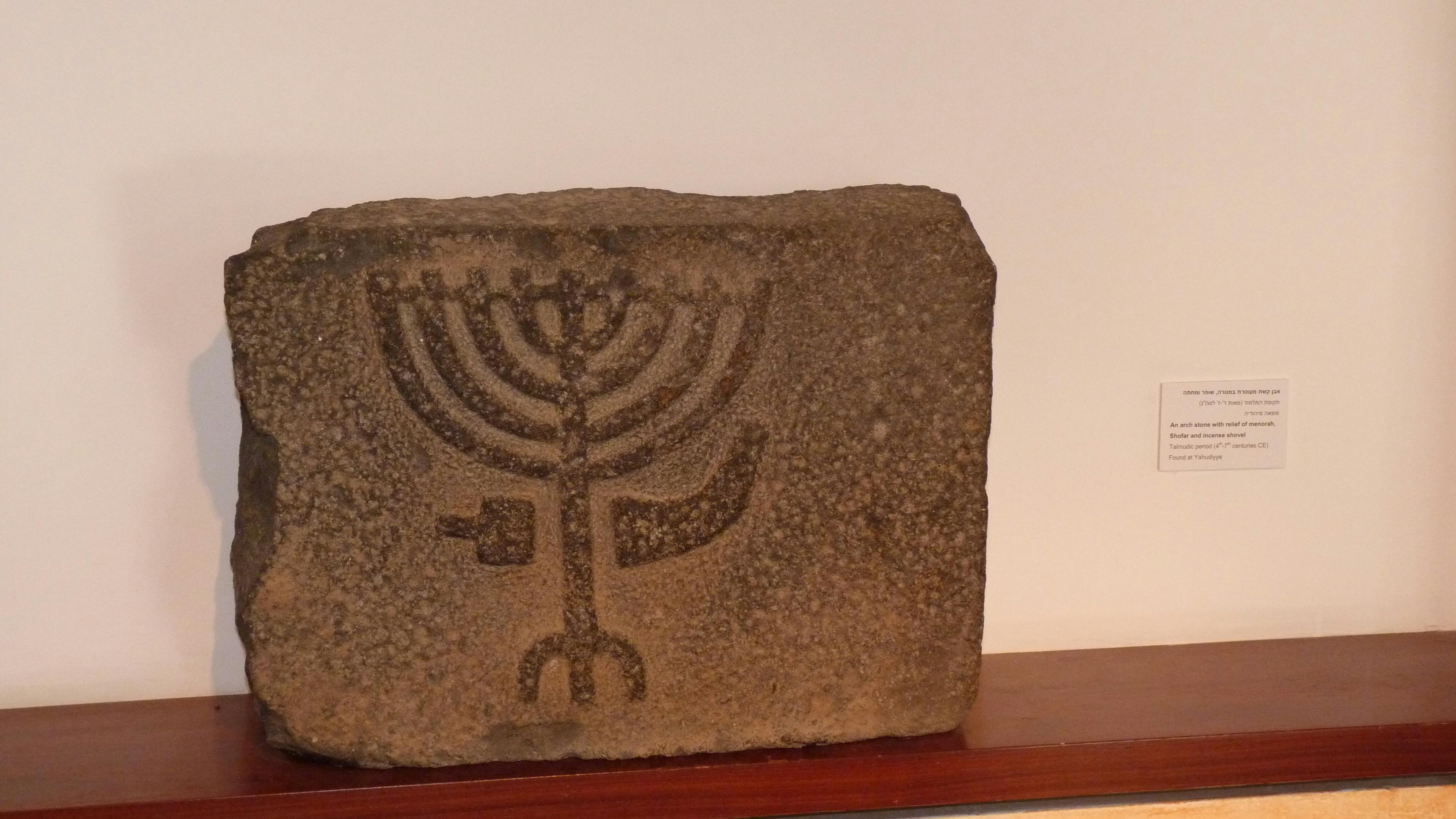
For decades, archaeologists have uncovered fragments and architectural elements from a synagogue, including a stone-engraved menorah, repurposed in the homes of the ancient village Yehudiya in the Golan Heights. The evidence suggested that a synagogue must have once stood nearby, yet its exact location remained a mystery—until now. In October, a team of Israeli archaeologists unearthed the remains of the synagogue. Preliminary stylistic analysis dates the site to between the late 3rd and 7th–8th centuries AD.
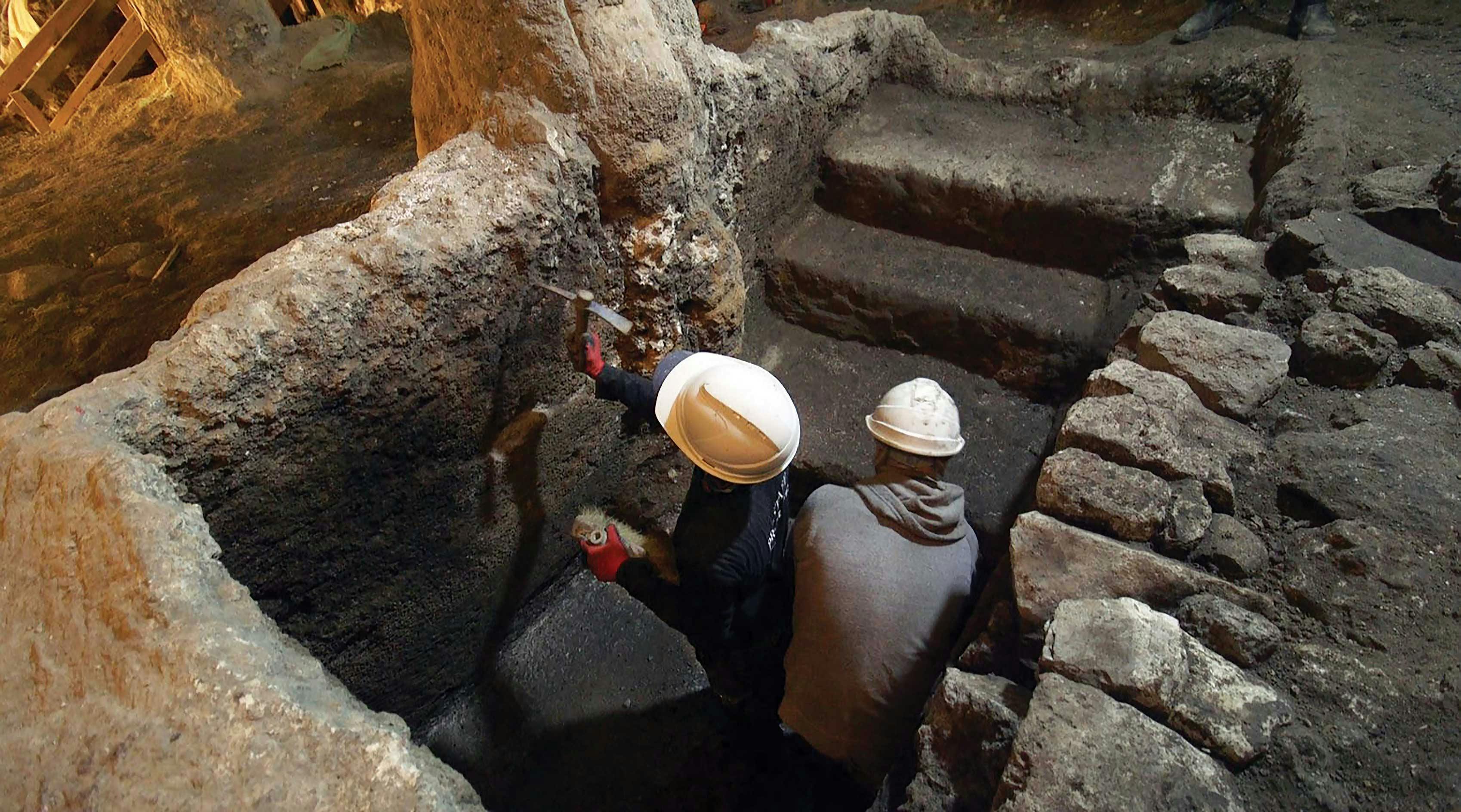
The discovery of a synagogue in the Golan Heights, dating back 1,500 years to the Roman and Byzantine periods, provides clear evidences of a thriving Jewish community in the region during that era. “Our excavations exposed a southern wall with three entrances, column bases and stone benches that unmistakably belong to a basilica-style synagogue,” explained Dr. Mechael Osband of the Zinman Institute of Archaeology. Osband co-directs the project with Prof. Haim Ben-David of Kinneret College. Their work, part of a multi-year research initiative, focuses on architectural fragments from Golan villages, including the abandoned village of Yehudiya.
In the past, the archaeological survey collected more than 150 items, including lintels, column segments and carved basalt stones, most of which had been reused in the abandoned village. Recent excavations also revealed the building’s structure: two rows of hewn stones with three openings along its southern face, as well as two decorated lintels nearby. Approximately 13 meters (42.7 ft.) wide and 17 meters (55.8 ft.) long, the building’s outline resembles the basilica style commonly found in ancient synagogues in Israel during that time period, namely a large hall with columns inside and benches along the walls.
Synagogues have always played a prominent role in Jewish life. They embody an unwavering devotion to worship, study and prayer, the bedrock of Jewish literacy. In the ancient synagogue, scholars and spiritual leaders of the time would have interpreted religious texts and instructed in matters of faith and law, which were, and still remain integral and vibrant parts of Jewish life.
Until recently, the Golan Heights had a relatively small population and little large-scale construction, which meant that discoveries of ancient remains were rare. But that is beginning to change. New developments in the region continue to reveal evidence of Jewish religious and social life beyond Jerusalem, Judea and Samaria and the Galilee.
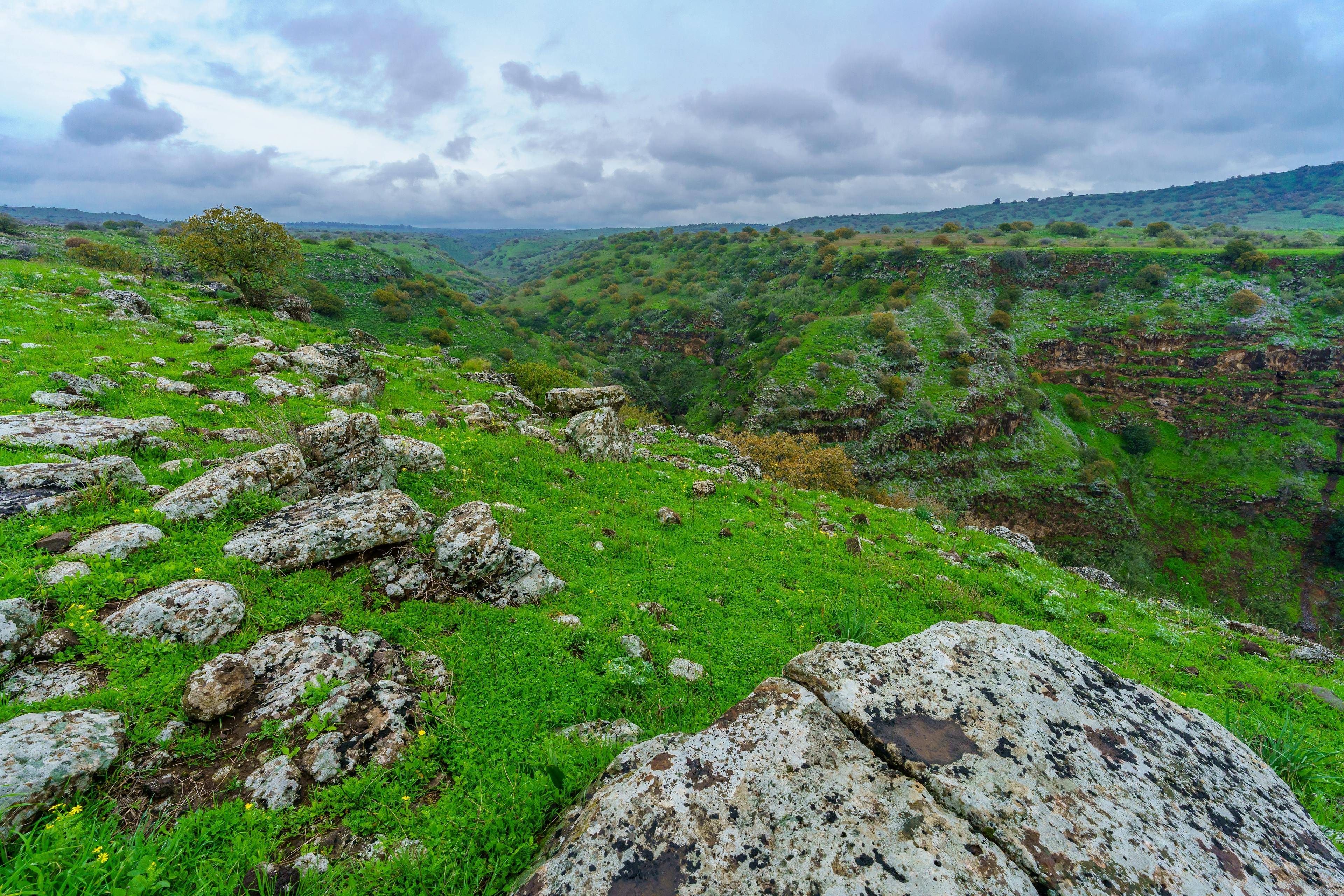
The area where the “lost” synagogue was uncovered also contains the remnants of another 25 ancient synagogues, further highlighting the region’s once-thriving Jewish communities. This newly discovered synagogue in Yehudiya is particularly remarkable, standing out in a landscape better known for its waterfalls and canyons than for its hidden archaeological treasures.
Related Resources




Discover Your Purpose and God’s Heart For You
In today's divided, turbulent world, it's essential for the Church to rediscover God's heart. Our free e-book, authored by a seasoned expert with three decades of experience in Israel, delves deep into the teachings of Jesus (Yeshua) to reveal God’s principles of love and purpose. Learn how embracing these truths can bring significance and impact to your life, even amidst chaos. Subscribe now to receive your free copy and embark on a journey of transformation.