Coins Reveal Secrets of Jewish Resistance in Galilee
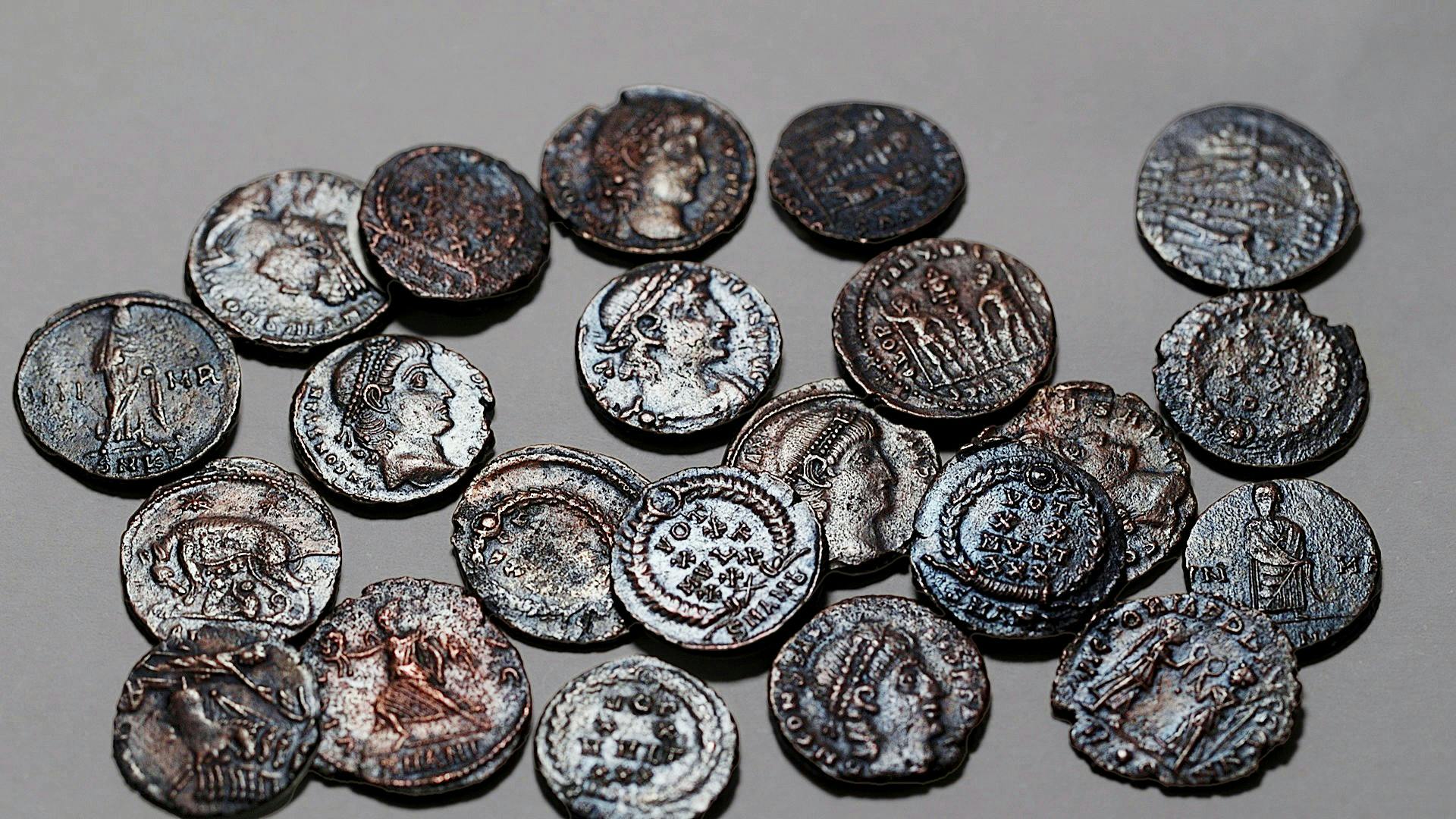
Hidden in a crevice within an extensive underground tunnel, a rare cache of 1,600-year-old copper coins was recently uncovered in the Galilee region. The discovery was made at Hukok, an ancient Jewish village in northern Israel, whose network of underground tunnels and chambers has been extensively studied in recent years. These tunnels served as secret hideouts for Jews during two major uprisings against the Romans: the Great Revolt in AD 66–70 and the Bar-Kochba Revolt in AD 132–135.
What’s fascinating about these copper coins is that archaeologists believe they were hidden during a different, lesser-known and much later uprising called the Gallus Revolt. This uprising occurred from AD 351 to 352, and was one of the last rebellions against Rome.
This uprising was named for Roman leader Constantius Gallus, who ruled the eastern provinces of the Roman Empire at the time and was infamous for his harshness and cruelty. His oppressive taxation and imposition of strict policies resulted in yet another Jewish rebellion. However, like its predecessors, this uprising was unsuccessful and in response, the Romans burned and destroyed a number of Jewish cities.
Historians have few records of this often-overlooked rebellion, making the discovery of these coins both surprising and significant. They offer a rare glimpse into how this specific uprising affected the residents in this region and reflect the determination of the Galilean Jews to preserve their identity and traditions during difficult times under Roman rule.
The tunnels themselves were viewed as a haven, allowing Jews to continue their daily religious practices out of sight from the Romans. The coins are believed to have been stashed there either in anticipation of imminent danger or with the hope of retrieving them after they defeated the Romans. “[The coins were] discovered in a pit, deliberately dug at the end of a narrow winding tunnel,” explained Uri Berger of the Israel Antiquities Authority (IAA) and Yinon Shivtiel of Zefat Academic College.
The faces of two Roman emperors are depicted on the coins: Constantius II, who ruled in AD 337–361; and Constans I, who ruled in AD 337–350. Since coins were only minted during the lifetime of the specific emperor, archaeologists can thus confidently conclude that these coins hail from AD 337 to 361, which dates them to the Gallus Revolt.
The coins provide a tangible connection to the people who lived through this little-known revolt, offering rare insight into their resilience and daily lives. They highlight the strategic use of tunnels like those at Hukok as both shelters and places to preserve traditions in the face of Roman oppression. Finds like this not only shed light on the Gallus Revolt itself but also contribute to a deeper understanding of Jewish life in the Galilee during these turbulent times.
Related Resources


Discover Your Purpose and God’s Heart For You
In today's divided, turbulent world, it's essential for the Church to rediscover God's heart. Our free e-book, authored by a seasoned expert with three decades of experience in Israel, delves deep into the teachings of Jesus (Yeshua) to reveal God’s principles of love and purpose. Learn how embracing these truths can bring significance and impact to your life, even amidst chaos. Subscribe now to receive your free copy and embark on a journey of transformation.