The Nakba: Catastrophe or Calculation?
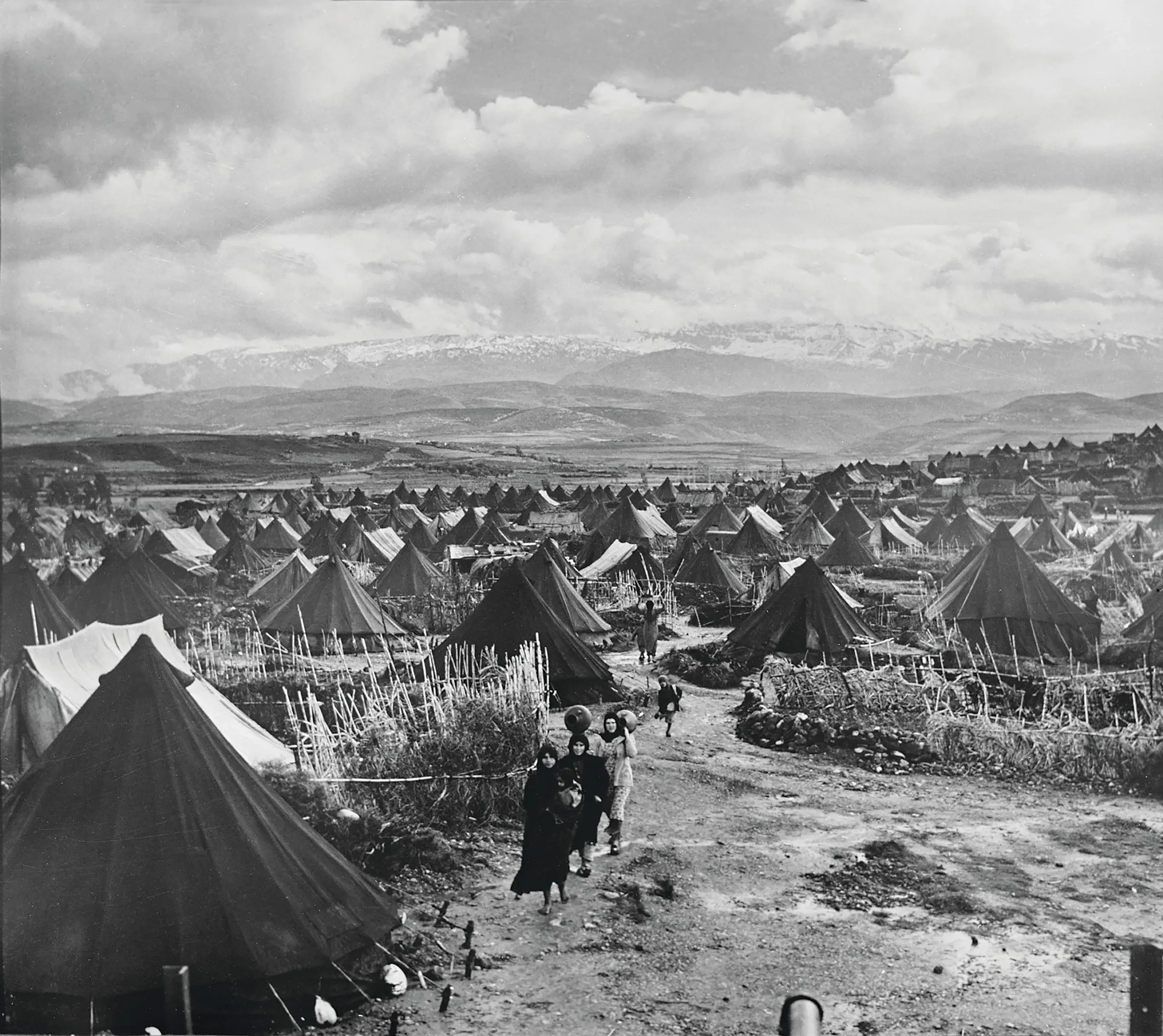
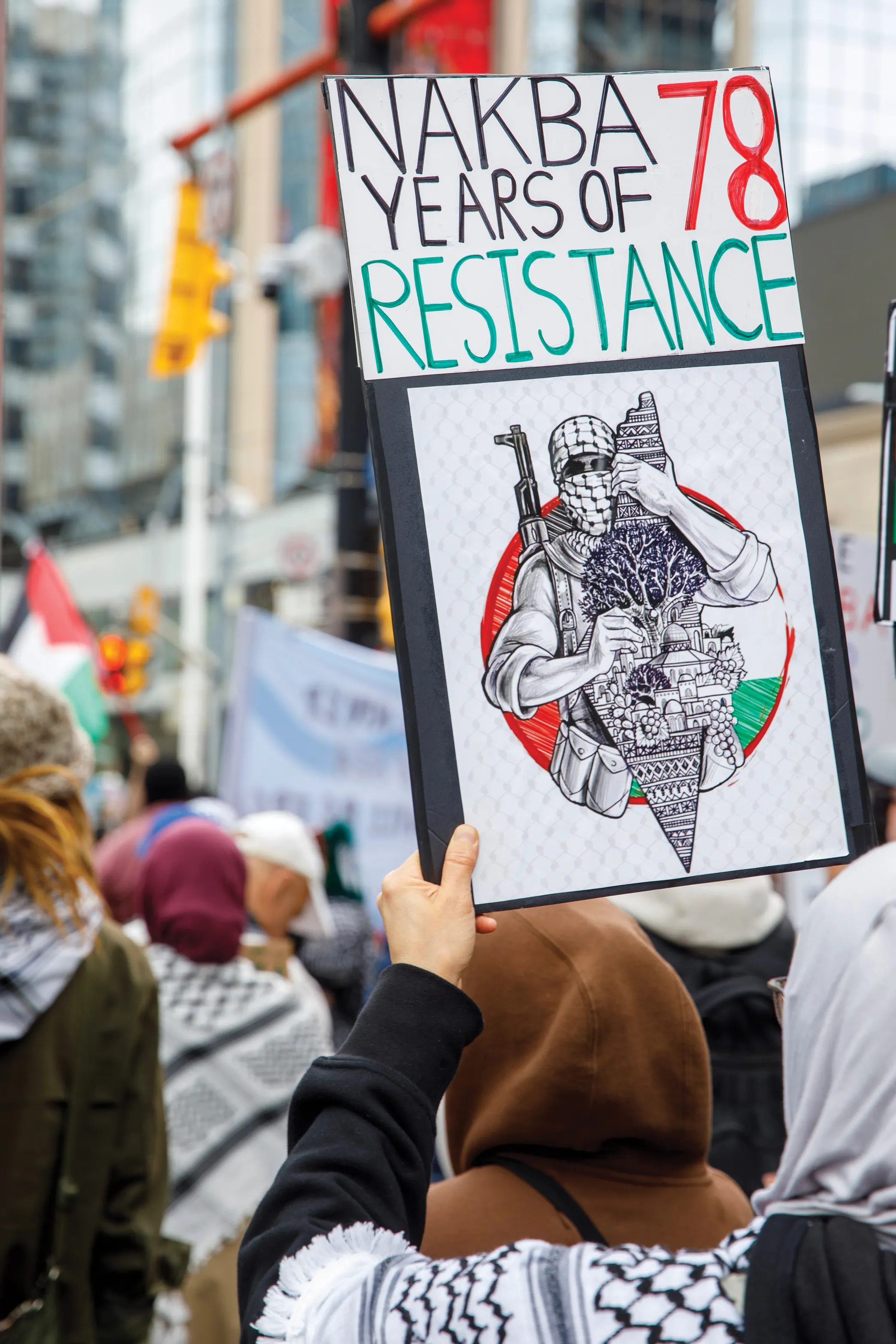
The Arabic word is nakba. Catastrophe. It’s the term the Arab world uses to describe the displacement of Arabs during Israel’s 1948 War of Independence. And it’s become one of the most potent weapons in the arsenal of those who seek to delegitimize the Jewish state.
But here’s a question worth asking: Is the nakba the tragedy its architects claim? Or is it a manufactured grievance, preserved and weaponized to serve a political agenda?
Who Were the Palestinians?
The Arabs—the forebearers of the Palestinians—arrived in the Promised Land as…wait for it…colonizers. In 638 AD, six years after Mohammed’s death, Arab armies invaded and absorbed the land into the Arab–Muslim Empire. What followed was a centuries-long game of musical empires, ending with the Ottoman defeat in World War I. Throughout this, “Palestine” was a loose geographical description, not a political identity.
This lack of national identity wasn’t unique to the local population but an overarching characteristic of the Arab world where the modern concept of a “nation-state” wasn’t popular at the time. Instead, people identified first by religion, then locally as members of a family, clan or tribe.
When the British inherited the territory after the Ottoman collapse, they resurrected the name Palestine, bestowing it for the first time in history on a defined administrative entity. Ironically, the name had Roman roots, not Arab ones.
Following a Jewish revolt against the Romans in 135 AD, Caesar Hadrian set out to de-Judaize the Promised Land, stripping it of its biblical name and erasing its Jewish identity. Judea became Syria Palaestina in a humiliating throwback to Israel’s biblical archenemies: the Philistines.
Palestine was thus not an ancient Arab homeland but rather a Roman insult, which the British exhumed 17 centuries later. A prominent Arab leader of the time, Auni Bey Abdul-Hadi, inadvertently confirmed this before the 1937 British Peel Commission: “There’s no such country as Palestine! ‘Palestine’ is a term the Zionists invented!”
From Wasteland to Wonder
While various empires fought over the territory for centuries, none developed it. Centuries of Ottoman misrule had left the landscape barren and the population remarkably sparse. Before the Jewish homecoming, the land was thus not a flourishing Palestinian civilization quietly passing ancestral farms from father to son.
Mark Twain visited in 1867 and famously described it as “a hopeless, repulsive, dreary, heart-broken land” of “unpeopled deserts” and “rusty mounds of barrenness.” He bemoaned that there was “hardly a tree or a shrub anywhere.”
This desolation didn’t imply a complete absence of indigenous people. Rather than a total Roman purge followed by a sudden post-WWI return, a continuous Jewish presence remained in the land throughout the centuries. By the mid-nineteenth century—long before modern political Zionism—Jews already formed the majority population of Jerusalem. Ottoman census records, Western consuls and Christian missionaries stationed in the city confirm this.
Then the Jewish people began to come home in earnest. They purchased land legally, established farming communities, revived the Hebrew language and built cities. The land God had promised would “blossom and bud, and fill the face of the world with fruit” (Isa. 27:6) began to do exactly that. The prosperity attracted people. Hundreds of thousands of Arabs from neighboring regions came flocking as economic migrants, drawn by the opportunities the Jewish pioneers were creating.
British Mandate records show that in coastal areas where Jewish development was most concentrated, Arab population growth between 1922 and 1944 reached 216% in the Haifa District. In inland Arab areas untouched by Jewish investment, growth was entirely flat. This means the population that would later claim the nakba was, to a degree, a recently arrived one that had followed Jewish prosperity to the coast.
What Actually Happened in 1948
When the UN Partition Plan was adopted in 1947, the Jewish leadership accepted it. The Arab League rejected it and launched “a war of extermination and momentous massacre.”
But here’s a crucial detail. The Arab League never intended to create a Palestinian state. The land they planned to purge of the Jews would simply be divided among Egypt, Syria, Transjordan and Lebanon. A Palestinian nation did not feature in the plan because, at that point, there was no Palestinian nation.
When the fighting began, Arab civilians fled. Some left voluntarily, but the historical record is clear that many more fled because their own leadership told them to. The Economist reported that “the most potent” factor driving Arabs from Haifa was “the announcements made over the air by the Higher Arab Executive, urging the Arabs to quit.” And then Syrian Prime Minister Haled al-Azm later admitted in his post-war memoirs: “Since 1948 we have been demanding the return of the refugees to their homes. But we ourselves are the ones who encouraged them to leave.”
Israel’s Declaration of Independence called on Arab residents to stay and build the country together as full and equal citizens. Around 160,000 heeded that call. Their descendants are the more than two million Arab full and equal citizens of Israel today.
The Refugees Nobody Mentions
During that same period, roughly 850,000 Jews were expelled from Arab countries across the Middle East and North Africa, stripped of their citizenship and property. This hostility was not a sudden reaction to Israel’s rebirth. The narrative that Jews and Arabs lived in perfect, peaceful harmony prior to 1948 is another convenient fiction. Jews had faced systemic discrimination, second-class status and periodic violent pogroms across the Muslim world for centuries.
Israel absorbed these refugees while fighting for its survival under severe economic austerity, receiving zero compensation from the Arab states that seized their property. The Arab world, by contrast, chose to use the Palestinian refugees as permanent political pawns, shunning them in camps rather than integrating them, preserving their grievance as a weapon. Today, Palestinians are the only refugee population in the world with a dedicated UN agency and a hereditary refugee status that passes from generation to generation.
Catastrophe or Calculation?
Is it tragic that hundreds of thousands of Arabs were displaced in 1948? Yes. Is Israel a perfect nation without fault? Of course not. No country or people is. In the fog of a war for survival, mistakes were made. But displacement is also the universal consequence of war, a war, in this case, that the Arabs started, with the stated goal of annihilating the Jews.
The nakba is real in the sense that lives were shattered. But as deployed today—as evidence of Jewish aggression against an ancient, rooted Palestinian nation—it’s a myth. The Arab leadership ordered the flight, then spent seven decades blocking recovery. This catastrophe was not Israel’s creation; it was the Arab world’s gift to its own people.
Related Resources



Discover Your Purpose and God’s Heart For You
In today's divided, turbulent world, it's essential for the Church to rediscover God's heart. Our free e-book, authored by a seasoned expert with three decades of experience in Israel, delves deep into the teachings of Jesus (Yeshua) to reveal God’s principles of love and purpose. Learn how embracing these truths can bring significance and impact to your life, even amidst chaos. Subscribe now to receive your free copy and embark on a journey of transformation.