Two Jews, Three Opinions: Dismantling the Antisemitic Monolith
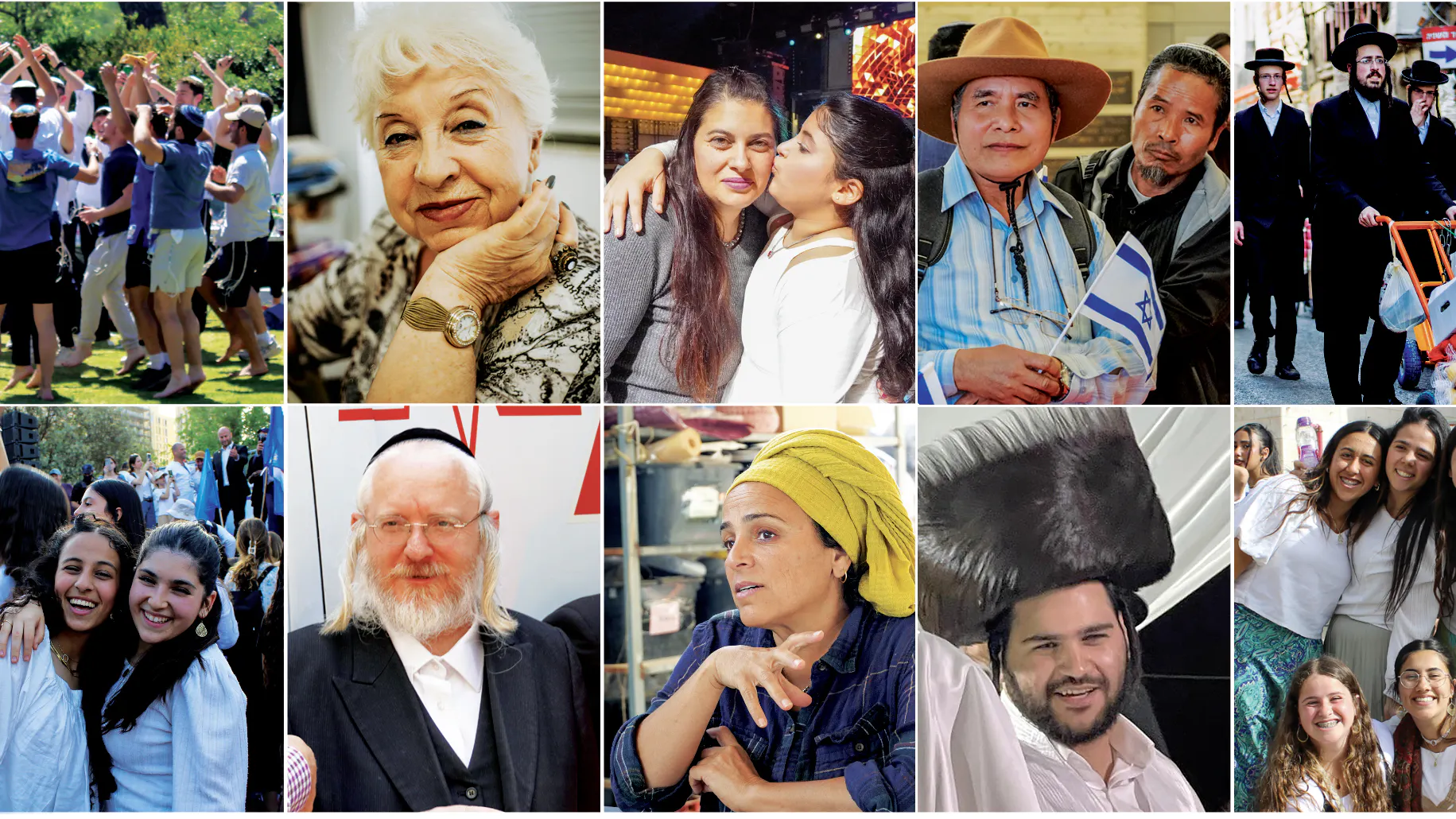
In an age of growing antisemitism and Israel hatred, whether open or covert, one phrase almost always gives it away: “The Jews this” or “the Jews that.” Spoken with a particular venom, as if the word “Jew” itself were a curse, these broad-stroke accusations paint an entire people as a unified, sinister collective conspiring to control the world and advance their own interests. They reduce the Jewish people—just 0.2% of the global population—to a cartoon villain drawn straight out of Nazi-era propaganda.
For anyone who has actually spent time in the Jewish world, the image is almost laughable. The idea of the entire Jewish people operating in seamless, coordinated uniformity flies in the face of everything that makes Jewish culture what it is today.
A Culture of Questioning
There is a well-known Jewish proverb that cuts to the heart of the matter: “Two Jews, three opinions.” It’s not merely a joke as much as a window into the Jewish soul.
The saying is rooted in the Jewish tradition of Torah (Gen.–Deut.) study, built on respectful debate, probing questions and the pursuit of deeper truth through dialogue. This is captured in the Hebrew concept of Makhloket l’shem Shamayim, or “argument for the sake of heaven.” That tradition produced the Talmud, the vast record of rabbinic commentary and debate on Scripture and Jewish law. And in perfect keeping with the proverb, there are not one but two versions of the Talmud.
Independent thought, vigorous disagreement and the freedom to question are foundational features of Jewish life. This spirit of holy argument runs deep in Jewish history. Moses himself pushed back on God multiple times, questioning his calling, interceding for his people and negotiating on their behalf (Exod. 3:11; 4:10; 32:30–32; Num. 11). And when Jesus (Yeshua) walked the earth, His ministry was marked by constant theological debate and back-and-forth questioning with the religious leaders of His day.
A Tapestry, not a Monolith
So, who exactly are “the Jews” that antisemites claim are pulling the strings of the world?
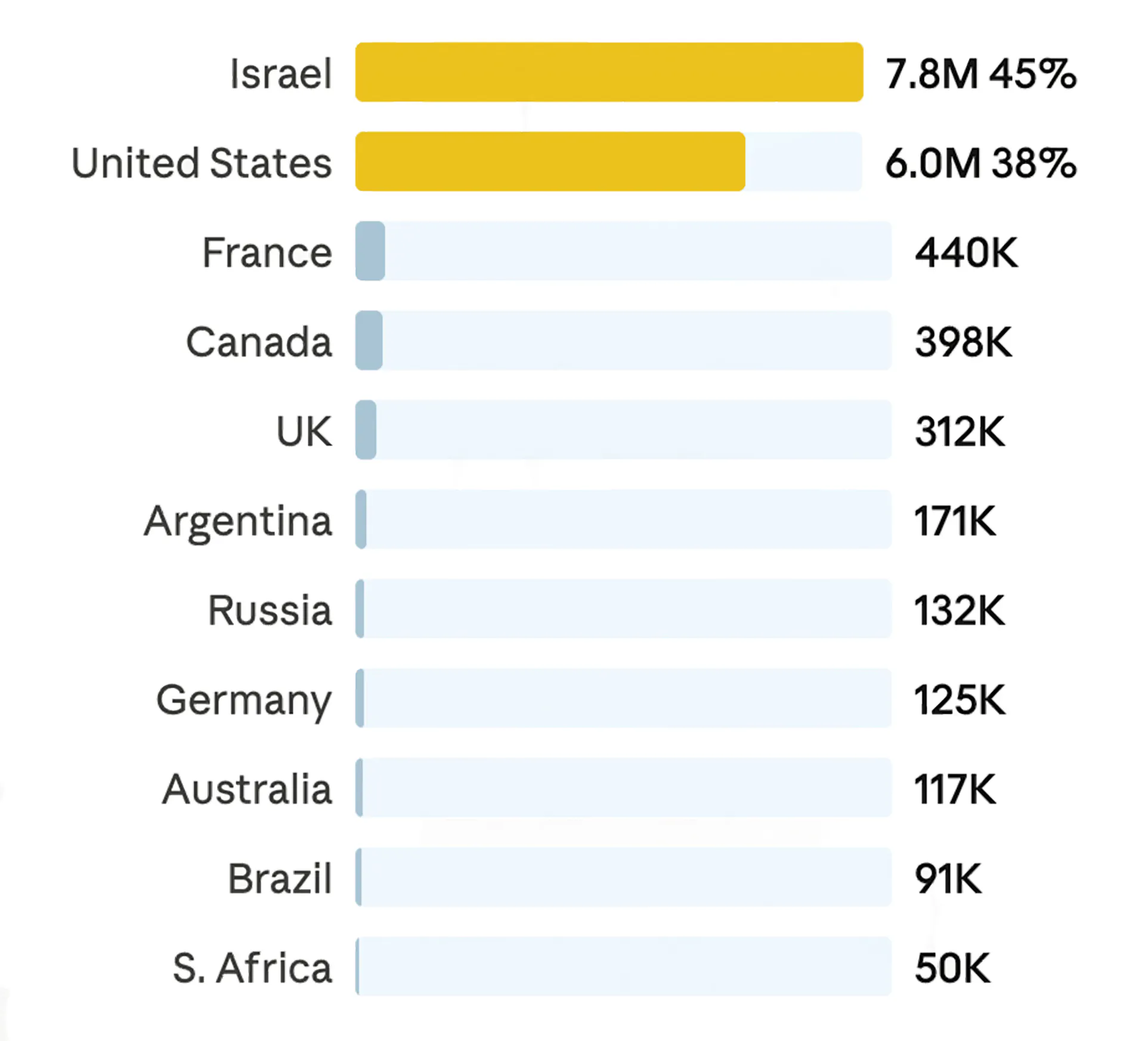
There are approximately 15.7 million Jewish people on earth today, just 0.2% of the global population.
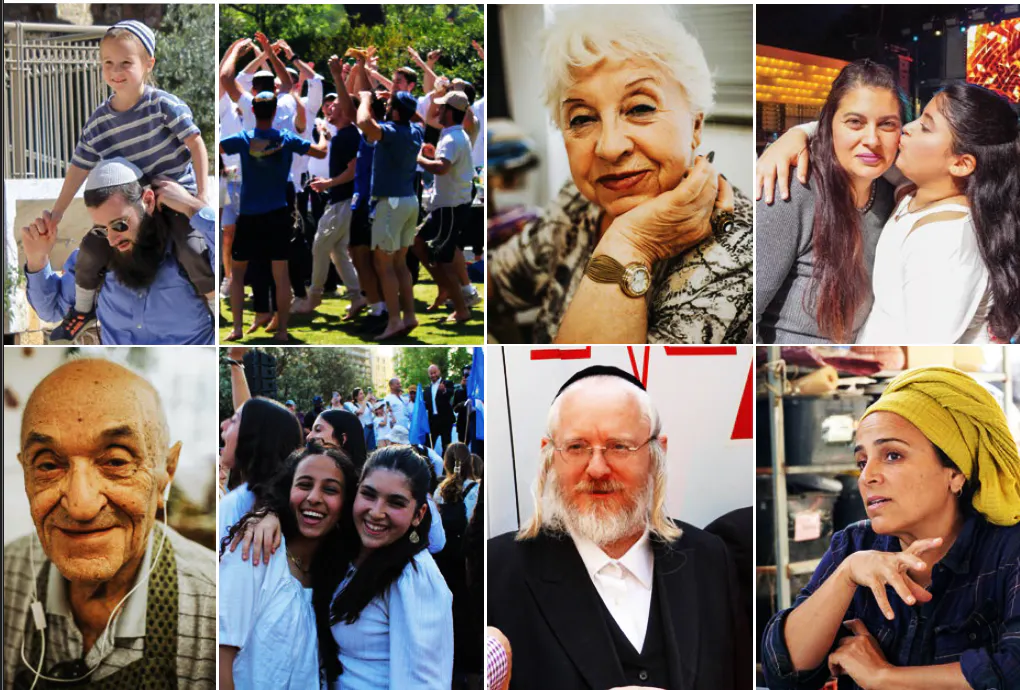
Leah Grisham, writing in the Jewish magazine Lilith, put it plainly: “Jews are not a homogenous group, but, in fact, are a highly diverse bunch whose members represent all walks of life and have unique experiences that provide us with different perspectives.”
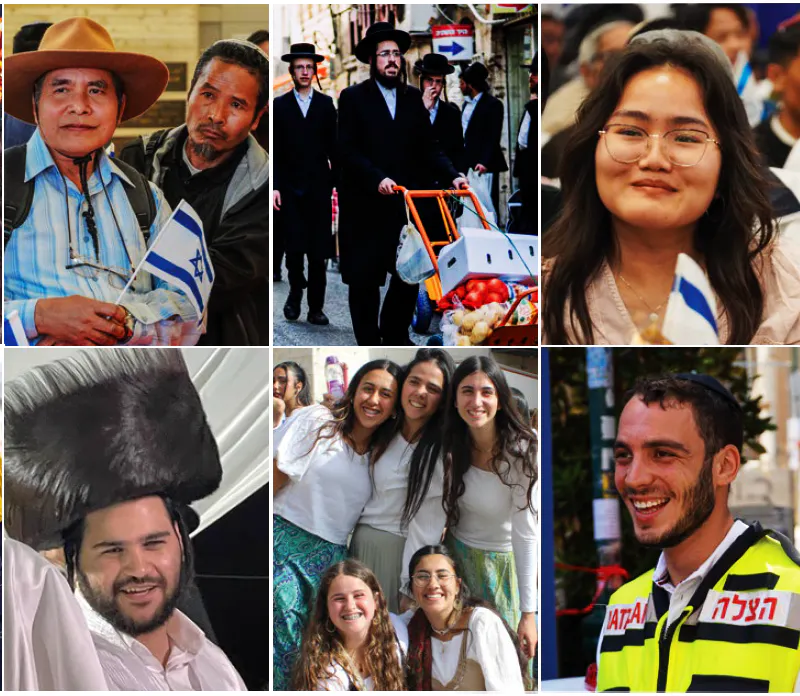
That diversity is ethnic, cultural and religious all at once. Since their ancient dispersion from the Land of Israel, Jewish communities across the globe have maintained their shared faith, culture and identity while also weaving in the textures of the civilizations around them. The result is a rich tapestry of traditions.
The three main ethnic groupings reflect this journey through history. Ashkenazi Jews are descended from communities in Germany, France and Eastern Europe. Mizrahi Jews trace their roots to the Middle East and North Africa, communities that never strayed far from the ancient homeland. Sephardic Jews are descended from those expelled from Spain during the Inquisition, who resettled across Southern Europe, North Africa and the Mediterranean. Each community carries its own distinct customs, liturgical melodies, cuisine and cultural memory.
And religiously, the Jewish spectrum stretches from secular and atheist Jews who identity culturally but not theologically, all the way to the ultra-Orthodox, for whom every waking hour is ordered by halacha (Jewish law), with every shade of Conservative, Reform and traditional observance in between. While a secular, native-born Israeli from Tel Aviv and an Orthodox immigrant from France are connected by their shared history and values of Judaism, they would hold vastly different worldviews, opinions and beliefs.
A Government that Can Barely Agree on Lunch
If the Jewish people truly functioned as a monolithic global power bloc, you would certainly expect their own government to reflect that unity. A look at Israeli politics tells an entirely different story.
Israel is a parliamentary democracy whose 120-seat Knesset (Parliament) is currently governed by a coalition of six political parties/blocs, spanning the right-wing Likud party under Prime Minister Benjamin Netanyahu, the ultra-Orthodox Shas and United Torah Judaism alliance, the Religious Zionist Party, the ultranationalist Otzma Yehudit and the center-right New Hope party. The opposition is equally sprawling, encompassing centrist, secular, social-democratic and Arab and Islamic parties.
The coalition has to work to hold itself together—and often fails. The Israel Democracy Institute think tank reported in 2021 that Israel has held elections on average every 2.3 years since 1996. Between 2019 and 2021 alone, the nation went to the polls four times in under two years, as coalitions collapsed under the weight of their own disagreements. In fact, the current coalition found itself at another stalemate over a draft bill and is expected to head to early elections sometime in September or October of this year.
This is not the machinery of a people plotting world domination. It is the beautiful, maddening reality of a deeply opinionated, passionately democratic society that cannot always agree even among itself.
The Danger of the Broad Stroke
The antisemitic accusation that “the Jews are doing this” and “it’s because of the Jews” requires erasing all of this. It requires flattening centuries of history, dissolving ethnic diversity, silencing religious debate and pretending that 15.7 million people scattered across every continent somehow operate as a single, coordinated entity. It is factually wrong and a deliberate distortion. Recognizing it for what it is remains one of the most important tools we have in the fight against hatred.
The next time someone reaches for that broad brush, remember the proverb: “Two Jews, three opinions.” The paint just doesn’t stick. The secular Tel Avivian and the Orthodox immigrant from France are not working together behind the scenes to run the banks or the world.
Related Resources




Discover Your Purpose and God’s Heart For You
In today's divided, turbulent world, it's essential for the Church to rediscover God's heart. Our free e-book, authored by a seasoned expert with three decades of experience in Israel, delves deep into the teachings of Jesus (Yeshua) to reveal God’s principles of love and purpose. Learn how embracing these truths can bring significance and impact to your life, even amidst chaos. Subscribe now to receive your free copy and embark on a journey of transformation.