Israel Is the Safe Place for Jews

Is Israel the safest place for Jews to live—especially after more than two years of war with Hamas and the constant threat of multi-front attacks from Iran’s terror proxies—or is Jewish life more secure elsewhere?
To a non-Jewish Westerner watching the news or scrolling social media, Israel can appear dangerously unstable, defined by wars, terrorism and regional conflict. Yet this Land is the ancestral and God-given homeland of the Jewish people (Gen. 12:7; 15:18; 17:8; 26:3; 28:13; Josh. 1:4; Deut. 30:4–5). The question, then, is not whether Israel is dangerous, but whether Jews are safer there than anywhere else.
Here Versus There
The Jewish people have paid a high price to live in their ancient homeland. Since 1860, when Jewish pioneers began building communities beyond Jerusalem’s protective walls, approximately 25,420 soldiers, police officers and security personnel have died defending the Land. Including civilians, the total death toll from wars and terror attacks since 1851 stands at 30,649, according to the Jewish Virtual Library.

But how many Jewish people have died outside of Israel since 1860? Well, that number is impossible to calculate, but far exceeds six million.
The Jewish Diaspora (population outside Israel) has been targeted repeatedly: six million murdered in the Holocaust, thousands killed in pogroms across Eastern Europe in the late 19th and early 20th centuries and countless victims of modern antisemitic terror.
Look no further than Bondi Beach, Australia, on the first night of Hanukkah in December 2025, when an Islamist father–son duo opened fire on a public Hanukkah celebration, killing 14 people and wounding 40 others. Among the dead were a 10-year-old girl and a Holocaust survivor.
This attack did not occur in a war zone but at a popular tourist beach, where the local Jewish community had gathered for an annual celebration, proof that even peaceful Jewish celebrations far from Israel are increasingly vulnerable.
War at Home, Violence Abroad
Israel has faced repeated wars and sustained hostility since its rebirth in 1948. Casualties are tragically inevitable in war, and Israel—the world’s only Jewish state—has been the target of its Arab neighbors over the decades of its modern history. Yet is this reality less safe than Jews being attacked while praying, shopping in kosher markets or celebrating holidays in public?
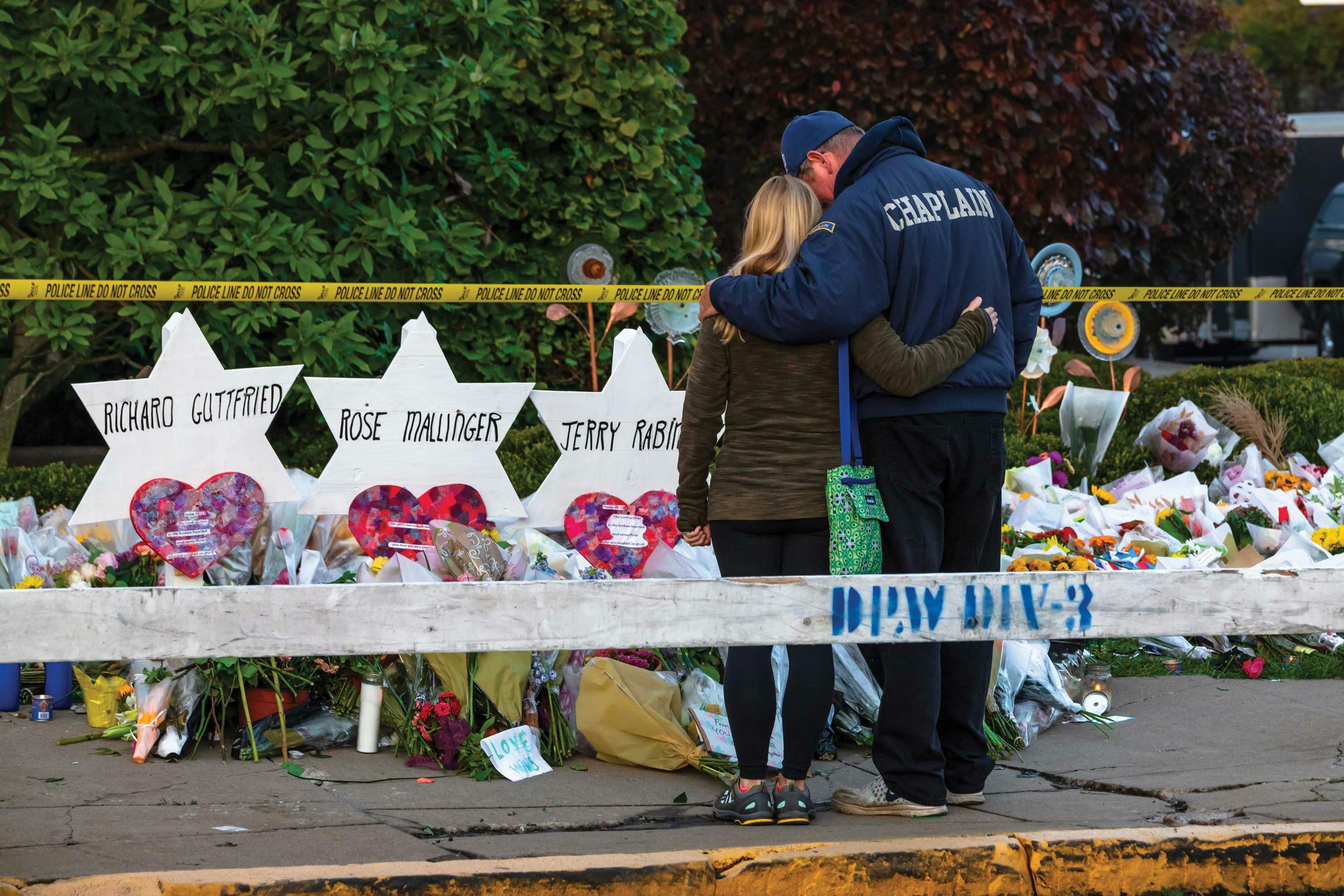
The chilling reality is that danger is growing worldwide. Antisemitic attacks have struck synagogues, Jewish neighborhoods and community events across the globe. A recent list includes the 2018 Pittsburgh synagogue massacre; the 2019 synagogue shooting in California; the 2019 Jersey City kosher grocery attack; the synagogue attack in Germany also in 2019; the fatal beating of a Jewish man by pro-Palestinian protesters in California in 2023 and the attack by a police officer on a synagogue in Tunisia in 2023. In last year alone there was the firebombing attack against a pro-Israel march in Boulder, Colorado; the fatal 2025 shooting of two Israeli embassy staffers in Washington DC and the Yom Kippur attack on the Manchester Synagogue in 2025.
Antisemitism by the Numbers
The numbers are staggering. In 2024, the Anti-Defamation League (ADL) recorded 9,354 antisemitic incidents, a record high, jumping 5% from the previous year. Since October 7, 2023, countries including Australia, France, Germany, the UK and Argentina have reported dramatic spikes.

The ADL reported an increase of 738% in antisemitic incidents in Australia in 2024; a 1,244% jump in Denmark in 2023; a 1,000% spike in France between October 1 to December 21, 2023, compared to previous months; a 95% rise in Germany in 2023; a 600% increase in Argentina in January 2024 compared to January 2023 and a record-breaking 4,103 incidents recorded in the UK in 2023. These incidents span vandalism and harassment to outright violence.
Conditional Safety in the Diaspora
There are pockets of relative safety outside Israel. Hungary, for example, has banned pro-Hamas demonstrations and maintains low levels of antisemitic violence. Other countries often deemed safe for Jewish people include Taiwan, Panama and Mexico. Even the United States has areas of relative safety—particularly large Jewish population centers such as New York City and Los Angeles—though in recent years, the safety once found in numbers in these areas has crumbled as the Jewish communities have become targets for Jew hatred. Even in havens like Hungary or Panama, such safety depends heavily on political leadership and external protection.
Israel alone offers something no other country can: Jewish self-defense.
A Homecoming
Amid the global surge in antisemitism, aliyah (immigration to Israel) statistics tell a revealing story. In 2025, Israel welcomed 21,900 new immigrants from more than 100 countries. Overall, immigration declined by one-third due to reduced emigration from Russia, but Western countries with spiked antisemitism rates also saw spiked Jewish emigration to the homeland. Aliyah from Western nations rose sharply, up 45% from France, 20% from the UK and 12% jointly from the US and Canada, the highest North American total in four years.
Public opinion within Israel mirrors this trend. A January poll by the Israeli Democracy Institute found that 76% of Israeli Jews believe Israel is safer for Jews than other countries, even after years of war and amid heightened global antisemitism. Another poll by the Center for Jewish Impact asks Jewish Israelis yearly whether Israel is the safest place for Jews. In 2020, 76% said yes. In 2022, 82% said yes, and in December 2023—just months after the horrific Hamas massacre—87% answered yes.
Following the Bondi Beach attack, Prime Minister Benjamin Netanyahu declared that “the safest place for the Jewish people in the world is where the government, the army and the security forces will defend them—that is first and foremost in the State of Israel, because we defend ourselves…”
The Bottom Line
While Israel’s casualty numbers reflect the heavy cost of war, Jewish life elsewhere is increasingly marked by fear and uncertainty. Around the world, Jews are looking over their shoulders, especially when wearing visible signs of their faith or gathering in Jewish spaces. In Israel, threats are real, but so is the resolve to face them together, as a nation defending its own people. It’s the only place in the world where Jewish people can live openly and securely as Jews, not by permission, political favor or the protection of others, but because they are home.
Related Resources




Discover Your Purpose and God’s Heart For You
In today's divided, turbulent world, it's essential for the Church to rediscover God's heart. Our free e-book, authored by a seasoned expert with three decades of experience in Israel, delves deep into the teachings of Jesus (Yeshua) to reveal God’s principles of love and purpose. Learn how embracing these truths can bring significance and impact to your life, even amidst chaos. Subscribe now to receive your free copy and embark on a journey of transformation.