Healing: Finding Redemption after Loss

Every culture and faith tradition carries its own language for suffering, resilience and renewal. But the experience of loss is universal, along with the longing to heal. Everyone who experiences loss—whether sudden and tragic or slow and painful—needs to find ways to rebuild their life and reasons to wake up in the morning.
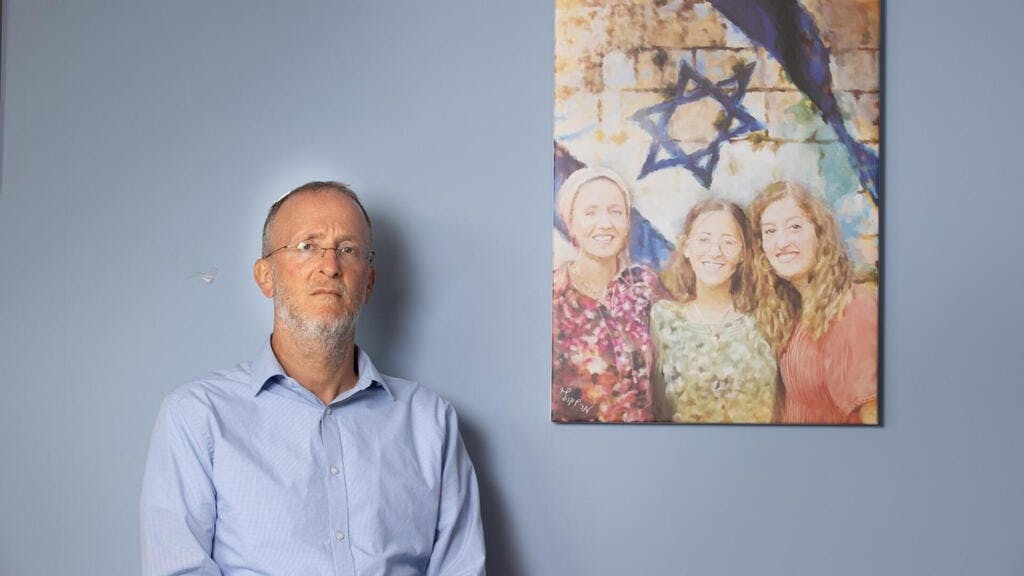
When terrorists brutally murdered my wife, Lucy (48), and our daughters Maia (20) and Rina (15) in Israel in April 2023, I found myself living in a world that no longer made sense. In that disorienting landscape, I began to observe patterns, small truths that repeated themselves, lessons that guided me when I had no map.
These insights eventually became a book, The Seven Facets of Healing, but long before that, they were simply my survival tools. Three of them stand out as foundational rules, principles that shaped my path forward when the ground beneath me felt unsteady.
1. Healing Begins When We Stop Avoiding the Pain
In the first weeks after our tragedy, medication numbed my anguish, holding the grief at a distance. But I soon realized that numbness was not movement; it was paralysis. Stopping the pills brought the full weight of sorrow crashing in, yet that rawness became a kind of clarity.
The world around me was full of triggers: Lucy’s bedside table left exactly as she’d placed it the night before her death; the muted quiet at the dinner table; the road junction where our lives changed forever. Avoiding these places only magnified their power.
So, I adopted a simple personal principle I call the “Three-Time Rule”:
- The first time facing a trigger is agony;
- The second is still painful but survivable; and
- By the third time, something shifts, the fear loosens its grip.
With each encounter, I was teaching my mind a new truth: the worst had already happened, and I was still here.
Healing didn’t begin with feeling better. It began with facing what I feared—gently but deliberately—until its shadows grew smaller.
2. Peace Emerges When We Release the “What Ifs”
One of the quietest but most persistent torments of grief is the “What if?” What if we had taken a different road? What if I had seen something, sensed something, prevented something? What if the lives of my wife and daughters were cut short before they fulfilled their purpose?
Over time, I began to consider a different question, one that reshaped my inner world:
What if their lives were exactly as long as God planned them to be?
This was not a surrender to fatalism, nor an attempt to erase the ache of the absence of loved ones. It was a shift in perspective. When I allowed myself to consider that their stories might have been complete in ways I could not yet understand, the relentless spiral of “What if?” slowly loosened.
Instead of replaying moments I could never rewrite, I found a small measure of stillness in accepting that the meaning of a life is not always tied to its length. In Judaism, we talk about a Book of Life in which every person has a page. Some lives write their lines in large letters, spacious and long; others in small, densely filled script, every inch packed with purpose.
Letting go of “What if?” didn’t erase my grief, but it allowed room for something else to grow beside it.
3. We Heal Faster When We Don’t Heal Alone
A month after the October 7 massacre, I visited some of the survivors from Kibbutz Be’eri who were temporarily housed in a hotel in southern Israel. Their community had lost 200 or 10% of its members. Yet what struck me most was not the devastation of their community, it was the resilience radiating from their nightly ritual.
Every evening, more than a thousand kibbutz members gathered in a hotel ballroom for updates, shared stories and mutual support. These meetings were not logistical; they were lifelines. They created structure in chaos, connection in isolation and belonging where the world had collapsed.
I met one brave father who had lost his wife, son and one of his legs after the family home was under attack by terrorists for 12 hours. He demonstrated unbelievable resilience.
It was then I understood something essential: resilience is not merely a personal trait, it is a communal architecture. The people of Kibbutz Be’eri were not healing alone. They were carried by a network of shared space, shared ritual and shared sorrow. Their strength was collective, not individual. This brave father had not lost two members of a family of six, but two members of a family of one thousand. That’s the power of community.
In my own life, I saw the same truth: friends, neighbors and even strangers created the scaffolding that held me upright when I could not stand on my own.
Why I Share These Lessons
These rules of healing—facing pain, releasing the “What ifs” and leaning into community—are not theories. They became the ground beneath my feet when everything familiar fell away.
In The Seven Facets of Healing, I explore these ideas through stories, psychological insights and the lived experience of rebuilding my life after an unthinkable loss.
My hope is that readers—whatever their background—will recognize echoes of their own struggles and find tools they can use in their moments of darkness. Not because my journey is universal, but because the human heart is.
If these reflections resonate with you, the book offers a deeper exploration of how we navigate pain, purpose, memory and renewal. It is not a roadmap, but a companion, one I wrote while learning how to take each next step myself.
The Seven Facets of Healing by Rabbi Leo Dee is available on Amazon.com
Related Resources


Discover Your Purpose and God’s Heart For You
In today's divided, turbulent world, it's essential for the Church to rediscover God's heart. Our free e-book, authored by a seasoned expert with three decades of experience in Israel, delves deep into the teachings of Jesus (Yeshua) to reveal God’s principles of love and purpose. Learn how embracing these truths can bring significance and impact to your life, even amidst chaos. Subscribe now to receive your free copy and embark on a journey of transformation.