Guardians of the Nation: Inside the Six Branches of the IDF
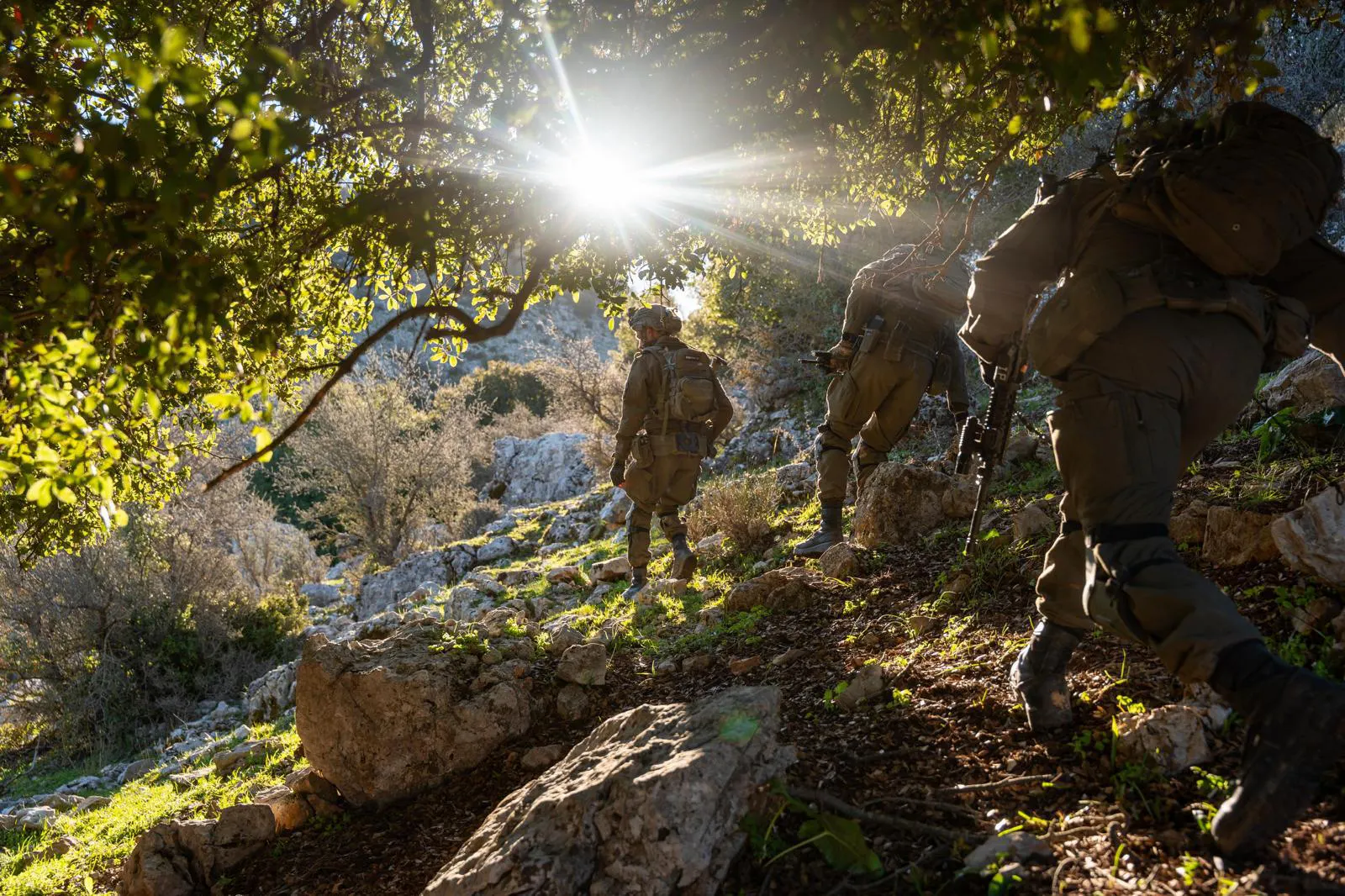
We who support Israel thank God for the gift of the IDF, for it is the instrument by which God preserves the Jewish state from the ruin its many foes intend. Recall Ezekiel’s prophecy of the dry bones. The biblical prophet’s vision taught that it would not only be a people that would come back to life but that “an exceedingly great army” (Ezek. 37:10) would rise to its feet. In our day, the IDF is that very fighting force from the biblical prophecy, now on land, sea and air, which stands to deter, defend and prevail in an arena of unimaginable geopolitical complexity.
Let us take a closer look at how that force is organized into six branches charged with the daily defense and preservation of the State of Israel.

Israeli Ground Forces
The Israeli Ground Forces (or literally “Land Arm” in Hebrew), under the command of Major General Nadav Lotan, has the mission of taking and holding the Promised Land. It is organized into the following fighting corps: Infantry and Parachute (small arms and anti-tank); Armor (tanks); Artillery (cannons and missiles); Combat Engineering; and Combat Intelligence Collection.
The Ground Forces’ weaponry includes the Galil, Tavor, M4 and M16 assault rifles, the SR-25 semi-automatic sniper rifle, the Merkava battle tank, M109 self-propelled howitzer and the AH-64D Apache attack helicopter. They further employ the Samson RCWS, a remote-controlled platform with machine guns, grenade launchers and anti-tank missiles on a remotely operated turret.
The Ground Forces also possess advanced combat engineering equipment, including the D9 armored bulldozer, Puma combat engineering vehicle, minefield breaching rockets and a variety of robots with explosive devices.

Israeli Air Force
The Israeli Air Force (or “Air and Space Arm” in Hebrew) falls under the command of Major General Tomer Bar. Its subordinate commands include the Chief of Air Staff, Fixed Wing Group, Joint Warfare and Borders Group, Intelligence Group, Air Defense Command and Air Traffic Control Command.
Israel takes to the skies in a wide variety of piloted and unmanned craft, many bearing Hebrew monikers reflecting their Israeli modifications with advanced technology. These include the F-35I Adir stealth attack, F-15I Ra’am air superiority, F-16I Sufa fighter, AH-64D Saraf attack helicopter, UH-60L Yanshuf utility helicopter and the C-130J Shimshon (Samson) transport.
A host of other aircraft support air and ground operations, including transport, rescue and reconnaissance missions. These include the CH-53 Sea Stallion and the KC-707 aerial refueling tanker, which extends Israel’s strong arm across the Middle East.
Israeli Navy
Skippered by Rear Admiral David Saar Salama, the Israeli Navy (or “Sea Corps” in Hebrew) operates in the Mediterranean, Gulf of Eilat and Red Sea to secure superiority at sea, freedom of action and freedom of navigation in the Israeli maritime space.
Naval units include patrol squadrons based in Haifa, Eilat and Ashdod. These safeguard the shoreline, protect oil and gas rigs and block and dismantle smuggling operations. A missile boat flotilla based in Haifa also protects Israeli commerce and wards off naval blockades while adding fire support for ground units. Israel is lethal under the surface as well. The submarine flotilla gathers intelligence, deploys commandos and attacks when engaging in a sea battle. Other naval assets perform amphibious landings, sea rescue and supply transport.

Computer Service Directorate
Major General Aviad Dagan oversees the IDF Computer Service Directorate (or “C4I and Cyber Defense” in Hebrew). This directorate charts and maintains all transmission and computerization of Israel’s command and control and intelligence-gathering. It also engages the invisible battle space of cyber warfare.
The directorate comprises four brigade-level units: C4I Command Corps; Operating Brigade (operational communications and electronic warfare); Cyberspace Defense Brigade (telecommunications of internal IDF networks); and Lotem Unit (the Hebrew acronym for Unit for Telecommunications and Information Technology).
As part of comprehensive organizational changes in the Ground Forces Command, the C4I Corps together with the Ordnance Corps, Logistics Corps and Adjutant Corps became subordinate elements of the Computer Service Directorate.
Technological and Logistics Directorate
Headed by Major General Michel Yanko, this activity of the IDF General Staff is responsible for building and maintaining military bases while providing medical infrastructure during peacetime, war or national crisis.
Living by the maxim, “An army runs on its stomach,” this directorate sees to what is, arguably, the most important mission in training or battle: feed the troops. Additionally, it appropriates and distributes replacement equipment and repair parts, stockpiles and conveys weapons and ammunition, and fuels and maintains the IDF’s vehicle fleet. In the event of a national emergency, this vital link in Israel’s defense also governs the deployment of non-combat reserve units.

Military Intelligence Directorate
Commanded by Major General Shlomi Binder, the Israeli Military Intelligence Directorate (or “The Intelligence Section” in Hebrew) is the central and governing intelligence-gathering body of the IDF. Together with the Mossad (intelligence agency) and Shin Bet (internal security organization), it is among the most significant players in the Israeli intelligence community.
This directorate includes Cyber Warfare Unit 8200, Human Intelligence Unit 504, Secret Technology Unit 81 and the training course Havatzalot Program. Sayeret Matkal, the elite General Staff Reconnaissance Unit, conducts its special operations.
The directorate plays the pivotal role in knowing Israel’s enemies and engages in analysis of threat military intelligence and securing classified information. Countering the old military intelligence joke that “there’s no intelligence in the military,” the directorate runs the famed Center for Consciousness Operations, a psychological warfare unit. Enemies of Israel, beware!
An Exceedingly Great Army
We’ve seen that this well-organized fighting force has a great depth of military capabilities, but we also know that all its achievements are dependent on the breath of God: “Thus says the Lord God: ‘Come from the four winds, O breath, and breathe on these slain, that they may live.’” (Ezek. 37:9b). This “exceedingly great army” knows its Source, and its commanders, rabbis and soldiers pray to the One who gives these “dry bones” life and breath to fight and win. Let us stand with them in prayer and agreement with Ezekiel 37:14: “‘I will put My Spirit in you, and you shall live, and I will place you in your own land. Then you shall know that I, the Lord, have spoken it and performed it,’ says the Lord.”
Related Resources



Discover Your Purpose and God’s Heart For You
In today's divided, turbulent world, it's essential for the Church to rediscover God's heart. Our free e-book, authored by a seasoned expert with three decades of experience in Israel, delves deep into the teachings of Jesus (Yeshua) to reveal God’s principles of love and purpose. Learn how embracing these truths can bring significance and impact to your life, even amidst chaos. Subscribe now to receive your free copy and embark on a journey of transformation.