Building an Unshakeable Life
Download PDF Version
I once heard a pastor teach that this side of eternity is like a roommate application process to determine our living arrangements in the hereafter. Jesus (Yeshua) said, “In My Father’s house are many mansions…I go to prepare a place for you” (John 14:2). When I consider this, I cannot help but chuckle. As a bachelor living on my own, I used to think I was an excellent roommate. That notion quickly changed the moment I actually lived with someone. Living with a roommate or a spouse confronts you with your own quirks and theirs, often revealing eccentricities you never knew existed. That’s one of the reasons why it is so crucial to make our living arrangements wisely, making godly choices when it comes to those with whom we share our lives. In much the same way, before we enter the Father’s house for eternity, Jesus is assessing who His roommates will be, determining who will reflect His character, honor His ways and live in alignment with Him?

Psalm 14 helps us understand why this assessment is necessary. David is keenly aware of the flawed nature of humanity. He describes the fool who says there is no God and a world so corrupt that “there is none who does good, no, not one” (v. 3b). He ends the chapter with a desperate cry: “Oh, that the salvation of Israel would come out of Zion!” (v. 7a). David longed for the Lord to intervene and set things right.
Today, looking at the state of the world, we feel that same weight of desperation. It is in this heavy, almost hopeless context that Psalm 15 arrives. This short but powerful psalm answers that cry by asking a critical question: “Lord, who may abide in Your tabernacle? Who may dwell in Your holy hill?” (v. 1). David then lays out the “do’s and don’ts” for those who are fit to dwell with the Lord, the successful applicants for roommates, so to speak, in God’s eternal dwelling.
Blameless, Righteous, Truthful
The ideal roommate is firstly described as “He who walks uprightly, and works righteousness, and speaks the truth in his heart” (Ps. 15:2). The Hebrew word for “blameless” is tamim, a term that carries a depth often lost in translation. While often translated as upright or perfect, its biblical meaning is less about flawless performance and more about living a life where heart, action and allegiance fully align with God.
Tamim does not mean perfection in the sense of never failing. Scripture itself teaches us otherwise. Noah, Job and even David were called tamim, yet they faced weakness, suffering and moral struggle. What sets these men apart is not a superhuman sinless perfection, but living lives wholeheartedly oriented toward God.
Being tamim also means giving the Lord your all and living consistently. The Rev. Charles H. Spurgeon put it plainly, “The true believer is not one thing abroad and another at home.” Tamim entails living a life where our walk matches our talk, and where our inner life lines up with what others see.
Once our hearts align with God, the next step is to let that alignment shape our actions. The Hebrew concept is tsaddiq, a righteous or just person. This follows on closely from tamim, moving from who you are to what you do. It is not enough to claim alignment with the Lord; that alignment must be expressed in the way we live.
One of the clearest biblical examples of this is Joseph. Though he is not explicitly called tsaddiq in the narrative, Jewish thought refers to him as Yosef HaTzaddik, as his life embodies this righteousness. Betrayed by his brothers, sold into slavery, falsely accused and imprisoned, Joseph consistently chose righteousness. He refused to compromise with Potiphar’s wife, remained faithful to God in obscurity, and when finally elevated to power, he responded with forgiveness instead of revenge. Righteousness is not theoretical. It is lived out in our decisions, often the most difficult and costly ones.
Lastly, David admonishes us to speak truth in our hearts. In the biblical sense, truth is not merely about factual correctness, but about something that can be trusted because it does not shift. The Hebrew word for truth is emet, which carries that sense of stability, reliability and faithfulness.
What is striking in this psalm is the location of truth. It is first in the heart, not the lips. This is in line with Jesus’ teaching that “out of the abundance of the heart the mouth speaks” (Luke 6:45). When your heart speaks truth, your mouth will follow.
Cultivating emet begins with truthfulness to oneself. Speaking truth in our hearts manifests in consistent behavior, trustworthy speech and reliable action. Conversely, internal deception will eventually undermine our spiritual walk and relationships.
First Do No Harm
Shifting from the inner life, Psalm 15:3 moves outward to speech and actions towards others: “He who does not backbite with his tongue, nor does evil to his neighbor, nor does he take up a reproach against his friend.” In an age of comment sections, private messages and viral outrage, the tongue has been amplified beyond anything David could have imagined. Words travel faster, cut deeper and linger longer. To “backbite” is to speak against someone in a way that damages their reputation. It often happens quietly, in passing comments or subtle criticism, but its effect is very real.
In Scripture, words are treated as instruments of creation or destruction, carrying the power of life and death. David thus highlights how we handle the words we release at the center of a life that pleases God. We cannot dwell in the Lord’s house while speaking words that erode the community around us.
Verse 3 then broadens the scope even more, moving from avoiding harm in speech to action. We need to care for those in our community and choose not to take advantage of others or act in ways that bring harm, even when we could justify it.

Finally, this verse points to something subtle but important. It is not only about what we say, but what we are willing to spread or repeat. Refusing to take up reproach means we do not join in spreading negativity, holding onto bitterness or discrediting those close to us. Instead, we should always protect relationships. Ultimately, David describes a person who uses their strength to shield their neighbor’s reputation rather than shatter it. This restraint reflects a heart that mirrors the Father’s protective love.
Discerning and Promise Keeping
In a modern Western culture that increasingly resists moral distinctions, Psalm 15:4 can sound controversial: “In whose eyes a vile person is despised, but he honors those who fear the LORD."
The psalm is not advocating personal hostility or spiritual arrogance toward others. Rather, it calls for a form of discernment that refuses to celebrate what the Lord defines as evil. Whether consciously or not, we are continually being discipled by the surrounding culture, being shaped in what to admire, applaud and normalize. As moral boundaries are intentionally blurred, what was once recognized as darkness is now often presented as light. It is precisely at this point that discernment becomes a defining spiritual test.
This verse makes it quite clear that those who desire to dwell with the Lord must share His values. In a world that often rebels against Him, living with discernment, valuing righteousness over popular opinion and honoring those who fear the Lord, requires intentionality.
Verse 4 continues: “He who swears to his own hurt and does not change.” Here we encounter another powerful Hebrew concept: shaba, which means to swear or take an oath. This word is deeply connected to sheva (seven), a number associated with completeness and covenant. In biblical times, words were binding; to swear an oath was to commit one’s integrity.
This stands in stark contrast to modern life, where commitments are maintained only as long as they remain beneficial. Psalm 15:4, however, presents a higher standard, namely a person who keeps their word even when it becomes costly. It can mean keeping a promise despite discomfort, accepting loss instead of breaking trust or standing alone while the world walks away.
The Lord Himself models this principle in His covenant with Abraham (Gen. 15; 22:16), swearing by Himself because there is no higher authority. His promises are steadfast and anchored in His character. To dwell with the Lord, we are required to mirror His faithfulness, becoming people whose words carry weight, whose commitments endure and whose lives reflect the permanence of covenant.
Financial Justice
Psalm 15:5 concludes the list of prohibitions with “He who does not put out his money at usury, nor does he take a bribe against the innocent.” The Hebrew word for usury, neshek, comes from the root word nashak, which means “to bite.” It paints a vivid picture of financial practices that consume or devour others, offering a specific warning against exploiting the vulnerable. It addresses the undesirable heart posture of using someone else’s desperation as an opportunity for personal gain.
David makes it clear that integrity is not confined to our inner spiritual life, but it extends to finances, business dealings and economic decisions. In a world marked by financial instability, the temptation to prioritize self-preservation is strong. But Psalm 15:5 calls for something higher: kingdom mercy that reflects God’s generosity and justice. Jesus amplified this principle in Luke 6:34–36, “But love your enemies, do good, and lend, hoping for nothing in return; and your reward will be great, and you will be sons of the Most High”(v.35). Generosity without expectation reflects divine character.
The Hebrew concept behind “bribe” (shachad) refers to any inducement that perverts justice and distorts truth, not merely to a financial exchange. The Torah (Gen.–Deut.) strongly prohibits bribes: “You shall not take a bribe, for a bribe blinds the clear-sighted and subverts the cause of the just” (Exod. 23:8 NASB20). David is therefore not only condemning personal dishonesty but exposing a deeper moral failure: the willingness to sacrifice justice for personal gain.
The phrase “against the innocent” in verse 5 heightens the severity. In Hebraic thought, the Lord is consistently portrayed as the defender of the innocent, the widow, orphan and stranger. To accept a bribe in such a context is to stand in opposition to God’s character and covenantal concern for justice. The one who may dwell with the Lord must reflect His justice in both private conduct and fairness toward others, particularly the vulnerable.

The Promise
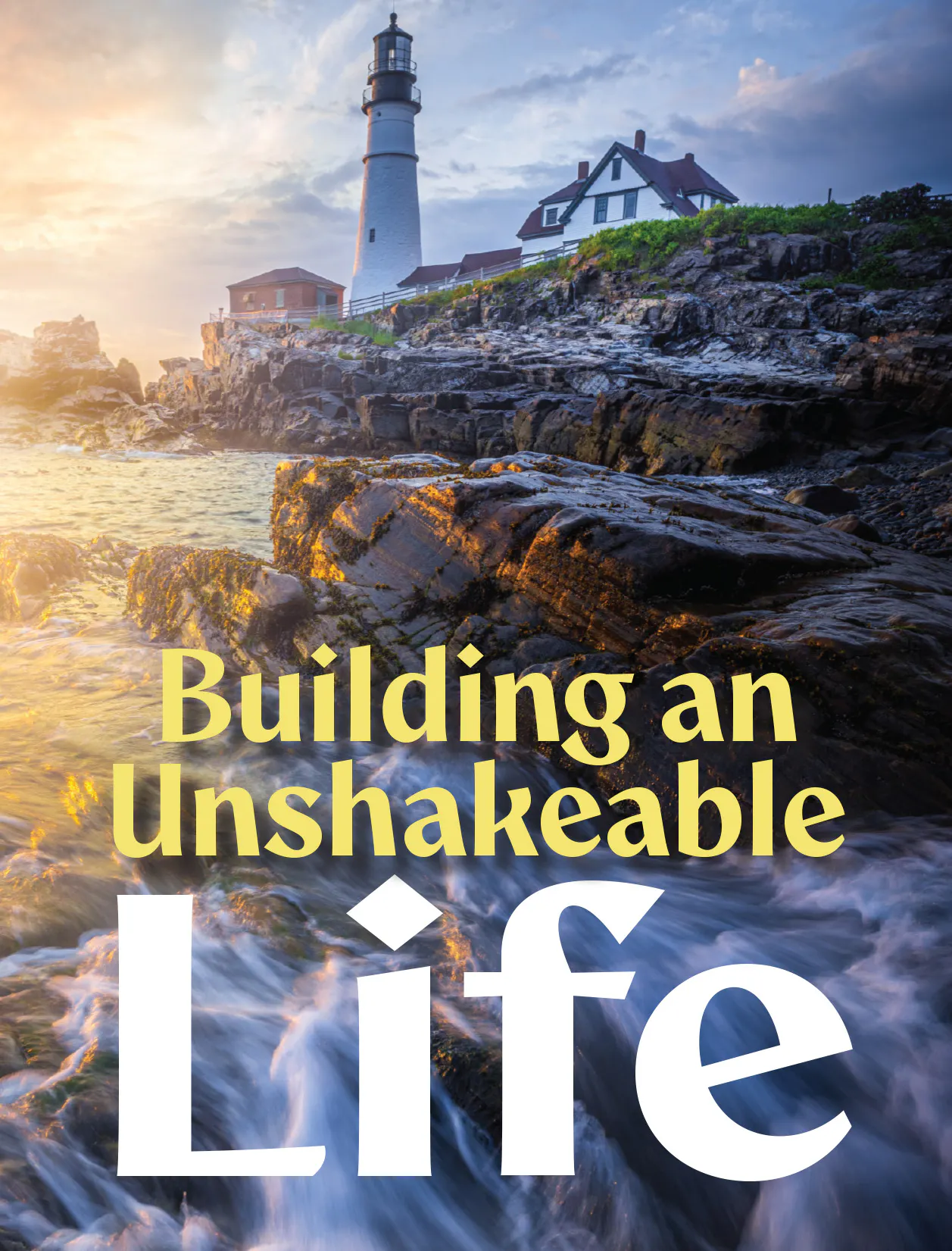
Psalm 15 closes with a definitive promise: “He who does these things shall never be moved” (v. 5). In the times the Bible describes as the “last days,” there will come a season of tremendous shaking. Hebrews 12:26–27 captures this with striking clarity: “Yet once more I shake not only the earth, but also heaven…that the things which cannot be shaken may remain.” Derek Prince summarizes it well: “Everything that can be shaken, will be shaken.” Nations will be shaken. Economies will be shaken. Religious systems will be shaken. Even heaven itself will tremble. The purpose is clear: the world will see that the only thing truly steadfast is the Kingdom of God. Our goal is to align our lives with that unshakable Kingdom, so that when the dust settles, we stand on the only foundation that cannot be moved.
In just five verses, David gives us both the key to a successful divine “roommate application” and the blueprint for building an unshakable life. Stability is not found in circumstances, human systems or fleeting assurances, but in alignment with our Heavenly Father’s character and ways. Those who walk in tamim (wholeness), who are anchored in emet (truth), who guard their speech, discern rightly, keep covenant even at cost and handle resources with mercy are the ones who will dwell securely. As the world trembles, those who embody these truths will stand, not because they avoided the shaking, but because they are anchored in the One who cannot be moved.
Scripture from the NKJV unless otherwise noted.
Bibliography
Prince, Derek. God Will Shake All Things. https://youtu.be/HaD43R-g3dk?si=dE-zOB02qxVxKms2
Sarna, Nahum M. Genesis. The JPS Torah Commentary. Philadelphia: Jewish Publication Society, 1989.
Spurgeon, Charles H. The Treasury of David. Commentary on Psalm 15. https://www.romans45.org/spurgeon/treasury/ps015.htm
Related Resources




Discover Your Purpose and God’s Heart For You
In today's divided, turbulent world, it's essential for the Church to rediscover God's heart. Our free e-book, authored by a seasoned expert with three decades of experience in Israel, delves deep into the teachings of Jesus (Yeshua) to reveal God’s principles of love and purpose. Learn how embracing these truths can bring significance and impact to your life, even amidst chaos. Subscribe now to receive your free copy and embark on a journey of transformation.