Chosen

Download PDF Version
I’ll never forget the afternoon it happened. I was standing on a street corner in Jerusalem as the sun dipped toward the horizon, painting the white stones that particular gold that only Jerusalem knows. Shabbat (Sabbath) was coming, and with it, the holy hush that settles over the city every Friday evening.
Then I saw him.
A father, wrapped in his prayer shawl, made his way toward the synagogue. Two little girls in frilly Shabbat dresses skipped excitedly by his side. A normal sight in the pre-Shabbat twilight. But then, slung casually over the father’s shoulder, was an assault rifle.
The image stopped me cold: prayer shawl trailing, pony tails bobbing and an assault rifle. In that moment, I heard God whisper, “That’s the price of chosenness, Ilse.”
A Dangerous Honor
Throughout generations, the Jews have been known as the Chosen People, a title given by God Himself: “…you shall be a special treasure to Me above all people...a kingdom of priests and a holy nation” (Exod. 19:5–6).
Can you imagine? A people for Himself. Chosen by God. How thrilling!
Yet throughout history, this title has sent humanity into blind rage. It has triggered pogroms and crusades and justified genocide. The implication seemed unreasonable: if the Jews are the Chosen People, are we the Unchosen Ones? That rankled. It still does.

However, the reason this term has attracted such hatred is because we look at chosenness through Western glasses, viewing it through a lens that distorts its original, biblical meaning.
The Fairy Tale We Invented
The Western understanding of chosenness rests on three assumptions. First, it depends on the superior qualities of the chosen one, thus smarter, prettier and more talented. Second, it implies a position of importance and prestige. Third, it comes with rewards like fame and fortune.
Sadly, even the Church often gravitates to this worldly view. We consider the worship leader or pastor as chosen. But is anybody ever “chosen” to wash dishes after church meetings?
When we think about being “chosen,” we often quote Esther 4:14: “For such a time as this.” But we tend to imagine that calling in noble, dramatic terms: grand adventure, sweeping romance, the honor of saving a nation, gratitude and recognition, and a storyline that ends in a “happily ever after” on our way to heaven.
Yet as I walked with Israel through October 7 and the ensuing war, God forced me to examine my understanding of chosenness. Where Western chosenness focuses on superior qualities, position and rewards, biblical chosenness speaks to function and purpose.
At first glance, that sounds…disappointing, lackluster, even downright dreary. But before you dismiss it as dull, look at God’s passion for His Chosen People. Consider Joshua, Gideon, Deborah, Ruth and Elijah.
The distinction: Western chosenness makes it all about me. My qualities. My position. My rewards. Biblical chosenness makes it all about Him, with me selected to play a part in His glorious plan. Western chosenness demands recognition for me. Biblical chosenness demands recognition too, but God retains all the glory.
From this perspective, calling Israel chosen doesn’t mean God prefers the Jews or that they’re better or more deserving. Deuteronomy 7:7 clarifies He didn’t set His love on Israel because of superior qualities. That way, the glory of success belongs to Him alone. It merely means God has a specific function and purpose for Israel. So, what are the Chosen People chosen for?
The Purpose Behind the Selection
Israel’s chosenness reaches back to the opening chapters of history. Adam and Eve’s sin introduced death into an otherwise perfect world. But God showed up with a rescue mission, proclaiming He would send someone to conquer death, right every wrong and restore us back to the Father.
From that moment, God was working to create a human vehicle, a people who would be the carriers and ultimately the fulfillment of that prophecy. He chose Abraham and his descendants through Isaac and Jacob, later known as Israel. Through generations, this culminated in Matthew 1:1: “The book of the genealogy of Jesus Christ, the Son of David, the Son of Abraham.”
The deliverer God promised? Born through Israel. Redemption? Coming through the Jews.
That’s not all. Through Abraham’s descendants, God revealed Himself to the world. Through Israel’s history, He showed us who He is. Through them, He penned the Bible. No Israel? No Bible. No knowledge of God.
Israel’s function and purpose aren’t limited to the past. Today, the modern state stands as a billboard to the nations that God exists. Throughout the Old Testament prophets, God gave promises He would one day fulfill in and through Israel. Today, those prophecies are coming to pass. More prophecy has been fulfilled over the past century than at any other time except during Jesus’ (Yeshua’s) earthly life.
Israel’s function and purpose continue into the future. Look at any prophecy relating to the end of days and Israel is there. Where does Jesus return? Israel. As what? The Lion from the Tribe of Judah. From where will He reign? Jerusalem.
From history’s opening word to the final chapter, God has used and continues using Israel as His instrument. Function and purpose.
But What About Us?
But Israel isn’t the only character taking center stage in God’s heart and plan. The same God who spoke divine selection over Israel also spoke covenant identity over us: “But you are a chosen generation, a royal priesthood, a holy nation, His own special people...” (1 Pet. 2:9a).
Just like Israel, our chosenness doesn’t depend on our superiority but on His. And just like Israel, our chosenness centers on function and purpose: “...that you may proclaim the praises of Him who called you out of darkness into His marvelous light” (1 Pet. 2:9b).

Yet there’s one thing we don’t like thinking about. In a world where we equate chosenness with grand adventure and fairy-tale endings, we forget the reality of serving tirelessly behind the scenes, of pouring ourselves out with seemingly no visible fruit, of persecution and ridicule. We forget the price of chosenness.
The Price Tag
Oh yes. Chosenness always comes at a price. Just ask Israel.
After October 7, Jerusalem resembled a ghost town. Deserted sidewalks. Empty streets. Funeral processions everywhere. Life slowly returned to an Israel that would never be the same. We sent our toddlers to kindergarten knowing that two teachers must get 20 toddlers to a bomb shelter within seconds when the siren screams. Bus drivers, doctors and shop keepers were called up within hours. Wives became single mothers, looking after petrified children while mourning those killed or taken hostage.
The father with his two little girls, walking to the synagogue, assault rifle slung over his shoulder. A wife kissing her husband goodbye over her nine-month-pregnant belly, knowing he wouldn’t be there for the birth. “That’s the price of chosenness, Ilse.”
I remember a young girl falling in the rain as she ran for the bus. Instead of getting up, she stayed there—on the soggy ground—sobbing. I sat down with her and held her as all the fear poured out: of a nation at war, universally hated, of a father who left in uniform before the sirens stopped, who she might never see again. “That’s the price of chosenness, Ilse.”
The early Church fathers teaching that Jews are Christ killers, despised by God. The Crusades. The Spanish Inquisition. The Holocaust. And then, after the rebirth of Israel: war; terror; threats of annihilation. Israel vilified as occupiers, accused of genocide. South Africa taking Israel to the International Court of Justice. “That’s the price of chosenness, Ilse.”
The moment God chose Abraham and his posterity as the human channel that would birth the Messiah, the enemy had them in his crosshairs. Oh yes. Israel knows all about the price of chosenness. But in a society infected with the Western understanding of chosenness, I wonder if we haven’t romanticized it to such an extent that we forget about the price.
Why Would Anyone Sign Up?
All this sounds terrible. Yet I share the less glamorous side for a simple reason. All of us want to be chosen. But when we’re called upon to pay the price, we often walk away, because the price surprises us.
Because of the price, I want to remind you of the reward. If we’re going to pay the price, we need to keep our eyes on the prize. That’s what Jesus did. Hebrews 12:2 says He endured the cross “for the joy that was set before Him.”
So, what’s our reward?
The Western understanding offers fame, fortune, authority, admiration, or through a Christian lens: comfort, prosperity, health and a smooth path to heaven. All the while, biblical chosenness stands on the sidelines, watching us settle, thinking, “You don’t know what you’re missing! That’s nothing! If only you knew!”
The issue with biblical chosenness isn’t that there’s no reward; it’s that the reward isn’t visible—yet. Our challenge isn’t that we should lower our expectations; it’s that we’re not dreaming big enough.
God promises that what He has in store is something that “eye has not seen, nor ear heard, nor have entered into the heart of man” (1 Cor. 2:9). In short, our reward is beyond human understanding. Ephesians 3:20 (AMP) speaks of “exceeding abundantly above all that we dare ask or think [infinitely beyond our greatest prayers, hopes, or dreams].”
In truth, we’ve never tasted pure joy, pure delight, pure satisfaction or pure peace before. We don’t know how magnificent our reward will be because it’s outside our frame of reference.
There’s one person who knew. On the Damascus road, Paul came face to face with the risen Jesus. That glimpse changed him instantly. Before this encounter, Paul had fame, fortune and an enviable position. After a taste of the coming reward, he called it all dung. What drove him through years of imprisonment, beatings and hatred? Paul knew what was coming. Therefore, he was able to say, “This is nothing. You don’t dream too big but too small! If only you knew!”
The Vision that Sustains
Everything in our society competes for our focus. That’s why Colossians 3:2–3 instructs us to set our minds and keep them set on the things above, where Christ is, not the things down here—the dung. As far as this world is concerned, we have died, and our real lives are hidden with Christ in God. And one day, when Christ appears, we will appear with Him in the splendor of His glory.
Can you imagine a trumpet sounding so loudly that everyone around the world stops? The heavens roll back and the Lion from the Tribe of Judah appears as Commander of the angel armies with the heavenly host behind Him.
It’s so glorious you can hardly look upon Him. There’s more! Colossians 3:4 promises we will appear right alongside Him in the splendor of His glory. In a moment, every fault and scar will be stripped away, we will appear glorious for the first time, as the beloved of the magnificent Lion from the Tribe of Judah.
Oh yes. Compared to this reward, the price is nothing.
Your Move
Choosing to step out in chosenness isn’t about salvation. It’s about refusing to sit on the sidelines, opting for comfort and neutrality as we coast toward heaven.
Israel’s chosenness thrusts them into the center of biblical history unfolding. They’re in the thick of things, bloody and bruised, but playing a starring role. As the Church, we’re called to be alongside them.
We were not born to stand on the sidelines of history. The time for silence in the face of evil has come and gone. This is the hour to make the choice. May we say yes to God’s chosenness in our lives; yes to paying the price; yes to the reward.
And may we never forget: compared to what's coming, the price is nothing.
Related Resources



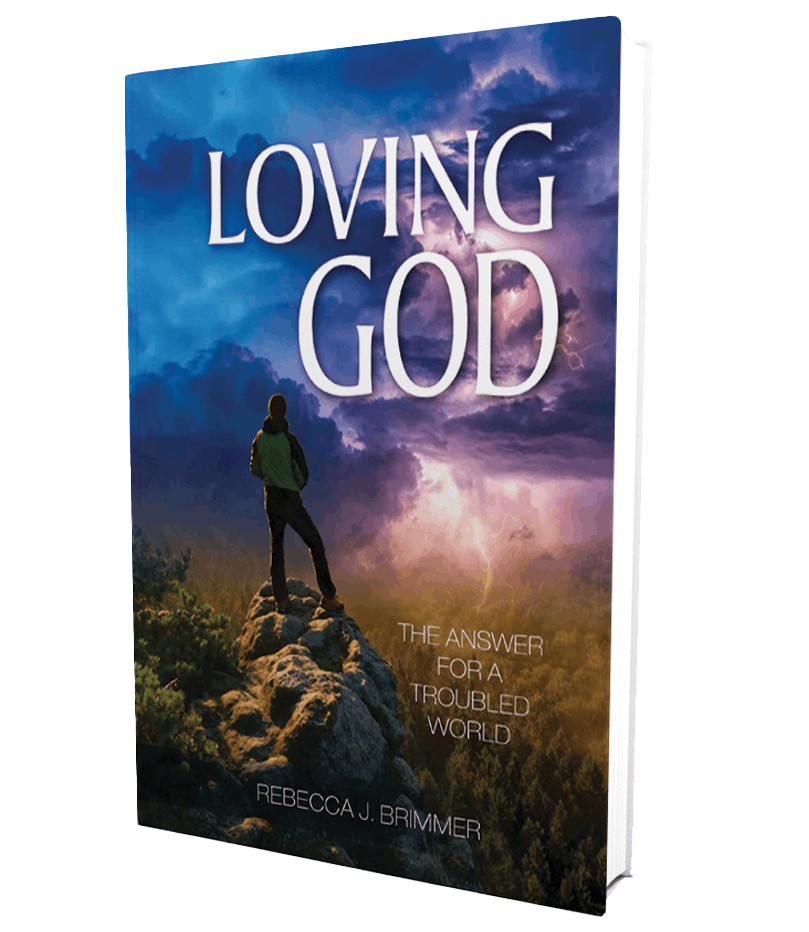
Discover Your Purpose and God’s Heart For You
In today's divided, turbulent world, it's essential for the Church to rediscover God's heart. Our free e-book, authored by a seasoned expert with three decades of experience in Israel, delves deep into the teachings of Jesus (Yeshua) to reveal God’s principles of love and purpose. Learn how embracing these truths can bring significance and impact to your life, even amidst chaos. Subscribe now to receive your free copy and embark on a journey of transformation.