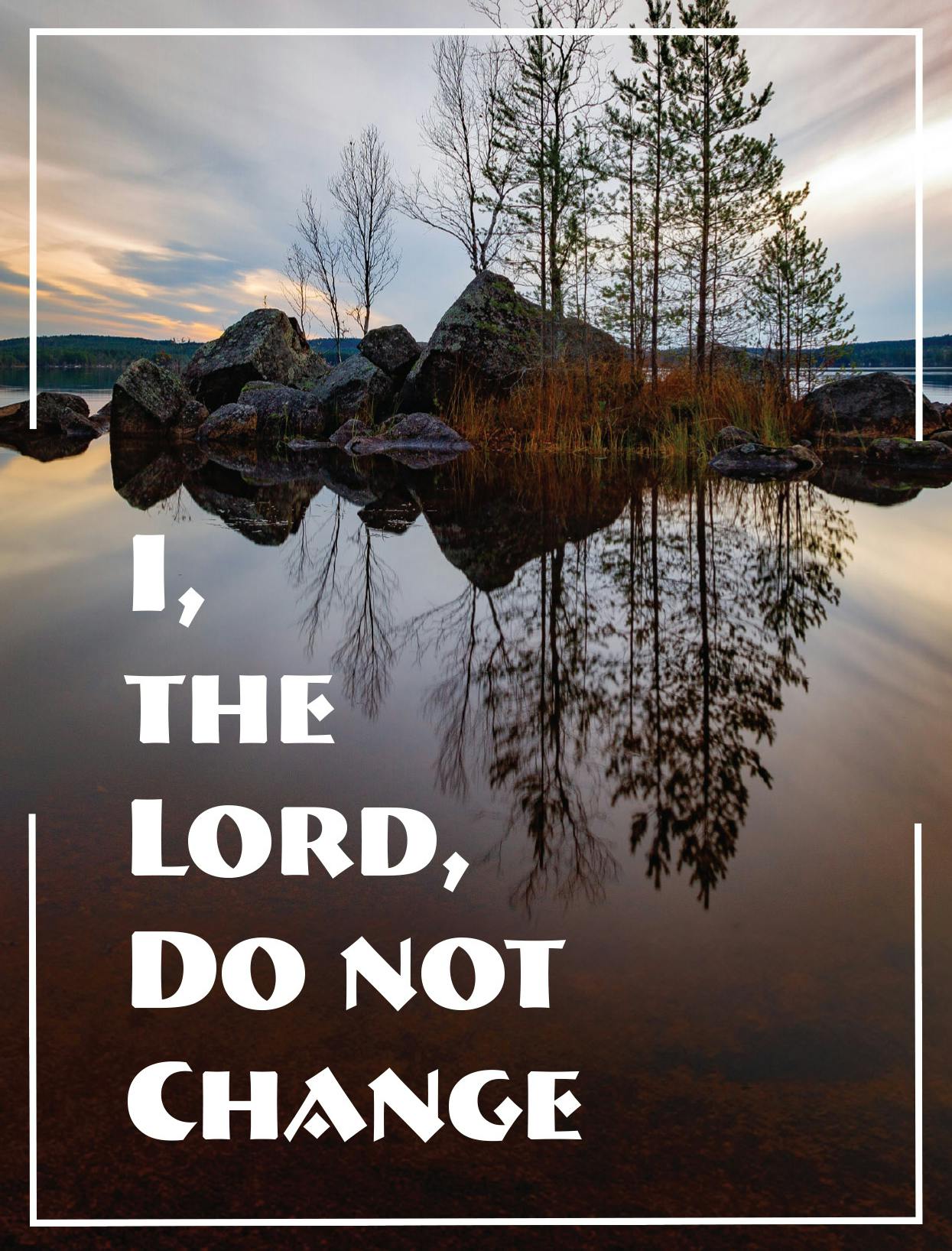
I, the Lord, Do Not Change
Download PDF Version
The world we live in today can seem very unstable. There are wars and rumors of wars. Earthquakes and other natural disasters are happening with increasing regularity. Changes occur everywhere we look. Yet in the midst of the shaking, there is one constant. The Lord assures us that He does not change, and neither do His plans and purposes. He who set in motion the promise of redemption after man’s fall in the Garden—and then chose the Jewish people as the human vehicle to fulfill the pledge in Jesus (Yeshua)—will see that promise through to the glorious final act. In fact, through the Jewish people and their ongoing role in His plan, we witness His unchanging nature clearly on display.

This month, we will consider Psalm 126, a short but powerful testimony to the faithfulness and unchanging nature of God toward the Jewish people that can also increase our faith when we are in seemingly hopeless situations.
This short psalm contains three key signposts standing as evidence of His faithfulness. First is His choice to identify with the Jewish people and so reveal Himself to the world. Second is aliyah, the return of the Jewish people from exile to their ancient homeland. Finally, there’s an assurance that sorrow and suffering will come to an end one day and there will be a joyful time of harvest.
Praising God
Before we dive into the verses of the psalm itself, let’s look at some background information. Psalm 126 is part of a group of 15 psalms known as the “Psalms or Songs of Ascent.” Three of these psalms are attributed to David and one to Solomon, while authors of the remaining eleven are unknown. Most of the psalms are joyful, reflecting on the presence of God and praising Him.
When were the “Songs of Ascent” sung? The most widely accepted answer is that these songs accompanied Jewish families as they ascended or made their way up to the Temple in Jerusalem for the pilgrimage feasts of Pesach (Passover), Shavuot (Pentecost) and Sukkot (Feast of Booths). However, other sources say the Levites sang these psalms as they ascended the 15 steps to the inner courtyard of the Temple. Perhaps both are accurate.
Although there is no longer a Temple in Jerusalem, Psalm 126 remains a festive favorite, a celebratory song. In Jewish homes, it is recited before the regular Birkat Hamazon (Grace after Meals) prayer on Shabbat (Sabbath) and other joyous occasions like weddings or holidays.
Shir HaMa’alot (A Song of Ascent)
As we turn to the words of Psalm 126, we step into a timeless song of hope and restoration.
“When the Lord brought back the captivity of Zion, we were like those who dream. Then our mouth was filled with laughter, and our tongue with singing. Then they said among the nations, ‘The Lord has done great things for them.’ The Lord has done great things for us, and we are glad. Bring back our captivity, O Lord, as the streams in the South. Those who sow in tears shall reap in joy. He who continually goes forth weeping, bearing seed for sowing, shall doubtless come again with rejoicing, bringing his sheaves with him.”
Psalm 126:1–6

The introduction to Psalm 126 in the Artscroll Tanach series reads, “This song describes the highest of Ascents, the ascent of the Jewish people from exile. The final redemption will appear to be a dream, because the wonders that will accompany it will exceed Israel’s wildest expectations.”
When the Lord Brought Back
Psalm 126 begins with a statement about the future of the Jewish people: the fulfillment of God’s promise to bring His people home. We find this promise 64 times in the Tanakh (Gen.–Mal.), demonstrating God’s unchangeable nature as well as the identification of Himself with the people of Israel. Through His dealings with the Jewish people, God intends to demonstrate to the world who He is. The same God who brought the Jews out of slavery in Egypt will ensure that they will return from the four corners of the earth.
Jeremiah expounds on this point, “‘Therefore behold, the days are coming,’ says the Lord, ‘that it shall no more be said, “The Lord lives who brought up the children of Israel from the land of Egypt,” ‘but, “The Lord lives who brought up the children of Israel from the land of the north and from all the lands where He had driven them.” For I will bring them back into their land which I gave to their fathers’” (16:14–15 emphasis added).

A Question of Verb Tenses
A question pops up in the first four words of the psalm. Is the psalmist writing about an event that has already happened or is he writing prophetically of a future time? Our English translation reads, “When the Lord brought back the captivity of Zion” (Ps. 126:1), with the verb in the past tense indicating that the return has already taken place. However, in the Hebrew we read: “When the Lord will bring back…” I believe this reflects the depth and mystery of God’s word, as there are scholars who say that the verse was fulfilled when the Jewish people returned from captivity in Babylon. However, some Jewish people remained in Babylon. Moreover, today, roughly half of the Jewish population still lives in “exile,” outside the Land of Israel. Therefore, both verb tenses are accurate.
Aliyah, or the return to Israel, began in the days of Ezra and Nehemiah (535–445 BC) and continues to this day. Without a doubt, God will complete the process of returning His people from all the nations where they are currently living. Also keep in mind that our psalm begins with the word “when” and not “if.” It is a certainty. No matter when they return, we understand that the mouths of His people will be “filled with laughter” and their tongues “with singing.”
Among the Nations
Reverence for God’s name among the nations is another important theme: “Then they said among the nations, ‘The Lord has done great things for them’” (Ps. 126:2). This is not a new development. The eyes of the world have been on the Jewish people for millennia, at times in awe and at other times in derision and mocking.
The Lord tied His reputation to a particular people when He called Abraham to leave his father’s house in Ur of the Chaldeans. Our psalmist writes that the nations will recognize the sovereignty and nature of God through His dealings with the Jewish people. There have been times in history when the nations have stood in awe of God and His keeping power. Here are a few examples from Scripture.

When Moses pleaded before God not to destroy the Israelites after they worshipped the golden calf, he said, “Why should the Egyptians speak, and say, ‘He brought them out to harm them, to kill them in the mountains, and to consume them from the face of the earth’?” (Exod. 32:12a). In other words, Moses challenged God, telling Him the Egyptians would think He was not able to completely save His people.
Rahab told the spies Joshua sent to Jericho: “I know that the Lord has given you the land, that the terror of you has fallen on us, and that all the inhabitants of the land are fainthearted because of you” (Josh. 2:9). The people living in Jericho had no doubt about God’s sovereignty or the power of His name.
The Kingdom of Israel was renowned throughout the ancient world, as we read, “When the queen of Sheba heard of the fame of Solomon concerning the name of the Lord, she came to test him with hard questions” (1 Kings 10:1).
At other times, God’s name was mocked because of His chosen people, something we see happening in modern times as well. After Israel was taken into Babylonian captivity and the Temple destroyed, God’s name was “profaned among the nations” (Ezek. 36:22). Through His identification with Israel and the Jewish people, God’s reputation in the world became tarnished, rendering Him powerless in their eyes. However, God did not waver. His plan remained intact as He proclaimed, “the nations shall know that I am the Lord,” says the Lord God, “when I am hallowed in you before their eyes. For I will take you from among the nations, gather you out of all countries, and bring you into your own land” (Ezek. 36: 23b–24 emphasis added).
How Long?
The first half of the psalm anticipates the joyous return of God’s people to the Land of Israel and subsequent recognition among the nations that God “has done great things for them” (v. 2). Then comes the impassioned plea to, “Bring back our captivity…,” a phrase which seems a little awkward to an English-speaking mindset.
The Complete Jewish Bible gives a clearer picture, translating verse 4 as: “Return our people from exile, Adonai...” This verse concludes with these words, “like streams in the South.” The image of streams in southern Israel—or in the Negev desert—introduces a picture of sudden, ferocious, overwhelming torrents of water rushing down from the mountains above. We cannot predict the “when” of God’s fulfilling His promises, but we can stand assured that He will not be late.
From Tears to Rejoicing
In The Book of Psalms: The New Translation and Commentary, the authors write, “The exiles who knew bitterness and persecution after long years in the Diaspora will enjoy freedom and gladness, liberty and peace in their own land restored and will sing out in joyous song to God for their deliverance.”
It is unlikely that any other people group has experienced the depths of sorrow that the Jews have during their years of exile. Yes, there have been periods when they were accepted in the nations, but in the end, they have always been set apart, with God’s fingerprint distinctly upon them. In Psalm 126, the psalmist writes of the hope within the heart of the Jewish people that there would come a day of rejoicing when at last they would return to Jerusalem.
The agricultural metaphor used in verses 5 and 6 stresses that faith in God’s unchanging nature is vital: “He who continually goes forth weeping, bearing seed for sowing, shall doubtless come again with rejoicing.” The sower may continually be in despair of a joyful harvest, but the psalmist assures us there is no doubt that he will rejoice when he brings in his sheaves of grain. Only trust and faith in an unchanging God could produce such confidence.
Our Unchanging God
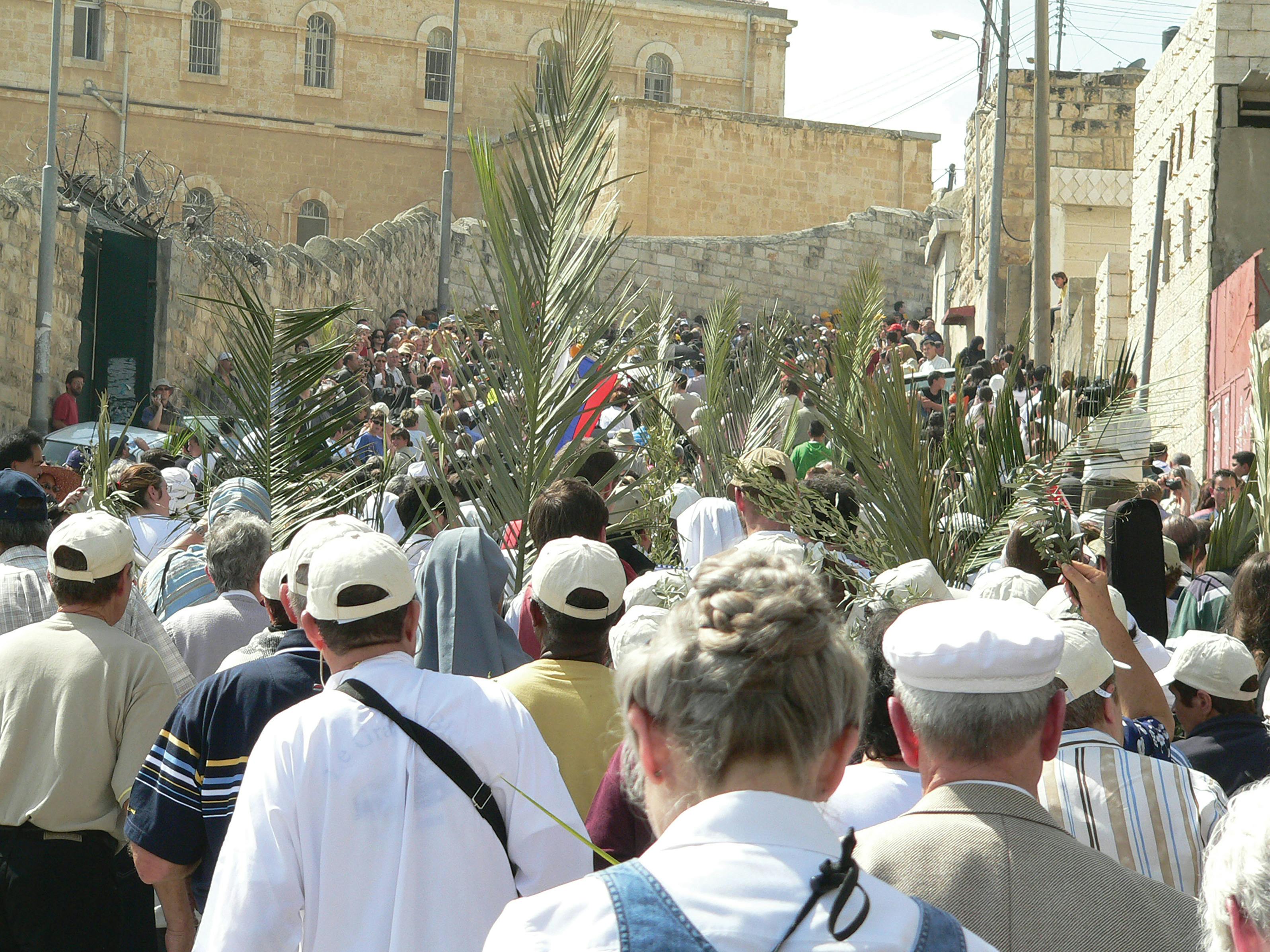
Can you imagine standing in the courtyard of the Temple and listening to the Levitical priests as they ascended to the inner courtyard, singing praises to the God who does not change? Or climbing the long hill up to the city of Jerusalem, the one place on earth where God chose to dwell?
In these six short verses, we have considered the signposts standing as evidence of the fulfillment of God’s promise that He keeps His word to the Jewish people; that the nations will see and know it was none other than the God of Israel who did great things for them; and that the years of tears and mourning will one day come to an end.
When we read Psalm 126, we can put ourselves in the Jewish people’s place and give thanks that we have been grafted into such an inheritance through our faith in Jesus. There may have been tears and sorrow along the way, but once we gaze upon His countenance, we shall rejoice in His presence.
Meditating on this psalm reminds us that what was true when the author wrote these words thousands of years ago remains true today.” As the prophet Malachi wrote more than two millennia ago, “For I am the Lord, I do not change; therefore you are not consumed, O sons of Jacob” (Mal. 3:6).
Bibliography
Feuer. Rabbi Avrohim Chaim, (ed.). Tehilim, Artscroll Tanach Series. Brooklyn, New York: Mesorah Publications, Ltd., 1995.
“Is Aliyah Biblical?” https://aliyahreturncenter-help.mailchimpsites.com/64-aliyah-verses
Rozenberg, Martin S., Bernard M. Zlotowitz. The Book of Psalms: The New Translation and Commentary. Northvale, New Jersey: Jason Aronson, Inc., 1999.
Stern, David H. (translator). Complete Jewish Bible. Clarksville, Maryland: Jewish New Testament Publications, Inc., 1998.
Related Resources




Discover Your Purpose and God’s Heart For You
In today's divided, turbulent world, it's essential for the Church to rediscover God's heart. Our free e-book, authored by a seasoned expert with three decades of experience in Israel, delves deep into the teachings of Jesus (Yeshua) to reveal God’s principles of love and purpose. Learn how embracing these truths can bring significance and impact to your life, even amidst chaos. Subscribe now to receive your free copy and embark on a journey of transformation.