I Will Plant Them in the Land
When Abraham came to the land of Canaan, he lived in the hill country of Judea and Samaria. We could say this was the birthplace of modern-day Israel, the area where much of the history of the Jewish people took place. In 1967, Israel recaptured its biblical heartland from the hands of the Jordanians and began to build communities, plant vineyards and bring life back to their ancient homeland. Today, ownership of this land is contested by the nations of the world who seek the formation of a Palestinian state.
The Jewish population of Judea and Samaria numbers roughly half a million people. I want to take you on a journey to a hilltop in Samaria where we will meet one of those families: Baruch and Batya Erdstein. They are living proof that the words of the prophet Amos, spoken more than 2,500 years ago, are being fulfilled today. “‘I will plant them in their land, and no longer shall they be pulled up from the land I have given them,’ says the Lord your God” (Amos 9:15).
Returning to the Land
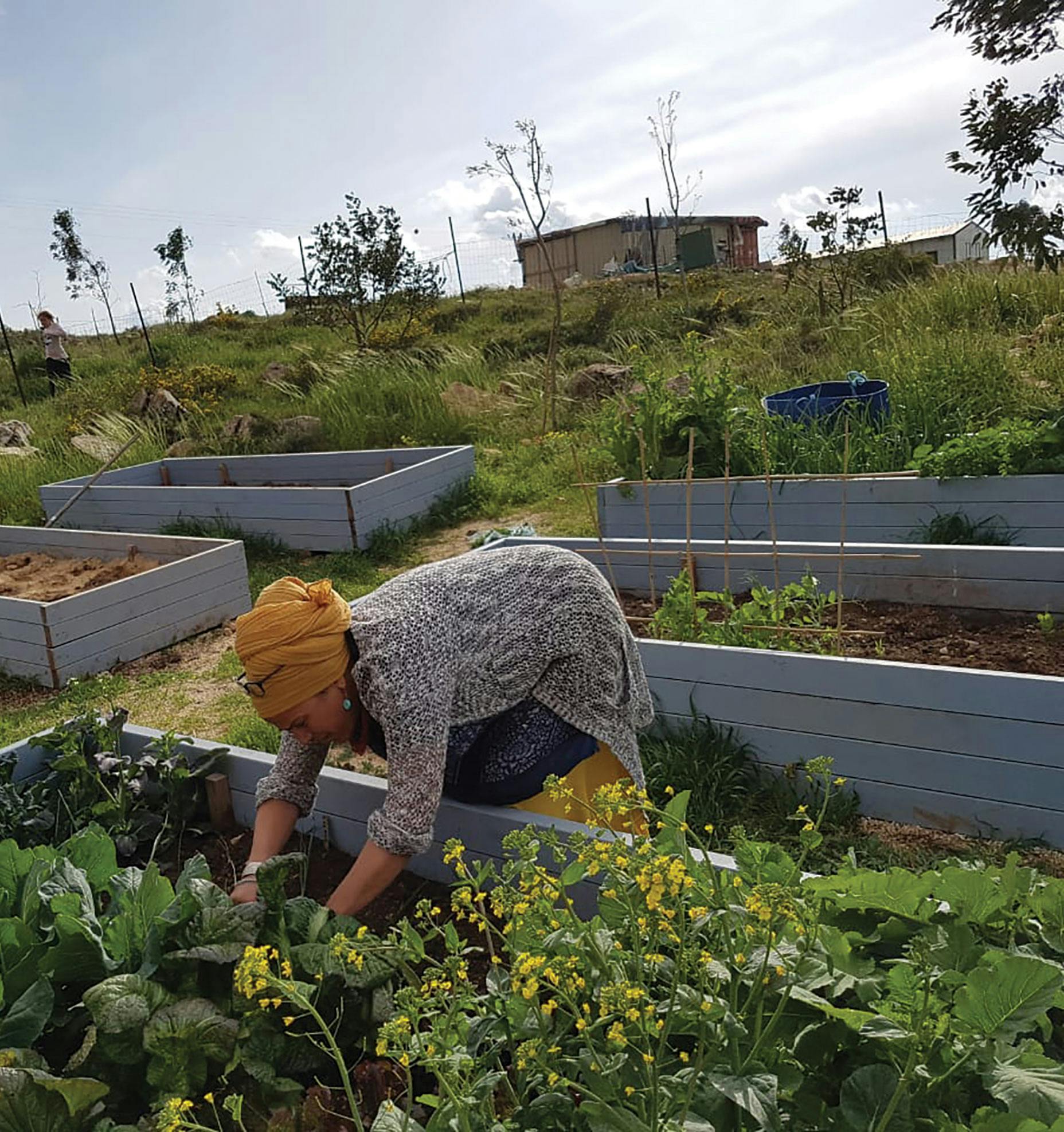
Although neither Baruch nor Batya is a sabra (native-born Israeli), both were drawn to Israel at a young age, and once they arrived, they never left. The couple met here in Israel, married and started a family. While living in the northern Israeli town of Safed, they felt a “tug,” a divine invitation as it were, to move south. They settled on the slopes of a mountain in Samaria overlooking the community of Itamar.
Life wasn’t easy in the beginning. They had to provide their own necessities like electricity and water. The hilltop was barren, devoid of trees. They were isolated and at times, it was lonely.
Batya shared that it was very quiet during the first few years. Often, she only heard the sound of the wind. Then, one day as she worked in her garden, she heard chirping. Looking up, she saw a bird on a branch of a pomegranate tree Baruch had planted! It was a small beginning, but 11 years later, Baruch’s trees have grown and continue to grow, drawing birds with their joyful chorus of thanksgiving to their Creator.
What’s in a Name?
Names are important. Most of the world uses “West Bank” to refer to the area of Judea and Samaria, a term Jordan coined to differentiate the area west of the Jordan River from Jordan proper on the eastern bank. The media uses the name “West Bank” almost exclusively, effectively removing all reference to the area’s Jewish presence and history.
The press also often refers to Judea and Samaria as “occupied” and calls the Jewish residents “settlers.” In Israel itself, the area is called “the territories.”
Batya clearly rejects the designation “settler.” The term refers to someone without any ties to a land who comes in as a foreigner, she explained.
Why Live Here?
Given the pressure from the world to establish a Palestinian state on these lands, a natural question might be, “Why do you live here?” Israel has not formally annexed the area, and though the Erdsteins pay taxes just like someone in Tel Aviv, they don’t receive the same services. And security has also been an issue. Until two years ago, most of the terror attacks happened in this particular area.
Baruch answered with two reasons. The first is ideological. This is the biblical heartland, he held. “Jacob raised his sons in the valley below. They herded their sheep on these very slopes!”
Baruch also shared how he found the ruins of a number of ancient winepresses on the surrounding hills. “Those ancient winepresses prove any claims that only Muslims ever settled here are false, as wine is forbidden to them and was not a major industry except for the Israelites.”
He then pointed out new vineyards being planted on the same surrounding hills, living proof of a people returning to the very places their ancestors once worked.
Baruch’s second reason is simply the sheer beauty of the land. “Why shouldn’t I live here?” he asked. “It’s gorgeous! Just because I’m a Jew, someone has a problem with me living in the land of my ancestors?”
Batya agreed that their life here is very connected to the times of the Tanakh (Gen.–Mal.) and their forefathers. Living in a way that honors Torah (Gen.–Deut.) is of utmost importance to the Erdsteins. Without fully understanding, I listened as they shared about the responsibility they have as Jews, that when the Jewish people “do what we’re supposed to do, to keep Shabbat and live as the Torah instructs,” the whole world will be blessed.
“Mud on the Mountain”
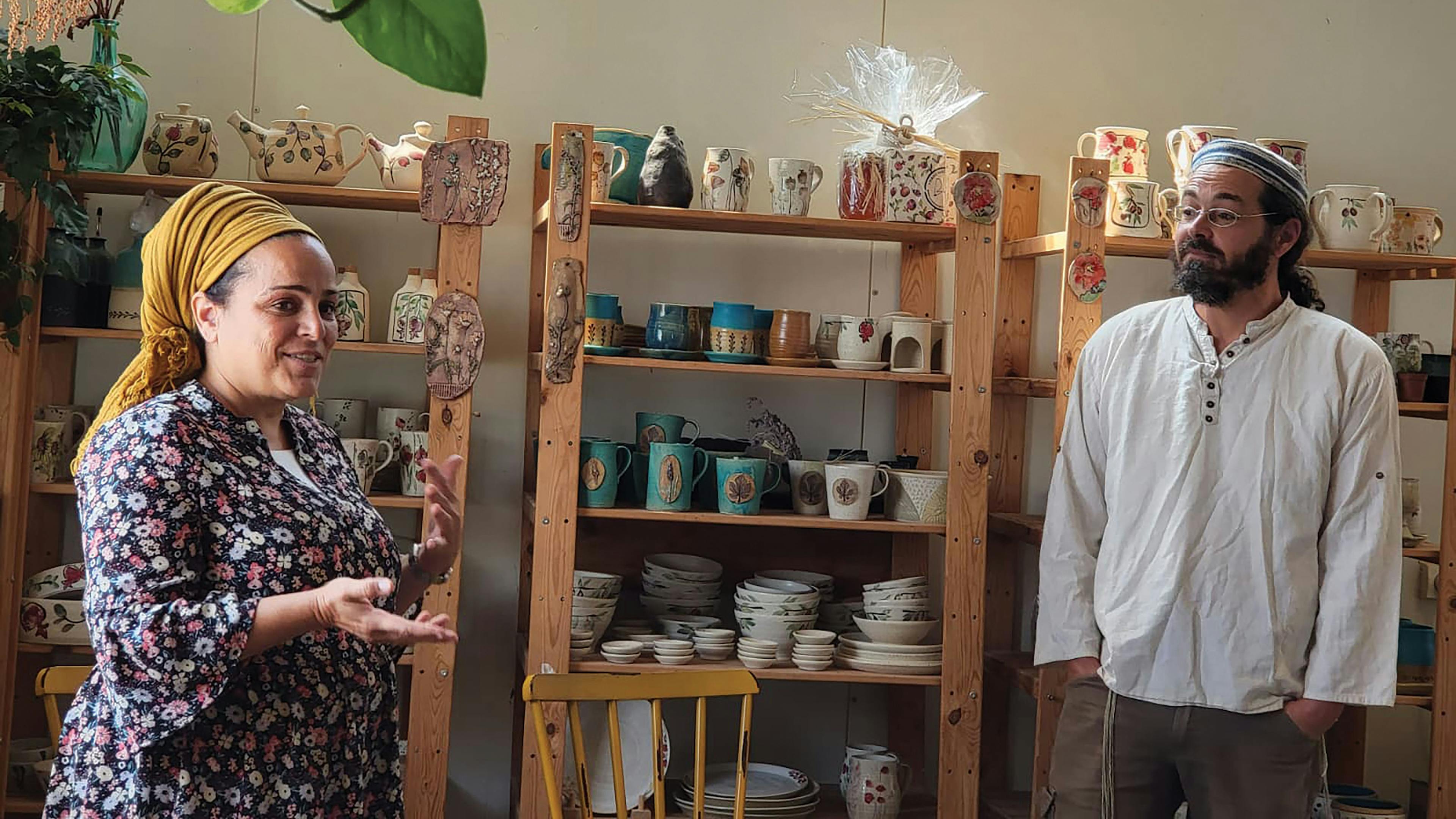
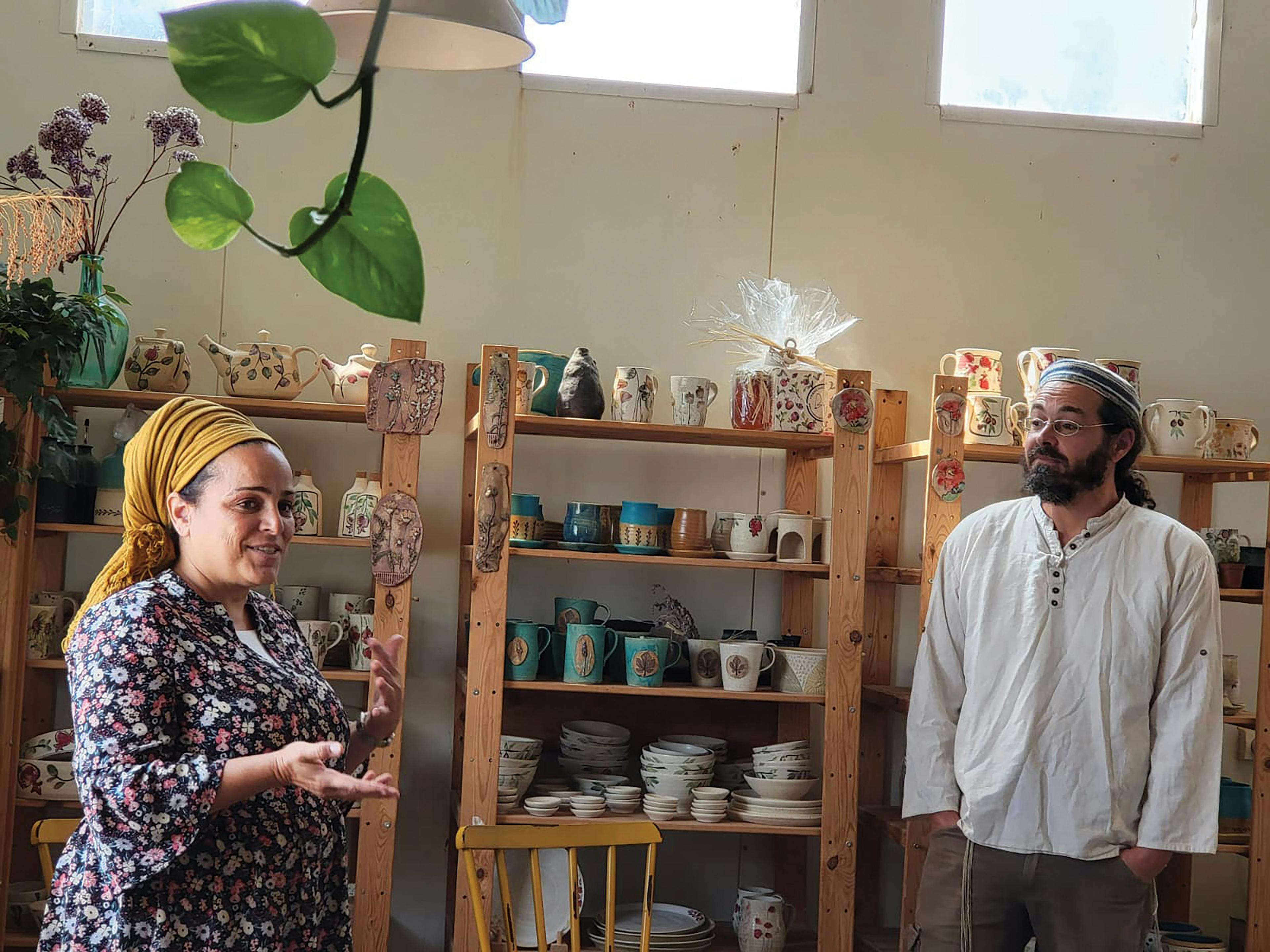
During those early days on the mountain when it was lonely, Batya found solace in her studio, at the potter’s wheel. Named “Mud on the Mountain,” Batya creates beautiful ceramic pieces and holds classes in the studio.
There is something about her work that brings a connection to the land. Back home in my cabin in Alaska, I keep an interesting platter Batya created. It is mostly unglazed with the imprints of fig leaves and wild grasses that were pressed into the clay before firing. This platter speaks to me as I envision Batya sitting at her potter’s wheel, creating cups and dishes, vases or olive oil decanters. As each unformed piece takes shape, she allows the hills and valleys that surround her home to speak of their ancient Jewish roots. Making pottery is not simply a job; it is an act of love. And when I look at the platter in far-away Alaska or drink tea from one of her cups, I feel that love and her connection to the land.
The Matter is Settled
Although the world may contest ownership of Judea and Samaria, God always has the last word. The fulfillment of the words of the prophet Amos will not come as a result of a UN resolution or any government decision. It has come, and continues to come, because the descendants of Abraham are returning after thousands of years in exile, to the land they were promised by a covenant—everlasting and eternal—that no earthly authority can overrule. The matter was settled when God spoke to Abraham at a place not far from the Erdstein’s hilltop home, saying “Also I give to you and your descendants after you the land in which you are a stranger, all the land of Canaan, as an everlasting possession; and I will be their God” (Gen.17:8).
Have a look at Batya’s pottery here.
Related Resources



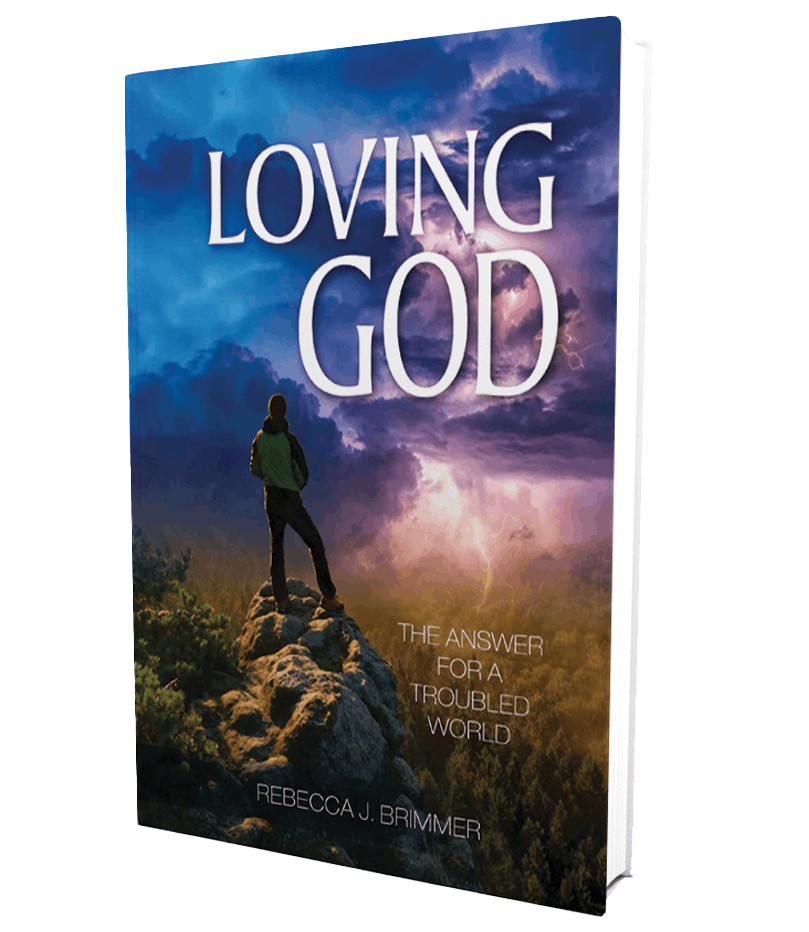
Discover Your Purpose and God’s Heart For You
In today's divided, turbulent world, it's essential for the Church to rediscover God's heart. Our free e-book, authored by a seasoned expert with three decades of experience in Israel, delves deep into the teachings of Jesus (Yeshua) to reveal God’s principles of love and purpose. Learn how embracing these truths can bring significance and impact to your life, even amidst chaos. Subscribe now to receive your free copy and embark on a journey of transformation.